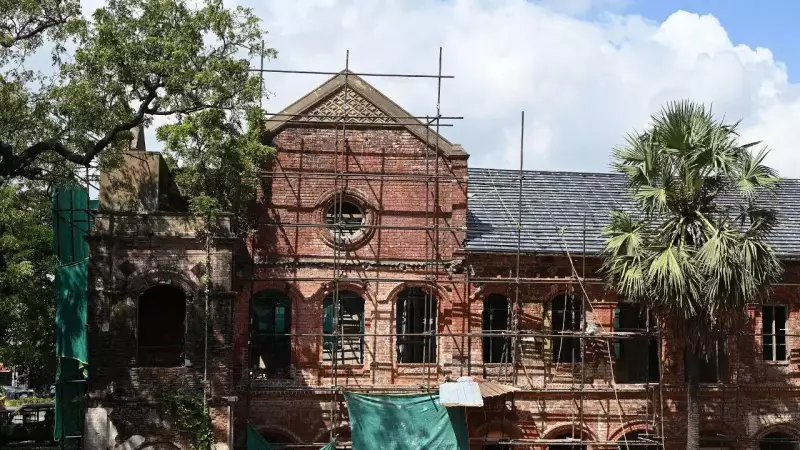
One of Chennai's most iconic and neglected heritage structures, the Bharat Insurance Building, is finally receiving a new lease on life. A comprehensive restoration project is now underway to bring back the original glory of this late-19th-century architectural gem located on Anna Salai.
Reviving a Fading Landmark
After decades of decay, the painstaking restoration work began in May 2025 and is projected to take approximately 20 months to complete. The project is being managed by Savani Heritage Conservation Pvt Ltd, with P Raju serving as the project coordinator for South Indian Projects. The focus is on a complete revival of the building's defining features, including its square and octagonal towers, bell-shaped domes, conical spires, and intricate decorative reliefs.
A Storied Past and Architectural Splendor
The building, originally known as the Kardyl Building, was completed in 1897 at the crucial junction of Anna Salai and General Patters Road. It was designed by architect J H Stephen for W E Smith & Co, conceived in a palatial style that served both commercial and residential purposes. Its eclectic two-storey design boasts exposed brickwork, stepped gables, verandahs with arches, and a mix of roofing styles like Mangalore tiles and the traditional Madras Terrace.

In its heyday, the ground floor operated as a showroom, while the upper floors housed doctors' rooms, staff quarters, a café, and even a beer parlour. The building later found its name when it was acquired by Bharat Insurance, which subsequently merged into the Life Insurance Corporation of India (LIC).
Combating Neglect with Modern Techniques
Years of continuous occupation could not stave off severe structural decline. The building suffered from water seepage, dangerously weakened floors, and vegetation growing from its crevices, which led to tenants being asked to vacate and even sparked discussions about potential demolition. Despite this, many original interior elements like vaulted ceilings, stained glass, ornate staircases, and cast-iron detailing have miraculously survived.
The current restoration plan is a blend of modern engineering and specialised heritage conservation techniques. Key tasks include:
- Repairing the weakened structural floors and roof.
- Restoring the elaborate façade and brickwork.
- Conserving original wooden doors, windows, and staircases.
- Reconstructing deteriorated Madras Terrace slabs.
The revival of the towers and spires is considered particularly crucial, as these elements are key to the building's visual identity and its historic presence in Chennai's skyline.
A New Future for an Old Icon
Once the restoration is complete, the plan is to repurpose the building for commercial and office spaces. However, heritage experts caution that heavy foot traffic must be carefully managed to prevent damage to the delicate, restored interiors. Some enthusiasts have also proposed the idea of converting the landmark into a museum to showcase its rich history, allowing the public to appreciate its architectural details and panoramic city views from its towers.
This ambitious project represents more than just fixing an old building; it is about actively preserving a tangible piece of Chennai's architectural legacy and reconnecting the city's vibrant present with its grand past.