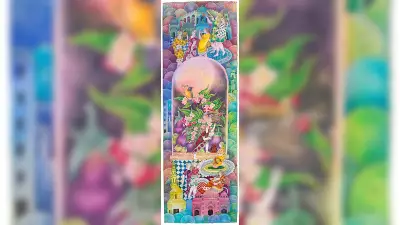
A significant controversy has erupted at the prestigious Kochi-Muziris Biennale (KMB) over a painting that Christian groups allege disrespects a core tenet of their faith. The artwork, created by Kerala-based artist Tom Vattakuzhy, is part of the exhibition titled 'Edam' and has drawn sharp criticism for its depiction, which protesters liken to a distorted version of The Last Supper.
Church Groups Voice Strong Condemnation
The Syro-Malabar Church, a major Christian denomination in Kerala, has issued a formal statement condemning the painting. Tom Olikkarott, the church's public relations officer, stated that the artwork represents a violation of basic respect towards religious faith. He emphasized that The Last Supper is a holy symbol for Christians and its distorted depiction is unacceptable.
Olikkarott also revealed that the same artwork had been withdrawn in 2016 after being published in a magazine following protests from the faithful. The church has expressed doubt that the current exhibition of the piece was unintentional, suggesting it may have been done deliberately to insult Christian beliefs. They have called upon the authorities to take fair and responsible action. The Kerala Latin Catholic Association has also registered its objections to the painting.

Artist and Curators Defend Artistic Interpretation
When approached for comment, the artist, Tom Vattakuzhy, declined to engage with the allegations. "I do not see that the ongoing claims and allegations are based on any facts. Therefore, I do not wish to say anything about them at the moment," Vattakuzhy said.
In a detailed joint statement, the curators of 'Edam'—K M Madhusudhanan and Aishwarya Suresh—along with Bose Krishnamachari, president of the Kochi Biennale Foundation, provided context for the contentious work. They explained that the painting was created in response to a story by writer C Gopan. It depicts Mata Hari, the convicted spy and exotic dancer, in the moments before her execution by the French Army.
The statement clarified that the use of nudity in the work is directly linked to this historical and narrative context. They traced the artwork's lineage, noting that Gopan's story was inspired by a poem by Vailoppilli, which itself draws from historical events. "The painting by Tom Vattakuzhy is therefore part of a long-established chain of artistic and literary interpretation," the statement read, positioning it within a recognized cultural tradition rather than an isolated provocation.
Biennale Foundation Opposes Censorship
The foundation firmly stated that it does not believe the artwork warrants removal. "Taking down the work would amount to restricting artistic expression and could be perceived as an act of censorship, which is contrary to the principles of artistic freedom and cultural dialogue that the exhibition seeks to uphold," the statement asserted. They highlighted that all works in 'Edam' were selected after careful consideration, acknowledging the inherent differences between literary and visual mediums.
Despite this strong defense of artistic freedom, the venue displaying the specific artwork has been temporarily shut, indicating the sensitivity and immediate impact of the protests. The incident, dated January 2, 2026, revisits enduring debates about the boundaries between creative expression and religious sentiment in India's diverse cultural landscape.