The crisp winter air in Assam's Barak Valley now carries a distinctive, comforting aroma—a blend of burnt bamboo, banana leaf, and roasting rice. This scent heralds the annual return of 'chunga pitha,' a cherished seasonal delicacy that has begun to appear in households across communities in the lead-up to Magh Bihu and Makara Sankranti.
The Seasonal Signal: Green Bamboo and New Rice
The markets in towns like Silchar offer a clear visual cue: stacks of fresh, green bamboo tubes, known locally as 'chunga,' piled high. Their arrival coincides with the harvest of 'Binni,' a specific variety of sticky rice essential for authentic chunga pitha. From late November onwards, this new rice hits the market, and despite an initial steep price of around Rs 100 per kilogram, demand remains robust due to the festive pull.
A retired government employee from Silchar's Rongpur area captured the sentiment, stating, "New Binni rice is expensive, but for chunga pitha we don't compromise." He humorously added that families are often quoted a lower price to soften the blow, highlighting the dish's non-negotiable place in seasonal traditions.

A Simple Recipe, A Rich Tradition
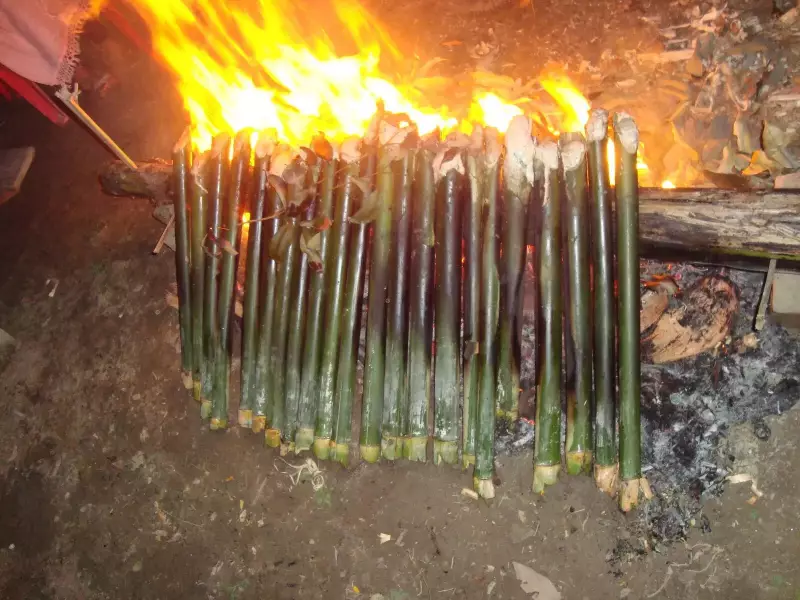
The preparation method is a study in rustic elegance. Soaked Binni rice is carefully wrapped in banana leaves and packed into hollow segments of the green bamboo. These bamboo cylinders are then patiently roasted over open fires fueled by paddy straw. The process transforms the simple ingredients.
When the charred bamboo is split open, it reveals a soft, cylindrical rice cake, perfectly infused with the smoky, earthy aromas of its natural packaging. This unique flavour profile is synonymous with a Barak Valley winter. In rural areas, the activity evolves into a quiet community ritual, where straw fires light up courtyards and fields as neighbours gather, strengthening social bonds through shared labour and the anticipation of a shared meal.
Crossing Cultural and Religious Lines
During Magh or Bhogali Bihu, chunga pitha becomes an indispensable part of Assamese harvest celebrations, symbolizing the region's deep agrarian roots. The tradition, however, transcends specific festivals and community boundaries.
For Bengali Hindu and Hindi-speaking families, it is intricately linked to Makara Sankranti or Poush Sankranti rituals. Significantly, the practice also holds strong in Muslim households, where preparing chunga pitha with the new rice and sending it to married daughters' homes is a common custom.
Noor Ahmed Chaudhury, a resident of Sonai, emphasized its emotional weight, saying, "Sometimes, if chunga doesn't arrive from the in-laws' house, there's genuine disappointment." This sentiment underscores that chunga pitha is more than mere sustenance; it is a tangible expression of care, kinship, and cultural continuity.
Ultimately, the annual return of chunga pitha represents the Barak Valley's intimate connection with its natural cycles, agricultural heritage, and the powerful, shared cultural memories that food can preserve and celebrate across generations and communities.