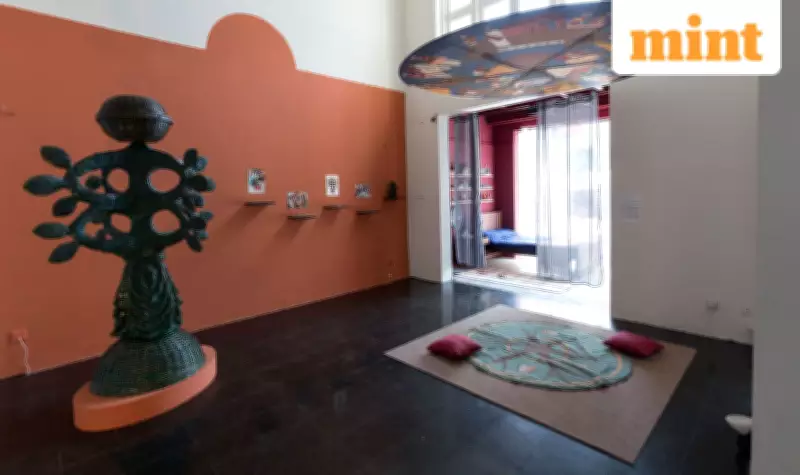
Over the past week, Colombo has transformed into a vibrant cultural hub as exhibitions and performances have blossomed across five distinct venues. From the intimate listening space at Soul Studio to the cinematic offerings at Liberty by Scope Cinemas and the evocative displays of kinship at Colpetty Town House, these activations collectively form the ninth edition of Colomboscope. This contemporary arts festival, established in 2013, serves as a creative platform for interdisciplinary dialogue, and this year's iteration, named Rhythm Alliances, aims to deepen its role as a cultural bridge not only within Sri Lanka but across the wider Indian Ocean region.
A Festival of Unity and Resistance
Bringing together more than 100 artists, musicians, and filmmakers, Colomboscope 2026 delves into themes of sound, movement, and collective memory, set against a backdrop of ongoing geopolitical tensions. The festival's mission is twofold: to resist mainstream hegemonic narratives and to foster collective solidarity and celebration. This edition is particularly notable for featuring 35 newly-commissioned projects, showcasing fresh artistic voices and innovative approaches.
Expanding Venues and Historical Context
While familiar locations like the Barefoot Café continue to host events, this year's festival has expanded to include the Rio Cinema Complex. This Tamil-owned movie theatre holds profound historical significance, having been burned down during the ethnic riots of 1983—an event that ignited decades of civil war in Sri Lanka. Its inclusion underscores the festival's commitment to addressing and healing from the nation's fractured past through art and dialogue.

International and Local Artistic Collaborations
The festival boasts an impressive roster of international artists, each contributing unique perspectives. Raven Chacon, the first Native American artist to receive the Pulitzer Prize, is exhibiting a set of compositional scores that will be interpreted by local musicians during live performances, creating a dynamic cross-cultural exchange.
Palestinian artist Basma Al Sharif presents a theatrical installation that combines printed banners, archival images, and a fictional novella to reimagine her fragmented history and identities, offering a poignant reflection on displacement and memory.
Composer-artist Ayumi Paul contributes a series of drawings on paper, installations, and sound scores designed to encourage visitors to discover deeper connections with each other and the broader universe, promoting a sense of shared humanity.
Insights from the Artistic Director
In an exclusive interview, Natasha Ginwala, the artistic director of Colomboscope, discussed the festival's evolution and thematic focus. She reflected on her association with the festival since 2015, noting that Colomboscope initially engaged with a post-war city grappling with myriad contradictions. Unlike the now-defunct Colombo Art Biennale, it was less focused on visual arts and more on building enduring relationships and alliances across regions, informed by her previous work in Dhaka, Lahore, Jaffna, and New Delhi.
Balancing Artistic Freedom and Sustainability
Ginwala emphasized the festival's journey toward independence. After its first four editions relied heavily on corporate sponsorship, Colomboscope transitioned into an independent non-profit initiative. This shift required scaling down to a seed-like entity, nurtured by independent cultural practitioners. Through partnerships with institutional allies, foundations, museums, and biennials, the festival has engaged in a long process of active learning and exchange, ensuring that patrons align with its holistic vision.

The Genesis of Rhythm Alliances
The theme Rhythm Alliances emerged from a desire to explore frameworks that originate in Sri Lanka and resonate across the Indian Ocean. Rhythm was chosen for its deep roots in Sri Lanka's rich heritage of ceremonial processions and musical histories. Practices like drumming and rituals serve as critical connectors across an island often divided by ethnic and religious fissures. The theme also contemplates rhythm's role in contemporary politics, where it becomes an expression of protest and resistance, and its paradoxes in modernity, such as industrial rhythms shaping capitalism. Guest curator Hajra Haider Karrar, from Savvy Contemporary in Berlin, brought expertise in storytelling, music, and sonic arts, making her an ideal collaborator.
Programming Highlights and Embodied Practices
This edition places a strong emphasis on embodied practices and inter-generational storytelling rooted in oral memories. A standout project is Arka Kinari, a solar-powered sailing ship that has traveled from Indonesia to Sri Lanka, moored in Colombo's contested port city extension. Carrying musicians, artists, and climate activists, the vessel collects traditional music threatened with extinction and engages in multilingual practices. Its floating stage has hosted memorable live performances, while its Laboratory of Sustainability offers educational workshops for visitors to learn about ecological approaches. These initiatives reflect on social fragmentation while providing powerful avenues for coming together in tenderness and kinship.
Colomboscope continues to captivate audiences until 31 January 2026, unfolding across multiple locations in Colombo, inviting all to experience its transformative artistic dialogues.