Navigating the Sacred Journey of Griha Pravesh: A Guide to Avoiding Common Pitfalls
In the rich tapestry of Indian culture, achieving dreams often intertwines with deep-rooted traditions. For countless families, purchasing a home and performing a successful Griha Pravesh represents a monumental milestone, transcending mere relocation to invite auspicious energy into a new living space. This ancient Hindu ritual, commonly known as the housewarming ceremony, is designed to shield the home from negative influences and Vastu doshas, fostering an environment of peace and prosperity. However, amid the excitement of moving and decorating, many inadvertently commit small errors that can disrupt the positive ambiance. Drawing from extensive experience and consultations with priests and families, a consistent pattern emerges: these mistakes stem not from intent but from a lack of proper information and guidance.
Selecting Convenience Over Auspicious Timing
The significance of choosing the right date and time for Griha Pravesh cannot be overstated. Performing rituals during an auspicious muhurat, determined by consulting a pandit based on rashi and nakshatra, is crucial for warding off negative energy. For instance, conducting the ceremony in the Magh month is believed to attract wealth, while Falgun brings wealth and children, Baisakh enhances prosperity, and Jeshtha bestows blessings of a son and cattle. Overlooking this aspect in favor of convenience can undermine the ceremony's effectiveness.
Neglecting the Entrance Decoration
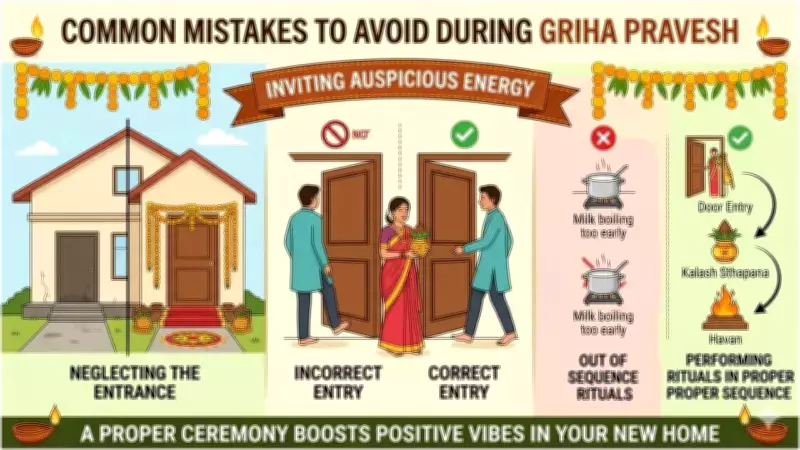
Often overlooked, decorating the front entrance door is a vital step, as it serves as the gateway to prosperity and good health, symbolizing the Simha Dwar in Vastu Purush. Enhancing this area with symbols like the swastika or Goddess Lakshmi's feet in rangoli not only beautifies the entry but also invites positive energy, making the home welcoming and harmonious.

Incorrect Entry into the New Home
When moving in, many simply walk through the door without thought. Traditionally, the lady of the house should enter first, carrying items such as a pot of water, mango leaves, coconut, milk, turmeric, or rice to usher in luck and abundance. She should step in with her right foot first, believed to harness positive energy and signify the arrival of Goddess Lakshmi, setting a blessed tone for the household.
Improper Sequence of Puja Rituals
Positivity can be compromised when rituals are performed out of order. In Hindu traditions, a step-by-step approach is essential: begin with Ganesh Puja, followed by Vastu Puja, then Navagraha Shanti, and conclude with Griha Pravesh. Skipping Vastu Puja is akin to constructing a house without a foundation, as it aims to balance the five elements within the living space, ensuring stability and harmony.
Conducting the Ceremony in an Incomplete House
Excitement often leads to performing the puja in an unfinished home, a major misstep according to Vastu Shastra principles. The house must be fully constructed, with a roof, doors, windows, and complete painting, before the housewarming ceremony. Only a completed home can effectively channel the blessings of Griha Pravesh, providing a solid base for the rituals to thrive.
Overlooking Post-Puja Oversights
After the puja concludes, it is advised not to leave the house empty and locked at night; at least one person should reside there for the next three days. Additionally, lighting a lamp in the puja room is essential. Avoid moving furniture, except for crockery and the stove, prior to the ceremony, and refrain from bringing broken items that may carry negative energy. Understanding the meaning behind the rituals, rather than merely observing them, enriches the ceremony's significance.
Failing to Choose the Right Priest
A common error is not engaging an experienced priest proficient in Vedic rituals, particularly Vastu Shanti and Navagraha Puja, to ensure proper purification and blessings. Relying solely on referrals from family and friends or making last-minute bookings can lead to suboptimal outcomes. Take time to select authentic pandits who can elucidate the rationale behind mantras, enhancing the spiritual depth of the ceremony.

Insights provided by Dayanand Kamble, Founder at Book My Pooja, emphasize the importance of meticulous planning and informed execution for a truly blessed home.