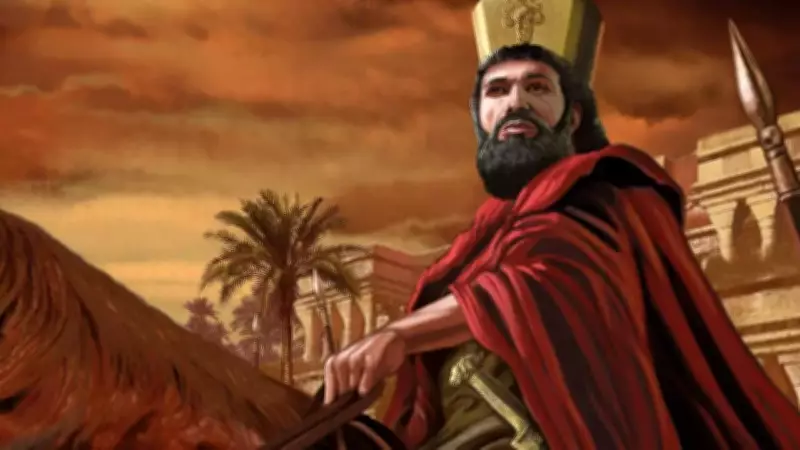
Cyrus the Great: The Ancient Persian Ruler Whose Legacy Endures After 2,500 Years
In the annals of history, few figures stand as tall as Cyrus the Great of Persia, whose influence resonates powerfully even today, more than two and a half millennia after his death. His significance lies not merely in the vast territories he conquered but in the remarkably humane manner in which he achieved his victories. Unlike many contemporary rulers who relied heavily on brutality and bloodshed, Cyrus forged an empire through a blend of strategic genius and profound respect for human dignity.
The Unprecedented Scale of the Persian Empire
According to the Armstrong Institute of Biblical Archaeology, Cyrus II reigned from 559 to 530 BCE, a period during which he established the largest empire the world had ever witnessed. Ancient historical sources and modern archaeological findings confirm that the Persian Empire under his rule stretched impressively from the Indus River in the east to the Aegean Sea in the west, and from the Danube River in the north to Libya in the southwest. This expansive domain was not just about territorial acquisition; it was characterized by a governance style that prioritized fairness and cultural tolerance over sheer intimidation.
The Bloodless Conquest of Babylon
One of Cyrus's most legendary achievements was the astonishing capture of Babylon in 539 BCE. The city was renowned for its formidable defenses, including walls hundreds of feet thick, the iconic Hanging Gardens, and imposing palaces, all seemingly impregnable. The Euphrates River flowed through Babylon, adding a natural barrier to its security. Yet, Cyrus executed a masterful strategy by diverting the river to create a shallow riverbed, allowing Persian soldiers to wade in under cover of darkness. As the Babylonians celebrated, unaware of the impending invasion, internal gates were opened, leading to a conquest that occurred without the expected bloodbath.

Greek historians such as Herodotus and Xenophon documented this event, which stunned Babylon's king, Nabonidus, and his son, Belshazzar. The fall of Babylon under Cyrus remains a cinematic episode in ancient history, highlighting his innovative military tactics and preference for minimizing violence.
A Humanitarian Approach to Rule
Cyrus distinguished himself as arguably the first true humanitarian ruler in recorded history. The Cyrus Cylinder, discovered in Italy in 1879, provides tangible evidence of his progressive policies. He permitted conquered peoples to retain their customs, religions, and local governments, avoiding mass executions and forced assimilation. This approach fostered loyalty and stability across his diverse empire.
His most celebrated act was the liberation of the Jewish people from Babylonian captivity. Cyrus not only allowed them to return to Jerusalem but also provided financial support for their journey and the reconstruction of the temple. Experts note that such generosity from a powerful ruler was rare and nearly unprecedented, underscoring his commitment to justice and compassion.
Fulfilling Ancient Prophecies
Intriguingly, the Bible mentions Cyrus long before his birth, with Isaiah 44:28 prophesying about a man who would rebuild Jerusalem and its temple. Isaiah wrote approximately 150 years prior to Cyrus's reign, making this prediction seem extraordinary. While some historians debate the dating of Isaiah, discoveries like the Dead Sea Scrolls confirm that the text existed well before Cyrus's time.
Cyrus was acquainted with the Prophet Daniel, who likely guided him during his time in Babylon. This connection may have helped Cyrus understand his prophetic role, potentially explaining his careful and fair-minded actions as a ruler.
Why Cyrus's Legacy Matters Today
Cyrus the Great's empire, his military victories, and his respect for human rights continue to resonate in the modern era. He conquered nations yet treated their inhabitants with dignity, fulfilling ancient prophecies while maintaining his humanity. His story serves as a timeless reminder that leadership can blend strength with empathy, leaving a legacy that transcends centuries and inspires generations to come.