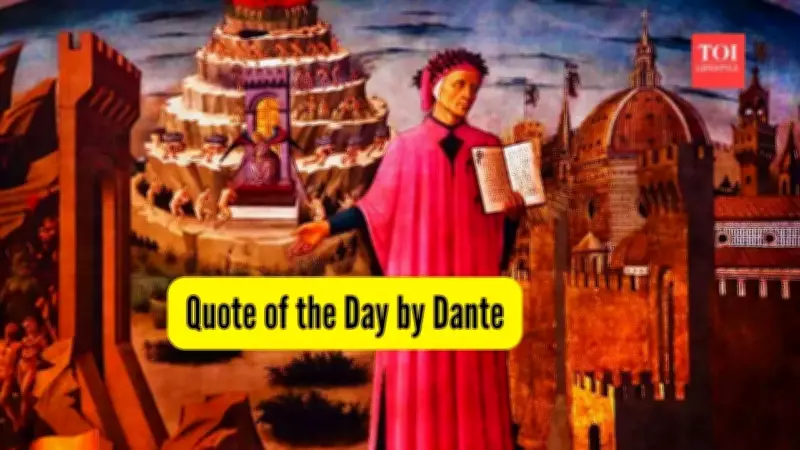
Dante Alighieri: The Visionary Poet Who Shaped Italian Culture
Dante Alighieri stands as one of the most pivotal writers of the late Middle Ages, widely revered as the father of the Italian language. His profound influence extends far beyond literature, permeating philosophy, theology, and cultural thought to this day.
Early Life and Political Turmoil in Florence
Born in Florence in 1265, Dante grew up in a city bustling with commerce, politics, and artistic endeavors. The political landscape was marked by instability, with fierce power struggles between the Guelphs and Ghibellines. As a member of the Guelphs, who aligned with the Pope, Dante found himself embroiled in further divisions between the White and Black Guelphs. He sided with the White Guelphs, advocating against excessive papal influence in politics, a stance that would profoundly shape his destiny.
Beatrice Portinari: Muse and Spiritual Inspiration
Beatrice Portinari played a crucial role in Dante's life, becoming a symbol of divine love and spiritual inspiration in his works. Despite minimal personal interaction, her idealized presence is central to his early writing, notably in La Vita Nuova ("The New Life"), which marks the inception of his literary career.

Political Involvement and Exile
Dante was not only a poet but also an active participant in Florentine politics, holding several public offices, including the prestigious role of prior. However, in 1302, the Black Guelphs seized control of Florence with Pope Boniface VIII's support, forcing Dante into exile. This event irrevocably altered his life, leading to a nomadic existence across Italian courts, reliant on noble patronage, and he never returned to his homeland.
The Divine Comedy: A Masterpiece Born in Exile
During his exile, Dante composed his magnum opus, the Divine Comedy, an epic poem divided into three parts: Inferno, Purgatorio, and Paradiso. Written in Italian rather than Latin, it narrates a symbolic journey through Hell, Purgatory, and Heaven, guided first by the Roman poet Virgil and later by Beatrice. This work serves as both a personal spiritual quest and a broader commentary on politics, morality, and human nature.
Innovative Writing Style and Literary Contributions
Dante's choice to write in the Tuscan dialect of Italian was revolutionary, elevating the vernacular to a literary standard and influencing the development of modern Italian. He employed terza rima, a complex rhyme scheme (aba bcb cdc...), enhancing the musicality and structure of his poetry. His writing is characterized by vivid imagery, intense emotions, and deep philosophical insights.
In Inferno, for instance, Dante's depictions of Hell's punishments are unforgettable, each tailored to the sins of the damned through the principle of contrapasso, where punishment mirrors the sin. These imaginative descriptions made abstract theological concepts accessible and engaging to readers.
Interdisciplinary Influence and Lasting Impact
Dante's work seamlessly integrates classical literature, Christian theology, medieval philosophy, and science, reflecting influences from thinkers like Aristotle and Thomas Aquinas. This synthesis not only captures medieval thought but also transcends it, bridging the transition to Renaissance ideals by emphasizing personal experience and emotional depth.
The Divine Comedy is regarded as one of the greatest literary works ever written, inspiring countless writers, artists, and thinkers from Geoffrey Chaucer and John Milton to contemporary authors. Its cultural and religious impact is immense, with Dante's imaginative portrayals of the afterlife shaping modern perceptions of Hell more than official doctrines.
Legacy and Death
Dante died in Ravenna in 1321, still in exile from Florence. Posthumously, his legacy flourished, with Florence eventually recognizing his greatness and attempting to honor him, though his remains were never repatriated. Today, Dante Alighieri is celebrated not just as a poet but as a visionary who transformed language, literature, and cultural thought, with his works continuing to resonate in literary studies and explorations of the human condition.