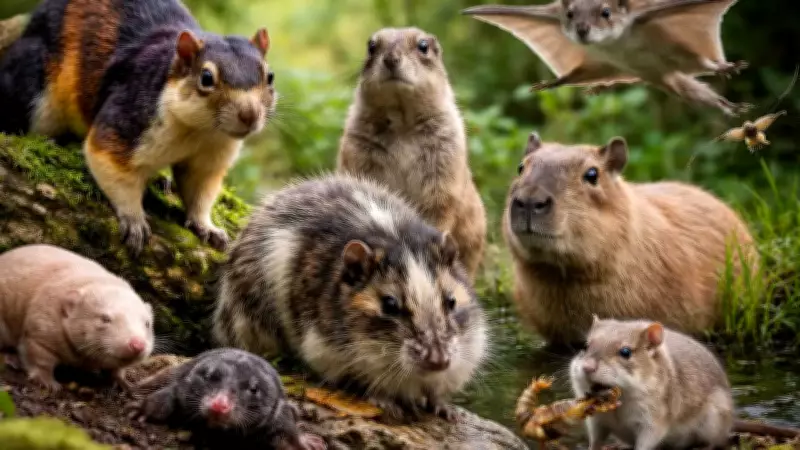
World's Deadliest Rat and 8 Bizarre Rodents That Defy Nature's Rules
Rodents are often dismissed as mere pests—rats rummaging through trash or mice hiding in corners. However, this perception barely scratches the surface of their incredible diversity. Across the globe, rodents have evolved in ways that are not only unexpected but downright astonishing, breaking every rule of nature with their unique adaptations and behaviors.
From gliding through forests to forming insect-like colonies, these creatures showcase a range of traits that challenge our understanding of the animal kingdom. Some are known for their bizarre appearances, while others exhibit extreme abilities, including one species regarded as the deadliest rat, capable of repelling even the most formidable predators like elephants with its potent poison.
Southern Grasshopper Mouse: The Fearsome Predator
The southern grasshopper mouse may be small, but it is a fierce hunter that defies typical rodent behavior. Unlike its plant-eating relatives, this rodent actively preys on insects, including scorpions. It possesses a high resistance to scorpion stings, allowing it to hunt and consume these dangerous creatures that other animals avoid. Its aggressive predatory nature makes it one of the most unusual rodents in the world.

Maned Rat: The Poisonous Defender
Often termed the deadliest rat, the maned rat employs a unique defense mechanism. Instead of producing its own poison, it chews on toxic plants and uses the poison to coat its hair. This adaptation makes it highly dangerous to predators, as even a small bite can release powerful toxins into their bodies. This is the only known case of a mammal using plant poison for self-defense, highlighting its exceptional and effective survival strategy.
Capybara: The Peaceful Giant
As the largest rodent in the world, the capybara is a peaceful and social creature that thrives in semi-aquatic environments. It prefers living near water and enjoys swimming, aided by webbed feet and sensory organs positioned high on its head to stay submerged. Known for its harmonious interactions with other animals, the capybara exemplifies a gentle yet adaptable lifestyle.
Shaw’s Jird: The Extreme Breeder
The Shaw’s jird, a desert-dwelling rodent, exhibits one of the most extreme forms of mating behavior. Studies have observed it mating hundreds of times in a short span, a necessity in harsh environments where survival is a constant challenge. This reproductive strategy ensures the continuation of the species under demanding conditions.
Ezo Flying Squirrel: The Gliding Acrobat
The Ezo flying squirrel doesn't actually fly but uses a flap of skin to glide through the air, an adaptation that helps it evade predators and navigate forests efficiently. Its large eyes support a nocturnal lifestyle, making it a master of nighttime movement and survival.
Gunnison’s Prairie Dog: The Social Communicator
Despite its name, the Gunnison’s prairie dog is a highly social rodent that lives in massive colonies. It derives its name from barking behavior used for sophisticated communication, reflecting a level of social organization uncommon in rodents. This complex interaction showcases their advanced communal structures.
Naked Mole-Rat: The Age-Defying Anomaly
The naked mole-rat is one of the strangest rodents, with a hairless, wrinkly appearance and a life spent underground. It defies typical mammalian traits by having low oxygen needs, an insensitivity to pain in certain situations, and a lifespan of up to 30 years. Its social structure, with a single breeding female similar to bees, adds to its uniqueness.
Star-Nosed Mole: The Sensory Specialist
The star-nosed mole is renowned for its extraordinary nose, equipped with 22 fleshy tentacles that enhance its sense of touch. This adaptation allows it to detect and consume prey rapidly in dark, underground environments, making it a marvel of sensory evolution.

Indian Giant Squirrel: The Colorful Canopy Dweller
Also known as the rainbow squirrel, the Indian giant squirrel stands out with its vibrant mix of reds, purples, and oranges. Nearly the size of a house cat, it lives in forest canopies, using agility to jump between trees. Its striking colors help break up its outline, providing camouflage rather than attracting predators.
These nine rodents illustrate the incredible diversity and adaptability of these often-overlooked animals, proving that nature is full of surprises that challenge our preconceptions.