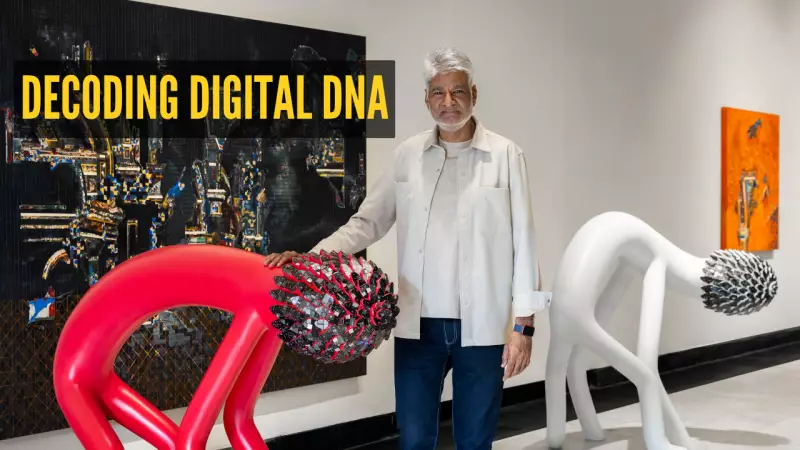
The art world witnessed a powerful conversation on technology, memory, and waste as artist Mukesh Sharma's exhibition, 'Decoding Digital DNA,' concluded in December 2025. Curated by Archana Khare Ghose, the show presented a stunning transformation of electronic debris into profound sculptural installations and textured paintings, challenging perceptions of value and obsolescence.
From Digital Junk to Poetic Artifacts
Sharma's labor-intensive process involved collecting discarded digital components—keyboard keys smoothed by use, stripped circuit boards, and redundant processors. He then meticulously cut, ground, arranged, and reassembled this e-waste. The result was artworks that felt tactile and almost bodily, carrying the silent imprints of human interaction. For Sharma, this material was never mere refuse. The worn keys held the physical memory of countless fingers, routines, and anonymous aspirations, transforming technological leftovers into an archive of human experience.
A Prophetic Look at Our Technological Past
In an age dominated by touchscreens, Sharma's focus on the physical keyboard feels significant. As these typing tools edge toward obsolescence, his art grants them an unexpected afterlife. The exhibition space itself acted as a 'pause button,' stripping the components of their inherent urgency and speed. "Keys lose language, circuits lose control, chips lose efficiency," Sharma explains. "But they gain fragility." This slowed-down state allowed stories of labor, ambition, and eventual decay to surface, narratives often erased in the relentless pursuit of the next upgrade.

Overwhelming Audience and Collector Response
The exhibition's impact was immediately evident. The opening preview saw nearly 50 percent of the works sold, a remarkable feat for a conceptually driven show. Sharma expressed humility at the reception, noting that his primary goal was to start a dialogue. The strong collector response indicated a growing public willingness to engage with uncomfortable questions about consumption, digital residue, and collective memory. The sales were seen as an affirmation that the work resonated on a deeper, emotional level beyond mere aesthetics.
Sharma's work consciously frames e-waste as a cultural and ethical issue. While the beauty of the pieces draws viewers in, the recognizable source material—the very debris of our daily digital lives—creates a sense of discomfort and implication. 'Decoding Digital DNA' ultimately asks us to reconsider our relationship with technology, urging a more conscious coexistence with the objects we create and discard, reminding us that even dead machines carry traces of human life.