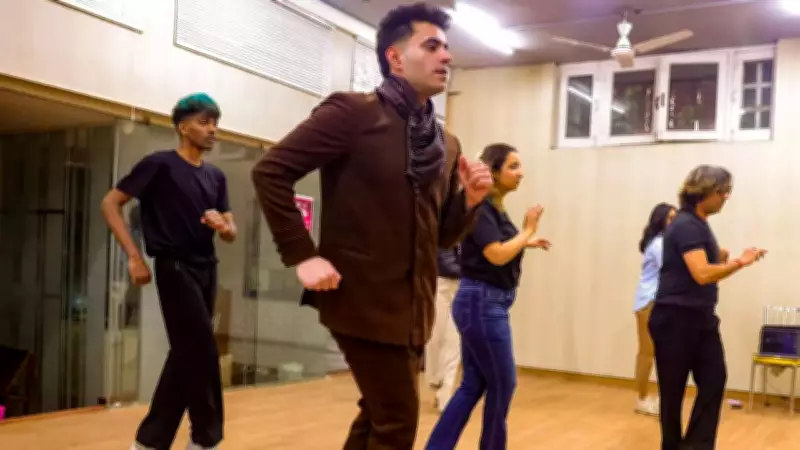
In an era marked by increasing urban loneliness and digital disconnection, forging meaningful relationships requires conscious effort. Yet, what if the path to genuine human connection could be paved with joy, rhythm, and movement? Delhi's burgeoning social dance scene is transforming this possibility into reality, welcoming everyone from complete beginners to experienced dancers into its inclusive fold.
Social Dancing: More Than Just Steps
Social dancing represents a unique fusion of movement and community, specifically designed to facilitate interaction and bonding. Unlike performance-oriented dance forms, its primary goal is connection rather than perfection. In Delhi, Latin dances such as salsa, bachata, and tango are at the forefront of this movement, attracting participants driven by curiosity, the desire to connect with partners, or simply to expand their social circles.
"Social dancing allows individuals to unwind, interact and build connections organically, making it both enjoyable and meaningful," explains Ravi Rastogi, founder of Moving Souls, a Latin dance academy in South Delhi.

The Allure of Latin Rhythms
The popularity of Latin dances in India's capital stems from a blend of emotional, social, and lifestyle factors. "They are becoming popular for a mix of reasons, especially in urban cities like Delhi. They're deeply social – unlike fitness classes, salsa and bachata create human connection. People meet, laugh, rotate partners, and feel part of something," notes Manasi Ajmani, founder of Delhi Bachata Company.
These dances offer a balanced experience of physical activity and interpersonal engagement. "Dance forms like salsa and bachata have gained popularity because they offer a perfect balance of movement and human connection," adds Ravi Rastogi.
Tango: A Dance of Passion and Expression
Among Latin styles, tango holds a special place for its artistic depth. Saket Prakash, a tango dancer who runs the community Tangoseeker, describes it as "an improvisational dance, allowing great creativity and freedom of expression, which makes it a lot of fun. It doesn't just look good, it feels good too."
He attributes its growing appeal in India to universal qualities: "Tango is gaining popularity in India for many of the same reasons it has won hearts around the world – for its passion, intensity, lyricism, and elegant beauty."
Personal Transformations Through Dance
For many participants, social dancing becomes a journey of personal growth and confidence-building. Nikita Khosla, a 24-year-old psychologist who recently started learning salsa, shares her initial apprehensions: "I was nervous at first but as I started going to classes regularly, I grew more comfortable with the people around me and realised that they were there to learn too."
She finds dance to be a therapeutic escape: "It is my space, free of worries and woes. I practice mindfulness through dance, it brings you to the here and now, where one should be."
Jijin Joseph, a 23-year-old master's student who moved to Delhi, discovered both challenge and reward in social dance: "Having danced before, I came with enthusiasm but slowly learned how challenging social dance can be because you have to take care of your partner and synchronise with them while maintaining the flow of the dance." He admits that dancing with women was initially outside his comfort zone, but emphasizes that "communication and practice make all the difference."
Deeper Motivations Behind the Movement
While fun and relaxation are significant draws, participants often seek more profound benefits. Ravi Rastogi observes: "Most of my students share that while they want to add a new skill to their lives, they also hope to meet new people. Dance brings a sense of fluidity that naturally builds confidence. It also helps them break monotony, express themselves more freely, and feel a deeper sense of connection, both with themselves and with others."

Creating Safe and Respectful Spaces
A crucial aspect of Delhi's social dance scene is its emphasis on consent and respectful interaction. Divieta Sahajwala, a 32-year-old professional performer with seven years of experience in salsa and bachata, highlights this priority: "In social dance environments, people are respectful and safe. Teachers and organisers are very attentive about behaviour and make it clear that nonconsensual touch is a definite no. It also helps instill respect by desensitising people from looking at bodies as sexual objects."
She believes these practices extend beyond the dance floor: "Social dances enhance your ability to connect with people. It fosters a healthy attitude towards partnership, communication and collaboration. It's truly one of the best activities one can pick up."
As Delhi continues to navigate the complexities of urban life, its social dance communities offer a rhythmic antidote to isolation. Through shared steps and synchronized movements, participants are not just learning dances – they are building bridges across the urban divide, one connection at a time.