Supreme Court Mandates Voter Verification Procedure for Tamil Nadu Electoral Roll Revision
The Supreme Court of India issued significant directives on Thursday concerning the verification of voters during the Special Intensive Revision of electoral rolls. A bench comprising Chief Justice Surya Kant and Justice Joymalya Bagchi instructed the Election Commission to implement a specific court-directed procedure in Tamil Nadu for handling voters flagged under the 'logical discrepancy' category.
Court's Detailed Directions for Voter Verification Process
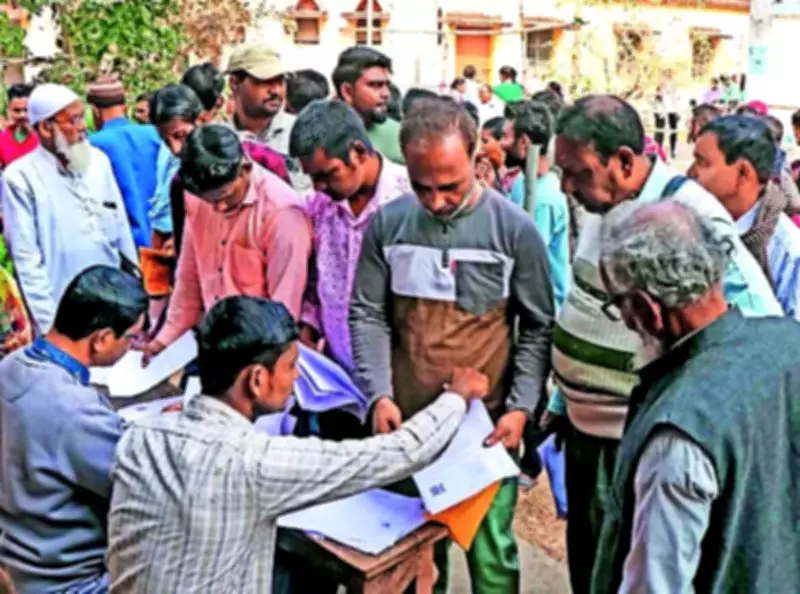
The bench, while hearing petitions filed by politicians from the ruling DMK party, outlined a comprehensive procedure to ensure transparency and fairness. According to the court's directions, the names of voters categorized under 'logical discrepancies' by the Election Commission must be publicly displayed at various locations including public places, panchayat offices, and taluk offices.
The display must include clear reasons for the categorization along with detailed information about the documents required from the affected voters to resolve their status. The court emphasized that officials receiving documents from voters must issue proper receipts as acknowledgment, establishing a formal paper trail for the verification process.

Operational Framework and State Government Responsibilities
The Supreme Court specified that hearings for the inclusion of names in electoral rolls would be conducted at the taluka level, ensuring accessibility for affected citizens. The bench directed the Tamil Nadu government to provide adequate administrative staff to the Election Commission to facilitate the smooth implementation of this verification exercise.
Voters have been granted a ten-day window to submit necessary documents following the public display of the list by the Election Commission. This timeframe aims to balance administrative efficiency with citizens' right to adequate response time.
Security Measures and Election Commission's Request for Nationwide Implementation
Recognizing the sensitive nature of electoral roll revisions, the Supreme Court instructed the Director General of Police, Superintendents of Police, and district collectors to ensure that no law and order situations emerge that could potentially disrupt the Special Intensive Revision exercise.
This comprehensive directive prompted Election Commission counsel and senior advocate D S Naidu to request the Supreme Court to extend the order to all states where Special Intensive Revision of electoral rolls is currently being carried out. In its formal order, the bench recorded: "We expect the EC to comply with these directions on a pan-India basis," indicating the court's preference for uniform implementation across the country.
Constitutional Challenge to Special Intensive Revision Procedure
In a separate but related hearing, the Chief Justice-led bench concluded proceedings on the constitutional validity challenge to the Special Intensive Revision process. This electoral roll revision was first implemented in Bihar before being extended to twelve other states, with hearings spanning three months that featured contrasting arguments from the Election Commission and petitioners.
Representing the Association for Democratic Reforms, advocate Prashant Bhushan argued that the Election Commission cannot remove individuals from voter lists if they provide self-declarations claiming Indian citizenship. He further contended that if anyone objects to a voter's citizenship status, the burden of proof should fall on the complainant to produce evidence, specifically suggesting they should obtain voter lists from Bangladesh to substantiate claims about alleged illegal migrants.
The bench responded with skepticism to this proposal, noting the practical impossibility of obtaining foreign voter lists containing names of individuals allegedly appearing on Indian electoral rolls. This exchange highlighted the complex legal and practical challenges surrounding citizenship verification during electoral roll revisions.