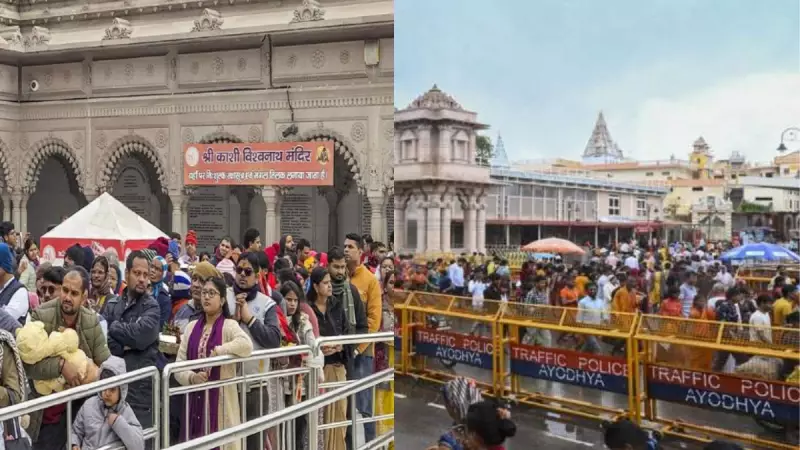
The dawn of the Gregorian New Year 2026 was marked not by raucous parties, but by a profound spiritual surge across India. Lakhs of devotees thronged to the country's most revered religious sites, seeking divine blessings for the year ahead. The ancient city of Kashi (Varanasi), the newly consecrated Ram Temple in Ayodhya, and other sacred spots became epicenters of faith and devotion on Wednesday, January 1st, 2026.
A Spiritual Spectacle in the Holy Cities
In Varanasi, the Kashi Vishwanath Temple witnessed an unprecedented influx of pilgrims from the early hours of the morning. The temple precincts, expanded and renovated in recent years, were filled to capacity as devotees queued for hours to offer prayers to Lord Shiva. The atmosphere was charged with chants of "Har Har Mahadev," creating a powerful and unifying spiritual energy. Authorities had made elaborate arrangements, including extensive security and crowd management measures, to ensure a smooth and safe darshan for the thousands who had gathered.
Similarly, in Ayodhya, the beginning of 2026 held special significance as it was the first New Year celebration after the historic consecration of the Ram Temple. Devotees from across the nation poured into the temple town to offer prayers to Ram Lalla. The temple complex, adorned with festive decorations, saw continuous streams of visitors. The event also coincided with the upcoming festival of Makar Sankranti on January 14, 2026, adding to the devotional fervor as many began their spiritual preparations for the auspicious harvest festival.

Nationwide Devotional Wave
The spiritual wave was not confined to Uttar Pradesh. Major religious centers across the country reported heavy footfall. In Karnataka, the Dharmasthala Manjunatha Temple and the Kateel Durga Parameshwari Temple saw massive congregations. In Gujarat, temples in Dwarka and Somnath were key destinations. In the south, the Tirumala Venkateswara Temple in Tirupati and the Sabarimala temple in Kerala (open for the Makaravilakku season) were also major focal points for devotees choosing to start the year with pilgrimage and prayer.
This collective turn towards temples highlights a growing trend of marking the calendar New Year with traditional and spiritual practices rather than solely secular celebrations. For many Indian families, the day represented an opportunity to combine gratitude for the year past with prayers for health, prosperity, and peace in the year to come.
Administrative Preparedness and Cultural Significance
The local administrations and temple trusts in all these cities were fully prepared for the large gatherings. Key measures included:
- Enhanced security deployment and CCTV surveillance.
- Special queue management systems and separate lines for the elderly and disabled.
- Arrangements for free food and water (prasadam and jal) for devotees.
- Traffic diversions and special parking zones to manage the vehicular influx.
The day underscored the deep-rooted cultural fabric of India, where modernity and tradition seamlessly blend. Choosing to welcome 2026 in the sanctum of ancient temples reflects a desire to anchor the future in timeless spiritual values. The scenes from Kashi, Ayodhya, and beyond presented a powerful narrative of faith, resilience, and collective hope as the nation stepped into another year.