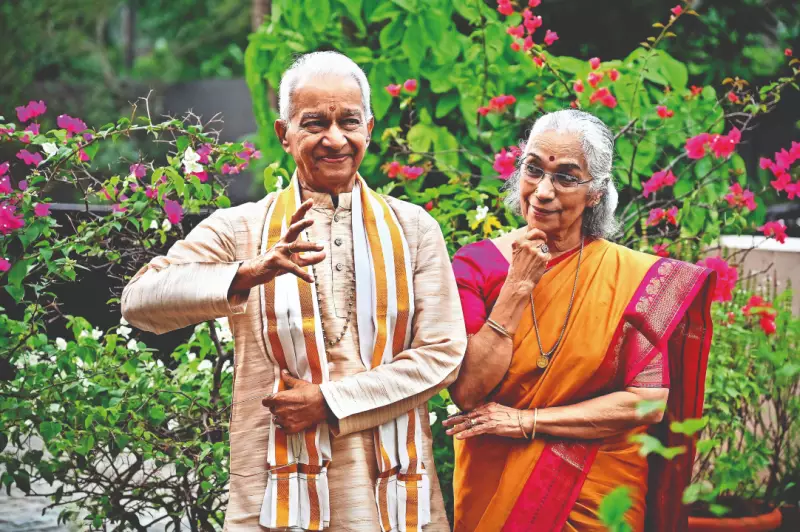
For legendary dancers V.P. Dhananjayan and Shantha Dhananjayan, the famed Margazhi music and dance season in Chennai evokes mixed feelings. While the city buzzes with cultural activity, the duo observes a significant shift. They note that the season's original devotional fervor has diminished, giving way to a more commercial atmosphere. The true joy for them lies in the opportunity to reconnect with peers and engage in meaningful dialogues about dance and music.
From Kalakshetra's Gruelling Days to Evolving Teaching Methods
The couple's artistic journey is deeply rooted in the hallowed halls of Kalakshetra. Shantha, with Malaysian roots, and Dhananjayan, hailing from Payyanur in Kerala, found a common language in Malayalam and a shared destiny in dance. Dhananjayan's father, facing financial constraints, sent him to learn Kathakali under 'Asan' T.K. Chandu Panikkar, which eventually led him to Kalakshetra.
Their training under the visionary Rukmini Devi was intense and instilled unparalleled discipline. "Art taught us discipline," Dhananjayan recalls. However, they acknowledge that the traditional gurukulam system has transformed. Today, with academics taking precedence for most students, classical dance forms like Bharatanatyam or Kathakali are often just an optional pursuit. The artists admit that the level of strictness they endured is no longer feasible, as students might simply stop attending classes.

A Global Stage, A Painful Departure, and Art's Financial Reality
Their artistry has taken them across the globe, from embassy events to small-town stages. One of Dhananjayan's most memorable performances was a piece depicting a pregnant deer in agony, surrounded by perils. A Canadian gynaecologist in the audience later expressed amazement at how a man could so powerfully convey the pain of childbirth.
Their exit from Kalakshetra remains a poignant chapter. Dhananjayan, vocal about inequalities and poor salaries, was asked by Rukmini Devi to leave after a heated discussion. Shantha followed a few years later. "The folly of our society is that art never pays," Dhananjayan states emphatically. He highlights how entire ancillary industries—from ghungroo and costume makers to musicians and cinema dancers—thrive because of classical dance, yet the art form itself lacks adequate institutional support.
After leaving, Dhananjayan faced financial hardship. Married with a child and responsibilities towards his parents in Kerala, he took a clerical job at the TTK Group, where he befriended satirist Cho Ramaswamy.
Principles, Legacy, and Addressing Contemporary Challenges
Their principles remained unwavering. When former Chief Minister J. Jayalalithaa's mother, Sandhya, approached Dhananjayan to teach her daughter at home, he politely declined, sticking to his rule that students must come to his school, Bharata Kalanjali. The institution takes pride in having taught many top film actors.
Regarding the recent sexual harassment complaints at Kalakshetra, the couple expressed shock and believed the situation needed more sensitive handling. They also reflected on their own chaste courtship within the campus, which was a topic of discussion but conducted with decorum.
Dhananjayan, renowned for his punctuality and once called "Mr. Sharp," famously never waited for latecomers, including icons like actor Sivaji Ganesan and former CM M. Karunanidhi, who both respected his discipline. He credits this value for eventually making sabhas start their events on time.
While Dhananjayan's name was once considered for the director's post at Kalakshetra, he chose to focus on Bharata Kalanjali. Today, Shantha remains immersed in teaching with unwavering dedication, while Dhananjayan continues to nurture ambition for the art form. Together, they represent a living bridge between Kalakshetra's legendary past and the evolving future of Indian classical dance.