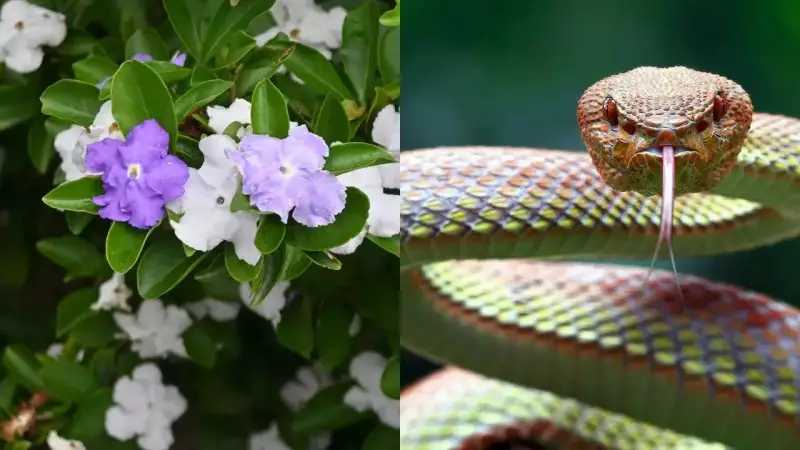
In countless Indian neighbourhoods, the Raat Rani plant, known for its intoxicating nocturnal fragrance, finds itself at the centre of a persistent and divisive belief. This night-blooming shrub is either lovingly planted near windows to perfume the evening air or is vehemently avoided due to a deep-seated fear: the idea that its scent attracts snakes. This notion, passed down through generations via family advice and local gardening lore, has shaped gardening choices for years, often without any scientific scrutiny.
The Root of the Fear: Coincidence and Folklore
The fear linking Raat Rani to snakes is powerful but largely unfounded. A significant part of this anxiety stems from timing. The plant, true to its name, blooms vigorously at night, with its scent intensifying after sunset. This is precisely when gardens grow quiet and human activity reduces, allowing imagination to fill the silence. When a snake is spotted in the garden during these hours, the conspicuously fragrant plant becomes an easy and immediate suspect. Over years, such coincidences have solidified into community-wide certainty.
Furthermore, the plant's typical placement adds to the misconception. Many gardeners plant Raat Rani near compound walls, fences, or in dim corners because it thrives there with minimal care. These very areas—edges, walls, and secluded spots—are natural pathways and hiding places for snakes seeking cover. When a snake is seen near the plant, the visual connection feels obvious, though the location is the real common factor, not the plant species itself.

What Actually Attracts Snakes? Food and Shelter, Not Fragrance
To understand the reality, one must look at snake behaviour. Snakes are predators driven by basic needs: food, shelter, and moisture. They do not hunt by tracking floral scents. Their world is guided by heat, vibrations, and the chemical cues of their prey—primarily rodents, frogs, and lizards.
The intense fragrance of Raat Rani has a single biological purpose: to attract night pollinators like moths. While insects swarm to the scent, and smaller predators that eat those insects may follow, the plant itself is not a food source for snakes. A snake passing through a garden where Raat Rani is blooming is likely there because the environment supports its prey, not because it is drawn to the flowers.
Gardens that are cluttered, overgrown, or poorly maintained are far more inviting to snakes. Piles of leaves, unused pots, stacks of bricks, compost heaps, and thick grass offer perfect hiding spots. Stagnant water attracts frogs, and poor waste storage attracts rodents. Once this ecosystem of prey is established, snakes may enter the scene. Removing a single Raat Rani plant does nothing to address these core attractants.
Growing Raat Rani Safely: Focus on Garden Hygiene
The good news for gardening enthusiasts is that Raat Rani can be grown safely and enjoyed without fear. The key lies not in banning the plant but in intelligent garden management. A clean, open garden is inherently less attractive to snakes than a messy one, regardless of the plants grown.
To minimise risks, keep the soil around the plant clear and trim nearby vegetation to reduce insect buildup. Ensure good lighting in garden corners, as snakes prefer darker areas. Regularly sweep fallen leaves and avoid accumulating clutter near walls and fences. Consider placing Raat Rani in a well-ventilated, visible spot like a balcony or terrace pot, where many people grow it successfully without any snake encounters. This practice alone proves the plant is not the decisive factor.
The seasonal overlap also fuels the myth. Snakes are more active during warmer months and the monsoon, which coincides with Raat Rani's peak blooming period. Both are responding to the same weather patterns, not to each other.
Why Does This Garden Myth Persist So Stubbornly?
Such myths endure because they feel protective and offer a simple solution. Avoiding a specific plant seems easier than undertaking the continuous effort of maintaining a clean, clutter-free garden. When advice comes from respected elders or neighbours, it carries significant emotional weight. Repetition over time replaces evidence, and the plant's dramatic, night-time persona only cements its eerie reputation.

However, decisions based on fear often miss the ecological reality. Snakes are a natural part of the environment in many Indian regions. Their presence is dictated by habitat suitability, not by flowering plants. Debunking this myth is crucial, as it reduces unnecessary anxiety and promotes healthier, more responsible gardening practices overall.
In conclusion, Raat Rani does not attract snakes into home gardens. The long-standing belief is a product of coincidence, timing, and folklore, not animal behaviour. Snakes seek food, shelter, and moisture—not fragrance. A well-maintained garden with Raat Rani poses no greater risk than any other garden. With sensible care and cleanliness, this plant can remain what it was always meant to be: a beautiful, night-blooming source of enchanting fragrance, not a hidden danger.