Ellora Caves: A Timeless Marvel of Ancient Indian Art and Architecture
The Ellora Caves, nestled in the Sahyadri hills of Maharashtra, stand as a monumental testament to India's unparalleled artistic and architectural prowess. This UNESCO World Heritage Site, dating back to the 6th to 10th centuries CE, represents a unique confluence of Hindu, Buddhist, and Jain traditions, carved meticulously from solid basalt rock.
A Symphony of Religious Harmony
What sets Ellora apart is its remarkable representation of three major religions within a single complex. The caves are divided into three distinct groups: 1-12 are Buddhist, 13-29 are Hindu, and 30-34 are Jain. This arrangement not only showcases the religious diversity of ancient India but also highlights a period of peaceful coexistence and mutual artistic influence.
Architectural and Artistic Brilliance
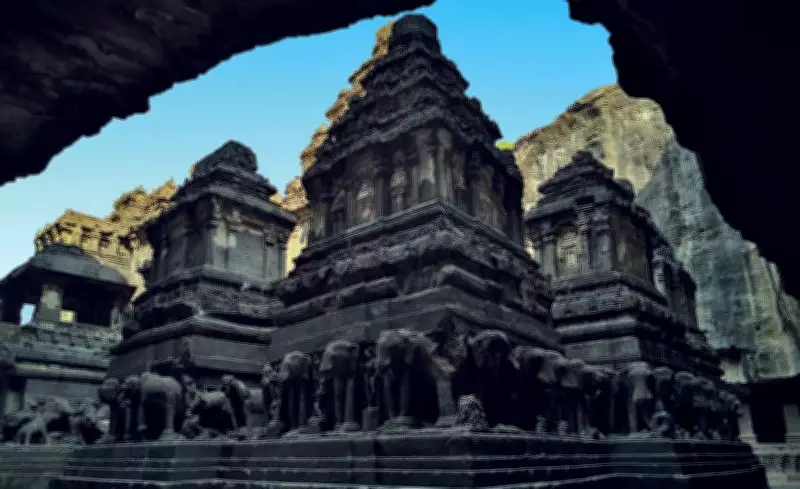
The most iconic structure at Ellora is the Kailasa Temple (Cave 16), a colossal monolithic temple dedicated to Lord Shiva. Carved from a single rock, it is considered one of the largest monolithic structures in the world. The temple's intricate carvings depict scenes from Hindu epics like the Ramayana and Mahabharata, showcasing the exceptional skill of ancient artisans.

Key features of Ellora's architecture include:
- Elaborate facades with detailed sculptures of deities, mythological figures, and floral motifs.
- Spacious prayer halls (chaityas) and monasteries (viharas) in the Buddhist caves.
- Exquisite Jain caves with finely carved Tirthankara images and ornate ceilings.
- Advanced engineering techniques for rock excavation, ventilation, and water management.
Historical and Cultural Significance
Ellora served as a major trade and pilgrimage center during its heyday, attracting scholars, monks, and travelers from across Asia. The caves provide invaluable insights into the socio-religious dynamics, artistic styles, and technological advancements of medieval India. They reflect the patronage of various dynasties, including the Rashtrakutas, Chalukyas, and Yadavas.
The preservation of Ellora is crucial for understanding India's cultural evolution and promoting heritage tourism. Ongoing conservation efforts by the Archaeological Survey of India (ASI) aim to protect this site from natural erosion and human-induced damage.
Visitor Experience and Global Recognition
Today, Ellora attracts thousands of domestic and international tourists annually. The annual Ellora Festival of Music and Dance, held against the backdrop of the caves, celebrates India's rich cultural traditions. As a UNESCO site since 1983, Ellora continues to inspire awe and admiration, reinforcing India's position as a cradle of civilization and artistic innovation.
In conclusion, the Ellora Caves are not just a collection of rock-cut monuments but a living legacy of India's spiritual and artistic heritage. They remind us of the timeless human endeavor to create beauty and meaning through stone, standing as a beacon of cultural harmony and architectural genius for generations to come.