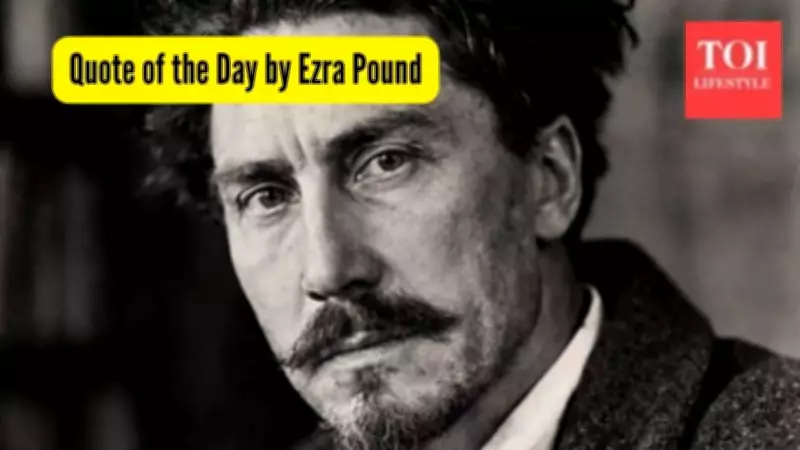
Ezra Pound: The Architect of Modernist Literature
Ezra Pound stands as one of the most significant and contentious literary figures of the 20th century, a multifaceted force who shaped modernist literature through his poetry, criticism, editing, and cultural advocacy. His reputation extends far beyond his own creative output, encompassing his remarkable ability to identify and cultivate emerging literary talent that would define an era.
Early Life and Formative Years
Born on October 30, 1885, in Hailey, Idaho, Ezra Pound spent his childhood primarily in Pennsylvania after his family relocated. His father's position at the U.S. Mint provided stability, but Pound's true passion emerged early through voracious reading and linguistic curiosity. He pursued higher education at the University of Pennsylvania and Hamilton College, where he developed profound interests in poetry, classical literature, and Romance languages. Even as a student, Pound harbored unwavering confidence in his destined greatness as a poet, a conviction that would propel his unconventional career path.
The European Odyssey and Literary Revolution
After brief stints in teaching that left him disillusioned with academic life, Pound made the pivotal decision to move to Europe in 1908, recognizing London as the cultural epicenter of literary innovation. He immersed himself in avant-garde circles where experimental writers were actively rejecting Victorian conventions in poetry and fiction. Pound rapidly emerged as a central figure in these movements, becoming their most vocal proponent and organizer.

During his London years, Pound forged transformative relationships with literary giants including T.S. Eliot, James Joyce, and W.B. Yeats. His role transcended mere friendship; he became their mentor, promoter, and editor. Pound's editorial contributions to T.S. Eliot's The Waste Land proved particularly consequential, with his structural and stylistic suggestions helping shape what would become a cornerstone of modernist poetry.
Imagism and Literary Innovation
Pound's most enduring contribution came through his leadership of the Imagist movement, which championed clarity, precision, and vivid visual imagery in poetry. Imagist principles rejected verbose descriptions and emotional excess in favor of concise, direct language that created powerful mental pictures. His iconic two-line poem "In a Station of the Metro" perfectly embodies this aesthetic, comparing faces in a subway crowd to "petals on a wet, black bough."
Beyond Imagism, Pound actively promoted Vorticism, another modernist movement seeking to capture the dynamic energy of contemporary life. He believed literature must reflect the technological and social transformations of the 20th century, encouraging writers to experiment with form and challenge traditional narrative structures.
The Magnum Opus: The Cantos
Pound's ambitious lifelong project, The Cantos, represents his most complex literary achievement. This sprawling, challenging epic poem attempts nothing less than a poetic synthesis of human civilization, weaving together ancient cultures, historical figures, and modern society into a dense tapestry of references and allusions. While notoriously difficult, The Cantos demonstrates Pound's extraordinary intellectual range and his attempt to create a comprehensive cultural history through verse.
Enduring Legacy and Philosophical Insight
Ezra Pound's legacy encompasses both his creative works and his catalytic influence on modernist literature. His willingness to champion experimental approaches, mentor emerging writers, and push literary boundaries established him as a central architect of 20th century literary innovation.
One of Pound's most famous quotations reveals his philosophical approach to conviction and action: "If a man isn't willing to commit to risking his opinions, either his opinions are no good or he's no good." This statement emphasizes the essential connection between belief and courage, suggesting that genuine conviction requires willingness to face criticism and consequences. The quote challenges individuals to demonstrate integrity through action rather than mere words, highlighting how personal character is revealed through what one is willing to sacrifice for principles.

This perspective extends to Pound's own controversial life, where his literary achievements remain inseparable from his contentious political stances during World War II. His complex legacy continues to spark debate about the relationship between artistic genius and personal responsibility, ensuring his place as one of literature's most fascinating and problematic figures.