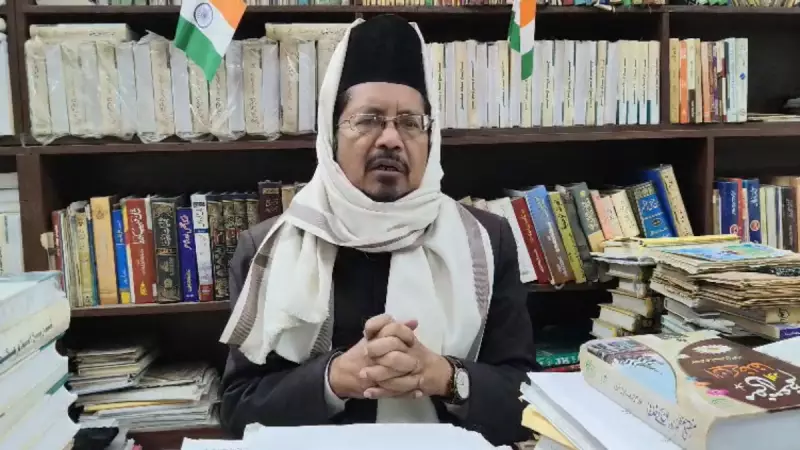
In a significant religious decree ahead of the New Year, the All India Muslim Jamaat has declared celebrations marking the occasion as impermissible under Islamic law. The organization's chief, Maulana Shahabuddin Razvi, issued a fatwa stating that participating in New Year festivities is 'haram' or forbidden according to Sharia principles.
The Fatwa and Its Religious Reasoning
Maulana Shahabuddin Razvi, a prominent Islamic scholar and leader, released the fatwa on December 29, 2024. The edict is directed at the Muslim community across India. It explicitly prohibits participation in events commonly associated with New Year's Eve and New Year's Day.
The fatwa identifies specific activities that Muslims should avoid. These include attending late-night parties, engaging in dance and music events, and using fireworks. The religious ruling is based on the interpretation that such celebrations are not part of Islamic tradition and may involve un-Islamic elements. The decree emphasizes that Muslims should instead engage in prayers and religious remembrance.

Community Guidance and Expected Conduct
The All India Muslim Jamaat has provided clear guidance to the community following the fatwa. The organization has urged Muslims to refrain from all forms of New Year revelry. This advisory extends to social behaviors often seen during the period.
The fatwa strongly advises against the exchange of gifts and greetings specifically for the New Year occasion. It also calls on Muslims to discourage their family members, particularly children and youth, from participating in such celebrations. The focus, as per the decree, should remain on Islamic duties and spiritual practices.
Context and Potential Implications
This fatwa arrives just before the global transition into the year 2025. It highlights the ongoing dialogue within communities about balancing religious observance with contemporary social practices. The ruling by the All India Muslim Jamaat is likely to influence the plans of many observing Muslim families and individuals across the country.
The issuance of such a decree ahead of a major calendar event underscores the organization's aim to provide religious clarity. It serves as a reminder of the Sharia perspective on festivals and celebrations not rooted in Islamic faith. The fatwa's impact will be seen in how the community navigates the social atmosphere of the New Year period while adhering to this religious guidance.
As the New Year approaches, this development adds a significant dimension to the public discourse on religion, culture, and celebration in India's diverse social fabric.