Ludhiana Shifts to Eco-Friendly Flower Holi Amid Health Concerns
As the vibrant festival of Holi approaches this Wednesday, a significant trend is emerging in Ludhiana. Many temples, housing societies, and individual families are opting for flower-based celebrations instead of traditional chemical colors. This shift is primarily driven by growing awareness of the skin problems and health hazards associated with synthetic Holi colors.
Temples Lead the Way with Floral Celebrations
Several prominent temples in Ludhiana are at the forefront of this eco-friendly movement. Govind Godham, ISKCON temple, and Krishan Balram Gaushala are among those organizing special floral Holi events this year. Sunder Das Dhamija from Govind Godham explained that their temple will feature a "phool bangla" (flower palace) where devotees will play Holi exclusively with flowers, as chemical colors are strictly prohibited on the premises.
"We expect to use more than one quintal of flowers for the celebrations," Dhamija stated. However, he openly acknowledged the disposal challenge, admitting that there is no established system to process the floral waste afterward. Currently, the temple simply hands over the used flowers to garbage collectors.

Residents Embrace the Trend for Health and Celebration
The trend is not limited to religious institutions. Many residents are enthusiastically adopting flower Holi in their personal celebrations. Toni Kalia of South City shared that his family has switched to flowers because chemical colors are harmful and can take days to wash off. "This Holi holds special significance as it's the first after my son's wedding, so our celebrations will be particularly grand," he added.
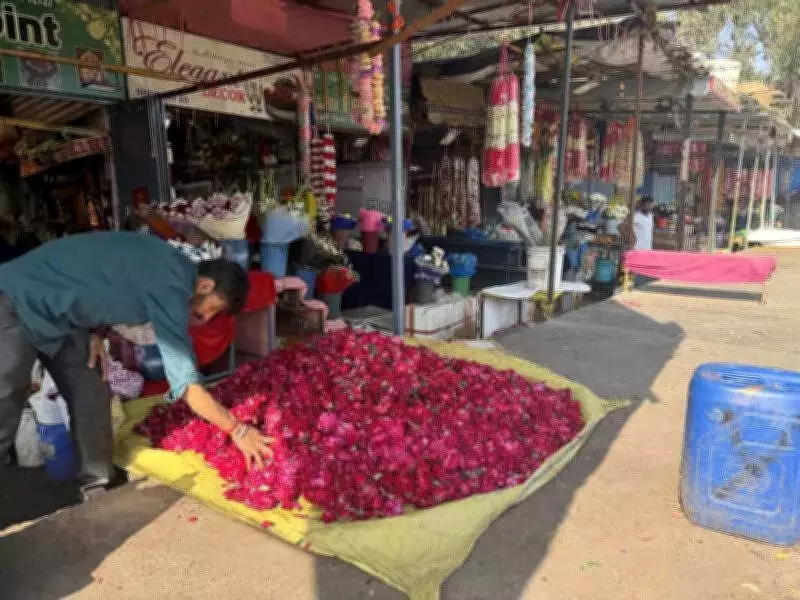
Flower sellers in the city have confirmed a noticeable surge in demand. Surinder Saini, president of the local flower sellers association, noted that flowers are typically not in high demand during this period. "But for the past five to six years, flower Holi has become a definite trend. Temples and residents from various areas now purchase flowers in advance for the festival," he explained.
The Unresolved Challenge of Floral Waste Management
Despite the growing popularity of flower Holi, the disposal of floral waste remains a significant environmental concern. Approximately eighteen months ago, the Ludhiana Municipal Corporation conducted a survey and held meetings with temple managements and marriage palace owners to develop a plan for handling floral and coconut waste.
The civic body had hoped to receive funding under the Swachh Bharat Mission to address this issue. An MC official revealed that initial plans included setting up a small plant at the Jamalpur dump site to convert floral waste into incense sticks. Machinery for processing coconut waste into rope was also considered. Unfortunately, lack of concrete planning and execution has stalled these proposals.
Learning from Other Cities' Solutions
Other Indian cities have successfully implemented floral waste management systems that Ludhiana could potentially emulate. In cities like Nagpur, Varanasi, and Ujjain, floral waste is systematically collected and converted into useful products such as incense sticks, manure, and other biodegradable items.
Environmental activists emphasize that processing such waste is far superior to dumping it into water bodies or landfill sites. They argue that proper waste management would not only address environmental concerns but could also create economic opportunities through the production of value-added products from what is currently considered waste.
As Ludhiana prepares for a colorful yet eco-conscious Holi, the contrast between the beautiful floral celebrations and the unresolved waste management issue highlights the need for sustainable solutions that match the community's environmental awareness.