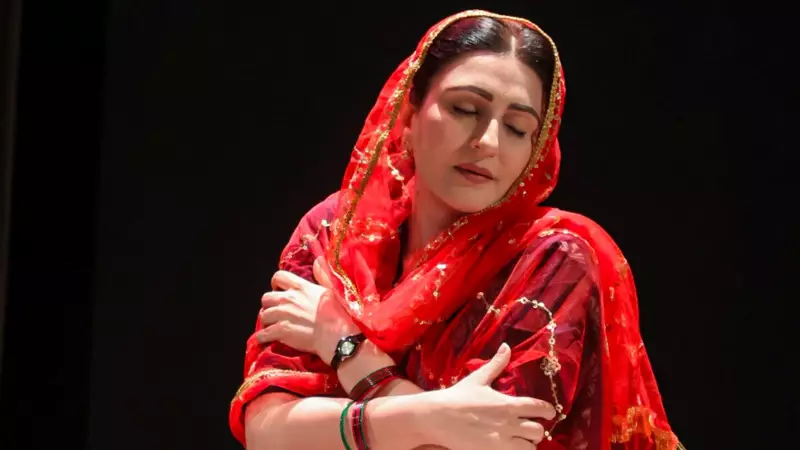
A powerful solo performance at the ongoing Jashn-e-Rekhta festival is bringing to light the extraordinary yet largely forgotten life of Urdu writer Razia Sajjad Zaheer and her progressive husband, Sajjad Zaheer. The play, titled Ek Lamhaa Zindagi – A Love Story (1938-1979), is presented by the Ekjute Theatre Group and stars their granddaughter, actor Juhi Babbar Soni.
The Forgotten Literary Luminary
The narrative opens with Razia, portrayed by Juhi Babbar Soni, as an Urdu teacher in Lucknow, lamenting the decline of the language among the youth. A prodigy who began writing short stories at the age of nine, Razia Sajjad Zaheer centered strong female protagonists in her work. Despite winning prestigious accolades like the Uttar Pradesh Sahitya Akademi Award and the Soviet Land Nehru Award, her name remains obscure outside circles of dedicated Urdu literature enthusiasts. She was also a committed member of the Progressive Writers’ Association.
While some may recognize her as the mother-in-law of actor-politician Raj Babbar, the depth of her own story and the revolutionary support of her husband have faded from public memory.

A Partnership Ahead of Its Time
The play powerfully highlights the role of her husband, Sajjad Zaheer, an Oxford-educated lawyer and son of a former Chief Justice. A passionate Communist and lover of Urdu poetry, he was a pillar of support who actively encouraged Razia's writing and independence. One poignant scene dramatizes their return to Lucknow by train after their wedding in Ajmer. As Razia reaches for her burqa upon arrival, Sajjad stops her, offering his hand instead. “Laao, apna hath mere hath mein de do (Give me your hand),” he says, leading her off the train unveiled—a bold act that scandalized society, including his own mother.
Their life took a dramatic turn during the Partition. Sajjad, who was in Punjab working for the Communist Party, was instructed to go underground and help form the Communist Party in what became Pakistan. He was subsequently imprisoned alongside poet Faiz Ahmed Faiz. Razia made the courageous decision to stay in India, raising their three daughters alone in the Lucknow home Sajjad had brought her to, and forging her identity through her writing during this crisis.
A Granddaughter's Tribute and a Fight for Homecoming
Juhi Babbar Soni, drawing from research and a book by her aunt Noor Zaheer titled Siyahi Ki Ek Boond, reveals the couple's intense bond. The play underscores that this is not just a personal love story but one entwined with the nation's tumultuous history. A significant episode involves Sajjad's eventual release from a Pakistani jail in January 1955, which was initially opposed by the Indian government. Razia, in a fierce display of determination, marched to Teen Murti Bhavan with her three daughters to secure Prime Minister Jawaharlal Nehru's intervention, ultimately ensuring her husband's return.
Director Makrand Deshpande praises Juhi's emotive and authentic portrayal, which transforms a daughter's perspective into a grand historical narrative. The performance at Jashn-e-Rekhta serves as a vital act of cultural recovery, reminding the audience of the progressive ideals and literary contributions that shaped a generation, yet risk being lost to time.