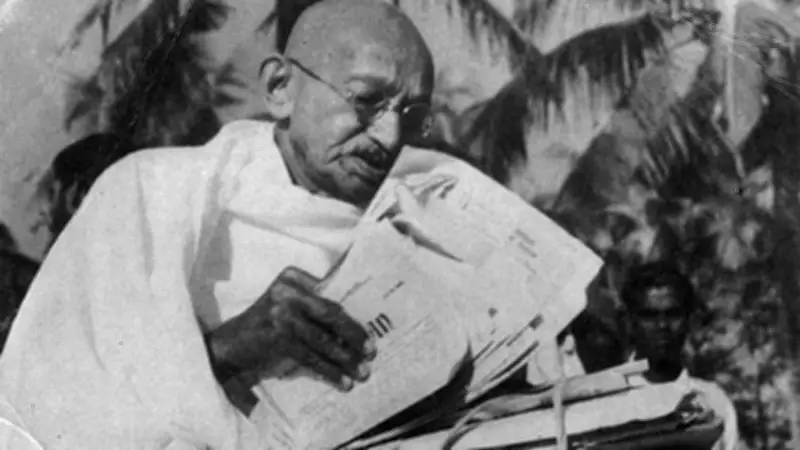
Gandhi's Prayer: A Beacon for Modern India
On January 30, 1948, a profound conversation unfolded between Mahatma Gandhi and American journalist Margaret Bourke-White. In the shadow of the atomic bomb's invention, Bourke-White questioned whether nonviolence had become irrelevant. Gandhi's response was unequivocal: "Nonviolence is now all that is left in the field." When pressed about what he would do if an atom bomb were about to fall on him, Gandhi declared he would not seek shelter but instead go outside, look up, and pray for the soul of the pilot.
The Enduring Significance of Gandhi's Final Moments
This exchange often provokes strong reactions. Some view it as making nonviolence inaccessible through extreme idealism, while materialists dismiss the realm of prayer as irrelevant. Yet, the events of that fateful day provide a powerful counterpoint. As Nathuram Godse fired his pistol at point-blank range, Gandhi's final words were "Hey Ram" – now inscribed on his memorial. Our ancestors who ensured this inscription understood something profound that transcends contemporary disputes.
The inscription challenges us to rise above partisan interpretations of "Ram" and recognize the spiritual essence, the bhava, that accompanied Gandhi's last breath. This matters today because it calls us to remember the depth of lived experience Gandhi inspired. Millions who mourned his death understood this intuitively – they recognized that his statement about praying for the pilot was entirely consistent with his life's philosophy.

Collective Mourning and Universal Prayer
The national response to Gandhi's assassination revealed the profound connection people felt with his teachings. American journalist Vincent Sheean documented one of the most touching manifestations during the journey of Gandhi's ashes to Allahabad. While crowds gathering at stations were expected, what struck Sheean was the continuous line of people waiting beside the tracks between stations – hands folded in prayer, paying silent tribute as the train passed.
This collective mourning demonstrated how Gandhi's message transcended religious and geographical boundaries. Sheean reported another poignant moment: as the procession carrying Gandhi's ashes passed a church, the sounds of his favorite hymn, "Lead, Kindly Light," wafted out. This interfaith tribute symbolized the universal appeal of Gandhi's spiritual guidance.
Rejecting Defeatism in Contemporary Times
The easiest and most defeatist approach today is to dismiss these moments as belonging to another era – a realm of goodness seemingly inaccessible to modern society. To succumb to this perspective would be self-destructive, cutting us off from wisdom that remains vitally relevant. Instead, we should hold these memories close, recognizing their continued significance.
Gandhi's example offers practical guidance for contemporary challenges:
- Transcending political polarization by focusing on spiritual essence rather than partisan interpretations
- Embracing nonviolence as a practical response to modern conflicts and weapons
- Cultivating personal prayer as a source of guidance in turbulent times
Whether or not we feel evolved enough to literally pray for those who might harm us, Gandhi reminds us that each of us possesses the capacity to seek guidance from the "Kindly Light." This isn't about religious dogma but about cultivating an inner compass that can navigate today's complex moral landscapes.
The Living Legacy of Ahimsa
Gandhi's prayer matters more than ever because it represents an active, engaged spirituality rather than passive resignation. His response to the atomic bomb question wasn't about surrendering to violence but about actively engaging with compassion even in the face of ultimate destruction. This approach remains relevant as India and the world confront new forms of conflict, polarization, and existential threats.

The writer, founder of the YouTube channel 'Ahimsa Conversations,' reminds us that Gandhi's legacy isn't confined to history books but lives in our capacity to choose light over darkness, understanding over judgment, and compassion over retaliation. In remembering Gandhi's prayer, we keep alive the possibility of a more humane world – one guided by the Kindly Light that transcends all divisions.