Plastic Rice Panic: Separating Viral Myths from Food Safety Facts
In the digital age, few food-related rumors have spread as rapidly or caused as much widespread anxiety as the alarming concept of "plastic rice." Every few months, social media platforms and messaging apps are flooded with dramatic videos showcasing grains that bounce unnaturally, melt under direct flames, or float suspiciously in water. These clips trigger fresh waves of concern and fear among consumers worldwide.
In countries where rice serves as a daily dietary staple, the very thought that something so fundamental and essential could be counterfeit feels deeply unsettling and threatening to food security. But is plastic rice actually a real, widespread threat? Or is it merely another internet-fueled myth driven by fear, misunderstanding, and sensationalism? Most importantly, how can everyday consumers determine whether the rice in their kitchen pantries is genuinely safe to eat? Let us meticulously separate established facts from pervasive fiction.
The Origins of the Plastic Rice Story
The plastic rice rumors first gained significant traction globally during the mid-2010s, primarily proliferating through social media channels and encrypted messaging applications. These claims were often loosely linked to broader narratives about counterfeit food products infiltrating local markets and supply chains.

Comprehensive investigations conducted by food safety authorities and regulatory bodies in several nations, including India, China, and various Southeast Asian countries, have generally concluded that there exists no credible evidence supporting the large-scale industrial production or commercial sale of synthetic "plastic" rice intended for human consumption.
What authorities have documented, however, are isolated incidents of food adulteration. These include practices like mixing lower-grade rice varieties with artificial binders for animal feed applications or using unauthorized polishing agents and chemicals to artificially enhance the visual appearance of grains. While these adulteration practices are illegal, unethical, and rightfully concerning, they are fundamentally different from manufacturing entire rice grains molded out of plastic polymers.
In summary, the notion of plastic being shaped into convincing, mass-market rice for everyday retail sale remains highly implausible from both economic and logistical perspectives, and it continues to lack support from any credible scientific or regulatory evidence.
Why People Mistakenly Believe Rice Contains Plastic
Several perfectly natural physical and chemical properties of rice can appear suspicious or alarming to consumers who are already anxious or primed by viral misinformation.
- When cooked rice cools, the starch within can harden, causing grains to exhibit a slight bounce if dropped on a surface.
- Certain rice varieties are naturally glossy or translucent in appearance. Highly polished white rice, in particular, may possess an unnaturally shiny surface due to processing.
- When exposed to an open flame, any organic food material, including rice, can melt, char, or produce residues that might visually resemble synthetic plastics.
These normal visual and textural quirks are frequently extracted from context, edited into short, dramatic video clips, and presented as "proof" of contamination, thereby transforming routine kitchen chemistry into something perceived as sinister.
Are Viral Home Tests for Plastic Rice Reliable?
This is where extreme caution becomes paramount. Many of the viral "tests" promoted online are scientifically unreliable or fundamentally misleading.
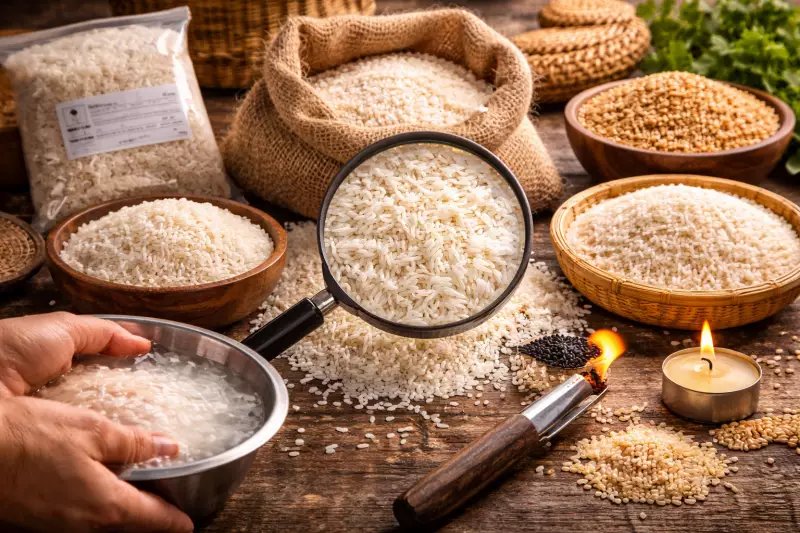
The Floating-in-Water Test: Authentic rice can either float or sink in water depending on multiple factors including the specific variety, grain age, and the presence of trapped air. Floating alone is not a definitive indicator of a fake product.
The Burning Test: Rice exposed to a direct flame will blacken and emit a characteristic burnt organic smell. Some observers misinterpret partial melting or the formation of hard residues as proof of plastic content, but this can simply be the result of caramelized starch.

The Crushing Test: Uncooked rice grains are naturally hard. If they do not powder easily between spoons or fingers, that does not automatically render them suspicious.
While these home experiments might raise initial questions, they cannot conclusively identify chemical composition or adulteration. Only professional laboratory analysis possesses the capability for definitive identification.
How to Recognize Good-Quality, Genuine Rice
Instead of relying on unreliable viral hacks, consumers should focus on practical, everyday checks that genuinely matter for food safety and quality.
- Check Packaging and Sourcing: Purchase rice from reputable, established brands or trusted local sellers with transparent supply chains. Look for securely sealed packages that display clear batch numbers, manufacturing dates, and valid food safety certifications. Exercise caution with loosely sold, unbranded rice where origin cannot be verified.
- Inspect the Grains Visually: Healthy, genuine rice grains are typically uniform in shape and size for their specific variety. They should not appear chalky, excessively powdery, or coated in strange, unidentified residues. While a small percentage of broken grains is normal, large quantities of dust or an unusual appearance are red flags.
- Smell the Rice: Fresh, authentic rice possesses a mild, neutral, or slightly earthy aroma. Sour, chemical, musty, or otherwise unnatural odors are significant warning signs, often indicating moisture damage, fungal growth, or other spoilage—issues unrelated to plastic but still rendering the rice unsafe for consumption.
- Always Wash Before Cooking: Rinsing rice thoroughly under clean water helps remove surface starch, dust, and any residual polishing agents. The water turning slightly cloudy is a normal and expected outcome.
- Conduct a Small Test Cook: If you have doubts, cook a small batch first. If the rice behaves wildly differently from your experience—remaining rock-hard after adequate cooking time, releasing strange colors into the water, or emitting an unnatural smell during cooking—do not consume it.
The pervasive notion of plastic rice flooding everyday consumer markets is largely a modern myth, amplified more by viral fear and compelling video content than by scientific proof or documented evidence. This does not imply that food adulteration never occurs; it certainly does, but it typically manifests in subtler, more economically viable forms than the fantastical idea of molding individual grains from plastic.
The best defense for consumers is not engaging in kitchen theatrics but adopting sensible buying habits, performing basic visual and olfactory inspections, and paying close attention to the rice's smell, texture, and cooking behavior. When something feels genuinely off or suspicious, trust that instinct and avoid consumption. Rice has nourished civilizations for millennia. With increased awareness, critical thinking, and reduced panic, you can continue to enjoy this vital staple with confidence and peace of mind.