George Eliot: The Unconventional Voice of Victorian England
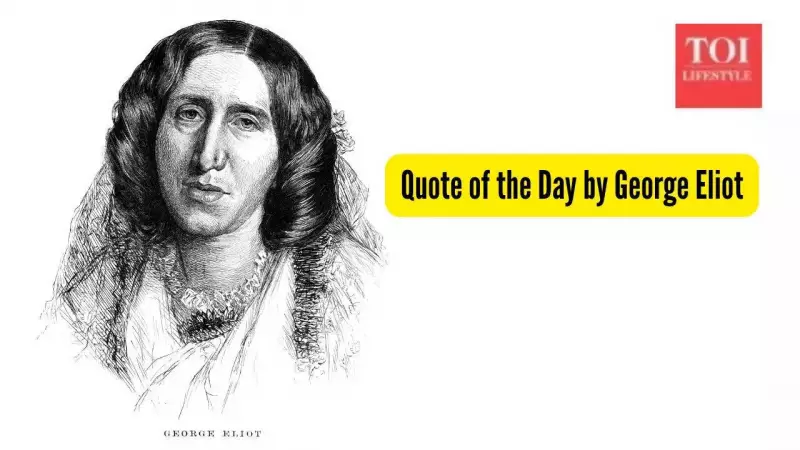
George Eliot stands tall as one of English literature's most celebrated novelists. She entered the world in 1819 as Mary Ann Evans but chose a male pen name to make her mark. Eliot was no ordinary Victorian lady writer. She carved her own path with fierce independence and intellectual depth.
From Rural Roots to Literary Fame
Her story began on a Warwickshire farm. Eliot grew up surrounded by muddy fields and the quiet rhythms of rural life. Her father worked as a land agent, instilling values of hard work over pretense. A voracious reader, she educated herself through books. Eliot shed the evangelical faith of her youth, developing a sharp, questioning mind instead.
By her thirties, she had transformed her life in London. Eliot worked as a translator and editor for the Westminster Review. There, she mingled with philosophers and radicals. Yet her true immortality came through fiction. She authored seven remarkable novels that examined ordinary lives with unflinching honesty.

A Life Defying Convention
Eliot adopted a male pen name for practical and personal reasons. It helped her books sell in a male-dominated world. More importantly, it freed her voice from the constraints of gender expectations. Her personal life also challenged Victorian norms.
She entered a scandalous relationship with George Henry Lewes, a married man. Society labeled her a "fallen woman" for living openly with him. Despite the criticism, Eliot persevered. She produced masterpieces like Middlemarch, often hailed as the greatest English novel. She passed away in 1880, leaving a legacy that prized moral complexity over simple lessons.
The Novels That Captured a World
Eliot's fiction refuses to let readers escape reality. Her books dive deep into provincial life, where grand dreams often clash with modest realities. Early works like Adam Bede (1859) and The Mill on the Floss (1860) portray rural characters—carpenters, millers, farmers—grappling with love, duty, and fate.
These stories, rooted in the English Midlands she knew well, embody realism while brimming with authentic tragedy. Then came Silas Marner (1861), a shorter tale about a weaver redeemed by a golden-haired child. It blends fairy-tale warmth with sharp social critique.
Romola (1862–1863) ventured into historical fiction, set in Renaissance Florence with scholarly detail. Critics widely consider Middlemarch her crowning achievement. This deeply layered novel explores marriage, ambition, and reform in a sleepy town, following characters like idealistic Dorothea Brooke and unfortunate Dr. Lydgate.
Her final major work, Daniel Deronda (1876), weaves romance with themes of Jewish identity and Zionism, reflecting her evolving conscience. Across all her novels, Eliot favored ensemble casts over solitary heroes.
A Distinctive Literary Style
Eliot's writing style sets her apart. She employed omniscient narration that feels like a trusted friend's voice, blending philosophy with poetry. She crafted long, intricate sentences that mirror the spiraling nature of thought.
For instance, in Felix Holt, she observes: "There is no private life which has not been determined by a wider public life." This highlights how personal choices ripple outward. Her prose offers keen insights into human folly, yet remains richly dense.
Eliot avoided melodrama. Instead, she calmly dissected emotions like jealousy or greed, often pausing for essay-like reflections on evolution, ethics, or progress. This approach reflects her friendships with thinkers like Darwin and Herbert Spencer.
A dry, knowing humor permeates her work. She once quipped: "Animals are such good friends; they don't ask questions or give you criticism." On marriage, she noted: "We are all made of moldy dough." These sharp jabs cut through pretense, revealing her warm irony. Eliot laughs at human vanity while urging growth.
Profound Insights into the Human Psyche
One of her most famous quotes delves into self-love: "It is possible to have a strong love for oneself without being happy with oneself. Instead, one may feel self-discontent, which is stronger because one's own little core of egoistic sensibility is a supreme care."

Eliot excels at exploring the mind's darker corners. This meditation on self-love is far from smug. It portrays the ego clinging to itself during hardship. She suggests you can deeply love your inner self, guarding it like a fragile flame, yet remain dissatisfied with its offerings.
That discontent grows because the "little core of egoistic sensibility" matters so much. It's painful to know your flaws intimately, love the real you anyway, and still resent selfish impulses. No need to parse every word; simply appreciate Eliot's genius for paradox. She presents self-love as both shield and spur, driving growth through dissatisfaction.
In Middlemarch, Dorothea Brooke embodies this. Her noble ego clashes with life's limitations, forging a quiet heroism. Eliot's insight remains strikingly relevant today. We scroll through social media seeking validation, yet often feel inadequate.
She reminds us that true self-love isn't self-absorption. It's a struggle against the ego to achieve something better. Her words cut deep in a world of shallow affirmations, inviting us to embrace the discontent that builds character.