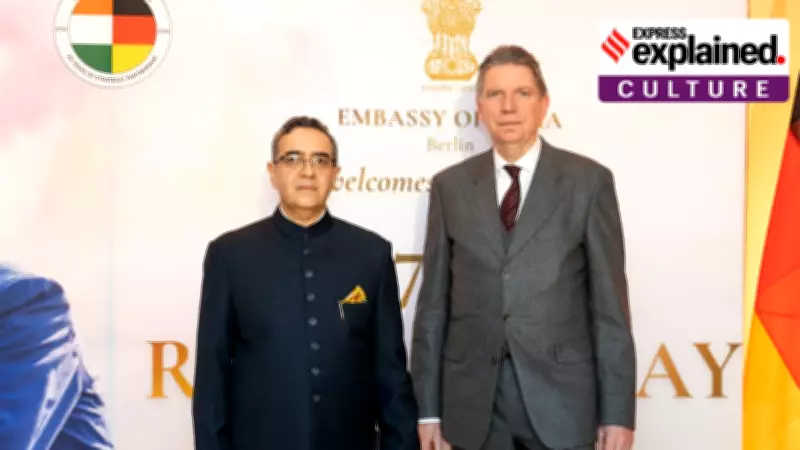
In a significant recognition of cross-cultural academic contributions, German ethnomusicologist Dr. Lars-Christian Koch has been honored with the prestigious Padma Shri award, one of India's highest civilian honors, for his profound and enduring engagement with Indian classical music. The 66-year-old scholar's decades of dedicated work have not only interpreted Indian musical traditions for Western audiences but have also elevated the study of Indian music within the global field of ethnomusicology, which explores music's intricate relationship with broader cultural contexts.
A Distinguished Career in Ethnomusicology
Born in 1959 in Peine, a charming town in Lower Saxony, Germany, Lars-Christian Koch embarked on an academic journey that seamlessly blended ethnology and musicology. After completing his studies, he earned a PhD in musicology from Bonn University, effectively merging these two disciplines to form the foundation of his expertise. His professional roles have been equally illustrious, serving as the Head of Media, Ethnomusicology, and Visual Anthropology at the Berlin Phonogram Archive within the Ethnologisches Museum in Berlin.
In 2018, Koch assumed the directorship of both the Ethnologisches Museum and the Museum of Asian Art, overseeing their integration into the Humboldt Forum, housed in the historic Berlin Palace, once the residence of Prussian kings and German emperors. It is worth noting that the museum has faced controversy due to its colonial-era acquisitions, including items like a bronze Nataraja statue. Concurrently, Koch holds the position of director at the State Ethnographic Collections of the Dresden State Art Collections in Germany and serves as a Professor of Ethnomusicology at the University of Cologne, with additional honorary and guest professorships at institutions such as the University of the Arts in Berlin, the University of Vienna, and the University of Chicago.

Koch's Scholarly Contributions to Indian Music
One of Koch's most notable academic achievements is his 1994 PhD dissertation, which delved into the rasa doctrine of contemporary North Indian classical music, drawing parallels with the 'Doctrine of Affections' prevalent during the Baroque era in 16th and 17th century Europe. In this work, he meticulously detailed the Natyashastra, an ancient Indian cultural text attributed to Bharat Muni, focusing on its concept of navarasas, or the nine fundamental emotional states experienced through performing arts.
Rather than merely translating Indian cultural concepts into Western theoretical frameworks, Koch employed a structured aesthetic system rooted in Indian vocabulary, comparing it to theories developed by French scholars at the Court of Versailles, who identified six basic affectations. This approach allowed for a nuanced analysis that respected the integrity of Indian traditions while making them accessible to a global audience.
Exploring Rabindra Sangeet and Instrument Making
Through repeated visits to India, particularly West Bengal, Koch developed a deep interest in Rabindra Sangeet, the songs composed by Nobel laureate Rabindranath Tagore. His book, My Heart Sings: The Songs of Rabindranath Tagore Between Tradition and Modernity, examines Tagore's music not only as a cultural anchor through classical and regional traditions but also as a vessel for modern ideas. By applying an ethnomusicological perspective, Koch has facilitated a richer understanding of Tagore's work among both Indian and Western audiences.
Another significant contribution is his 2011 publication, Sitar and Surbahar Manufacturing: The Tradition of Kanailal & Brother, published by the Ethnologisches Museum Berlin. This book chronicles the instrument-making tradition of iconic shops on Kolkata's Upper Chitpur Road in Burrabazar, which began in 1930. Featuring photographs, technical details, and interviews, it highlights the craftsmanship of Kanai Lal and celebrates renowned musicians like Enayet Khan, Waheed Khan, Pandit Ravi Shankar, and Ustad Vilayat Khan, as well as the instrument makers themselves. The closure of Kanailal & Brother in 1995 due to a lack of successors underscores the importance of preserving such traditional arts, a theme Koch emphasizes in his work.

Impact and Legacy
Lars-Christian Koch's scholarly endeavors have significantly distinguished Indian music as a vital field of study within global ethnomusicology. His writings have not only interpreted Indian music and instruments for the West but have also enhanced their appreciation within India itself. By focusing on historical recordings, music archaeology, and field work in India and South Korea, Koch has bridged cultural divides, fostering a deeper global understanding of India's rich musical heritage.
The Padma Shri award serves as a testament to his decades of commitment and the profound impact of his research. As a German scholar honored by India, Koch's story exemplifies the power of academic exchange in enriching cultural dialogues and preserving intangible heritage for future generations.