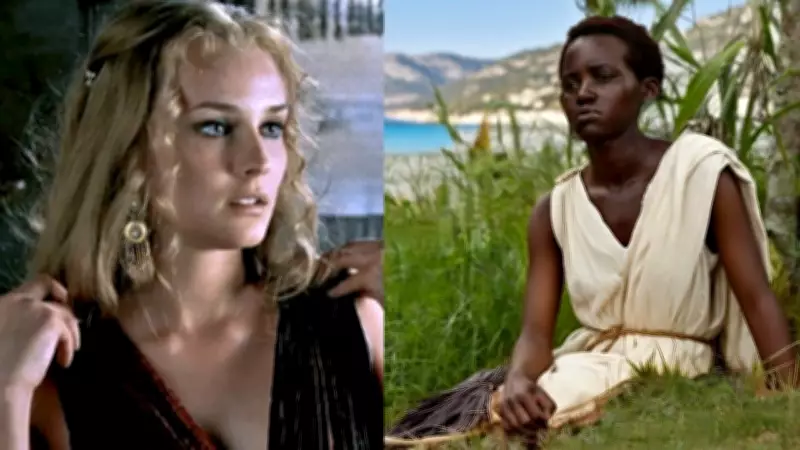
Unraveling the True Appearance of Helen of Troy: A Mediterranean Perspective
Helen of Troy stands as one of the most iconic figures in Greek mythology, immortalized as "the face that launched a thousand ships." According to Homer's epic poems, her departure from Sparta with Paris ignited the Trojan War, cementing her place in literary history. Yet, beyond the legend, what did Helen actually look like? Modern interpretations often clash with historical evidence, revealing a complex picture rooted in ancient Mediterranean context rather than contemporary racial frameworks.
Ancient Texts and Linguistic Nuances
The earliest Greek accounts of Helen appear in the Iliad and Odyssey, composed around the 8th century BCE. These texts describe her as "white-armed" with "lovely hair," but these terms require careful interpretation. Ancient Greek vocabulary does not align directly with modern racial categories, making translations potentially misleading.
For her hair, the Greek word "ξανθή" (xanthē) is frequently used. In classical Greek, this term meant "golden" or "light," encompassing shades like blond, reddish, or light brown. It did not specifically denote the deep Northern European blonde familiar today but rather indicated a lighter hue without implying a particular racial type.

Regarding her eyes, the word "κυάνεος" (kyáneos) appears. Scholars suggest this likely referred to brown eyes, as ancient Greek had precise terms for various shades of blue and brown. This linguistic precision highlights how modern color assumptions can distort historical descriptions.
Archaeological and Artistic Evidence
Bronze Age Aegean art offers further insights into how Greeks depicted people during that era. Mycenaean and Minoan paintings from this period show men with reddish-brown or darker skin and women with lighter skin. This difference was largely an artistic convention, similar to Egyptian depictions where women often had paler skin than men. These images provide context for cultural representations rather than exact records of individual appearances.
Genetic studies of ancient Aegean populations reveal that people in the region had Mediterranean ancestry, resulting from a mix of early farmers from Anatolia and local hunter-gatherers. Common physical traits included:
- Olive to light brown skin
- Dark hair
- Brown eyes
Lighter hair and eye colors were possible but rare, suggesting that Helen's described features would have been exceptional yet plausible within this genetic framework.
Mythological Figure vs. Historical Reality
Helen is a mythological figure, not a historical individual, so her actual appearance remains unknown. However, combining evidence from ancient Greek texts, archaeology, and genetics points toward a Mediterranean appearance. It is most plausible that she would have had olive or light brown skin, dark hair, and brown eyes, rather than fitting modern categories of "black" or "white."
The concept of race in ancient Greece differed significantly from modern ideas. Greeks typically classified people by culture, language, and region rather than skin color. Helen's legendary beauty was emphasized in texts because it aligned with Greek ideals, not because it matched contemporary racial types.
Conclusion: Embracing Historical Context
In conclusion, while Helen's story is rooted in myth, the evidence suggests she was likely Mediterranean in appearance. Her hair may have been golden or light brown, her eyes probably brown, and her skin olive-toned. This understanding respects both the historical context of ancient Greece and the descriptions preserved in classical literature, offering a nuanced view that transcends modern racial interpretations.