Holi 2026 to Coincide with Total Lunar Eclipse: A Celestial Dance of Science and Spirituality
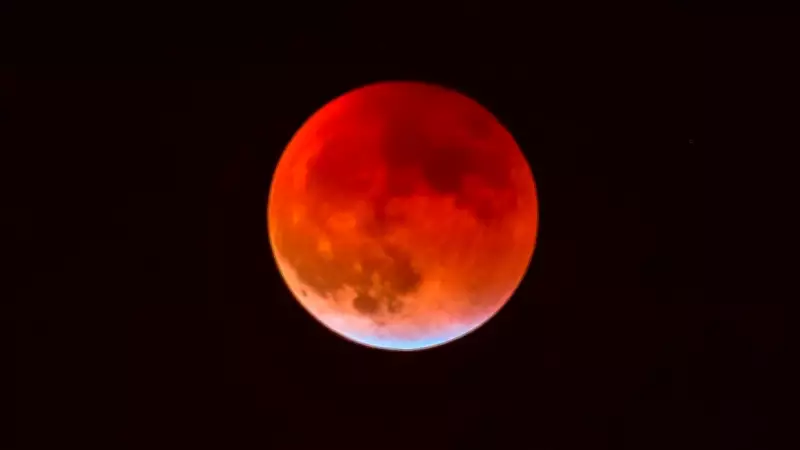
There are certain nights when the heavens appear to participate in our earthly celebrations, creating moments of profound connection. In early March 2026, as India prepares for the vibrant festival of Holi, the Moon will undergo a remarkable transformation, appearing dipped in a deep, coppery red hue. This is not the result of playful powders but a natural phenomenon known as a total lunar eclipse, where the Earth casts its shadow upon the Moon, offering a celestial spectacle that mirrors the spirit of Holi.
The Science Behind the Red Moon
Scientifically, a total lunar eclipse occurs when the Earth positions itself directly between the Sun and the Moon, blocking direct sunlight. However, Earth's atmosphere bends and filters the light that passes around it, scattering blue wavelengths and allowing red wavelengths to travel onward, gently bathing the Moon in a reddish glow. This process means the Moon reflects our planet's atmosphere back to us, highlighting the fragile nature of our blue home. In 2026, this eclipse will align with Phalguna Purnima, the full moon traditionally linked to Holika Dahan, adding a poetic layer to the event.
Cultural Adaptations and Ritual Timing
The overlap of the lunar eclipse with Holi has practical implications for cultural practices. In many Indian traditions, rituals are avoided during a grahan and its associated sutak period, which is considered a time for stillness rather than celebration. Consequently, Holika Dahan will be observed on varying dates across regions, from March 2 to March 4, depending on local panchang calculations. This variation is not confusion but a testament to cultural adaptability, as ancient calendars intelligently respond to cosmic rhythms.

Spiritual Symbolism and Modern Interpretations
Astrology, often misconstrued as mere prediction, originally served as a symbolic language connecting human life with celestial cycles. A full moon represents culmination and emotional release, while an eclipse amplifies this symbolism, urging reflection over action. In traditional Indian thought, this is about restraint, not fear. Holika Dahan symbolizes the burning of arrogance and ego, with Prahlada's survival illustrating how surrender dissolves fear. The blood-red Moon above this ritual deepens the symbolism, reminding us that destruction and renewal are natural cosmic processes.
Blending Science with Spiritual Wisdom
Modern science confirms that eclipses are predictable, harmless, and beautiful, yet spiritual wisdom asserts that predictability does not negate meaning. Holi itself is more than outward colors; it involves inward release of grudges and hierarchies. The eclipse refines this celebration, shifting it from noise to awareness. As Holi 2026 unfolds on different dates across India, the deeper message remains constant: transformation is universal, even if timing varies.
A Humbling Cosmic Lesson
It is profoundly humbling to realize that the red Moon of an eclipse is created by Earth's atmosphere—the same air we breathe, pollute, and protect. On that night, the Moon will glow red because of us, offering a spiritual lesson through science. As colors return to streets the next morning, the cosmos will have gently reminded us that festivals are intertwined with nature, rituals align with reason, and spirituality embraces scientific understanding.
Under one shared sky and atmosphere, Earth will have celebrated by coloring the Moon itself, where the gulal is not thrown but reflected, symbolizing unity and renewal.