

Hyderabad's Heritage Sites Spark Debate: Cultural Revival or Exploitation?
Hyderabad's historic monuments are experiencing a dramatic transformation, shifting from museum-like stillness into vibrant contemporary spaces. From electronic music echoing through ancient stepwells to high-fashion showcases in colonial halls, the city is witnessing a visible redefinition of what it means for heritage to remain alive. Yet, as Hyderabad marks World Heritage Day, this "modern remix" of historic spaces has ignited sharp debate among conservationists, curators, and cultural advocates.
Fashion Meets History at Restored Landmarks
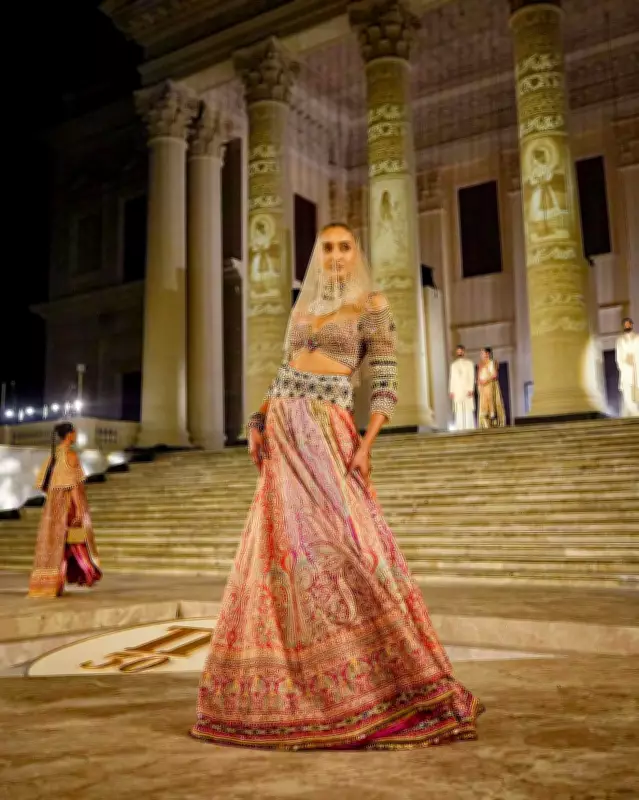
In January, renowned designer Tarun Tahiliani celebrated thirty years of his fashion label with an elaborate showcase at the British Residency. This early 19th-century Palladian structure, originally built by James Achilles Kirkpatrick with local craftsmen, underwent restoration with support from the World Monuments Fund. The building, which beautifully reflects a blend of colonial and Indo-Islamic architectural influences, was subsequently opened as an event venue. Tahiliani specifically cited the "White Mughal" era and the structure's "confluence of influences" as direct extensions of his design philosophy, positioning the Residency as a thematic anchor for his collection rather than merely a decorative backdrop.
Experimental Music in Ancient Stepwells
Hyderabad's historic stepwells have emerged as unconventional venues for live performances, with locations like Bansilalpet Stepwell and Bapu Ghat Baoli hosting experimental musical nights. These ancient water structures are being positioned as immersive sound spaces within a broader trend of heritage activation focused on atmospheric architecture and younger audiences. The unique acoustics and historical ambiance create distinctive experiences that traditional venues cannot replicate.

Multi-Genre Utility at 17th-Century Venues
The 17th-century Taramati Baradari near Golconda Fort continues to function as a remarkably versatile cultural venue, hosting everything from underground electronic music events to classical evenings and large-scale lifestyle showcases. Earlier this month, a music collective transformed the historic site into a techno and house music space, drawing approximately four hundred attendees for a private electronic set featuring local DJs. In contrast, the "Gayaki Gat Ghazal" event held in February offered a classical jugalbandi performance rooted in traditional acoustics and ambience. The venue has also hosted fashion and art installations by prominent artists including Martand Khosla and Ayesha Singh, alongside appearances by notable figures from film and fashion such as Naga Chaitanya, Anaita Shroff Adajania, and Jayanti Reddy.
Conservationists Prioritize Site Sanctity
Anuradha Reddy, convener of INTACH Hyderabad, links the increasing use of heritage spaces for events to a larger funding and upkeep gap. "These places are often lent out because there is no funding. Authorities must provide proper and continuous maintenance funds. Restoration alone is not enough. There must be ongoing care," she emphasizes. Regarding how these spaces are presented during events, she stresses the critical need for contextual understanding. "If events are used to attract young people, organisers must clearly state that the event is being held at a heritage site and explain its history... Without that, what is the point? The difference between thoughtful use and commercialisation lies in awareness and supervision. But the most important thing is sensitisation. People must understand the importance of the place."
Architect and researcher Mohammed Sibghatullah Khan adds perspective on infrastructure limitations. "While these sites are not inherently meant for such activities, they are still being adapted for them. To some extent, this also reflects a lack of alternative infrastructure. There simply aren't enough dedicated cultural venues, which is perhaps why heritage spaces are increasingly being drawn into this role. Even when events are hosted, they are expected to be contextually relevant and designed in a way that does not dilute the historical significance of the space."

Curated Nights at Chowmahalla Palace
At Chowmahalla Palace, heritage is being reinterpreted through The Chowmahalla Experiences (TCE), a programme featuring guided night tours followed by live music and curated dining inside the former seat of the Nizams. Curator Aamir Tameem frames this initiative as a deliberate shift away from conventional museum formats. "It's culture, history and food in a more immersive and accessible way," he explains, adding that approximately sixty percent of current clientele comprises younger audiences, particularly millennials. Regarding sustainability, he notes, "There's certainly value in the commercial use of heritage spaces, but it's a delicate balance... Activating heritage spaces in this way not only enhances their cultural appeal but also helps sustain them... it's a more dynamic way of ensuring these monuments remain both meaningful and well-preserved."
Active Use Funds Upkeep, Say Reuse Advocates
Dr. Harikrishna Mamidi, Director of BC Study Circle, Government of Telangana, historian, and cultural studies expert, explains that heritage activation has evolved organically. "The idea of activating heritage sites as cultural hubs has not emerged from a single, top-down policy but has evolved over time through a combination of government support and sustained efforts by Hyderabad's cultural community," he states. "These initiatives reflect a long-standing effort to bring heritage sites into the city's cultural life," he notes, referencing formats such as ghazal evenings at the Qutub Shahi Tombs and mushairas near Charminar. "While these events may appear purely cultural or aesthetic on the surface, they generate wider economic activity... This influx not only makes heritage spaces more visible and relevant to contemporary audiences but also creates revenue streams that can support their upkeep and conservation."
Conservation architect and heritage consultant Madhu Vottery frames the increasing use of heritage sites as cultural venues as both necessary and positive when handled responsibly. "These cultural and historic sites must be used. They derive their value when they are alive and accessible to people. What is the point of having vast heritage spaces if they are left vacant, uncared for, or replaced by constructing so-called community centres or enclosed performance venues? Not everything needs to be an air-conditioned space." She simultaneously stresses the importance of alignment between site and programming. "A historic site is a setting, and how it is used depends on responsibility... These are not neutral backdrops, they carry their own cultural weight."
Engaging Younger Audiences
Sowmya Bokuri, entrepreneur and part-time content creator, observes that heritage spaces in Hyderabad have always been rooted in art and storytelling. "A lot of younger audiences may not have engaged with or even visited these spaces before, so events like these bring a different kind of attention to them, making people curious about their history and existence." This engagement represents a crucial bridge between generations and historical awareness.
The fundamental question remains unresolved: Are these activations genuinely reviving Hyderabad's heritage, or are they simply exploiting historic spaces to bridge budget gaps? As the city continues to navigate this delicate balance between preservation and activation, the debate highlights broader questions about cultural sustainability, historical integrity, and the evolving relationship between past and present in urban India.





