IIT Bombay Graduate's Viral Post Ignites National Debate on Urban Cultural Differences
Relocating to a new city presents numerous challenges, but sometimes the most significant adjustments aren't about infrastructure or living costs. They're about something far more subtle: how people communicate with one another. A recent graduate from IIT Bombay discovered this profound truth after spending several months in Bengaluru, sparking a nationwide conversation about the cultural distinctions between two of India's largest metropolitan centers.
The Viral Observation That Captured National Attention
Poobesh Gowtham, a technology professional and IIT Bombay alumnus who recently moved to Bengaluru, shared his unexpected observations about daily interactions in his new city. Instead of focusing on typical urban complaints like traffic congestion or lengthy commutes, he highlighted something more fundamental: how everyday conversations in Bengaluru felt fundamentally different from those in Mumbai.
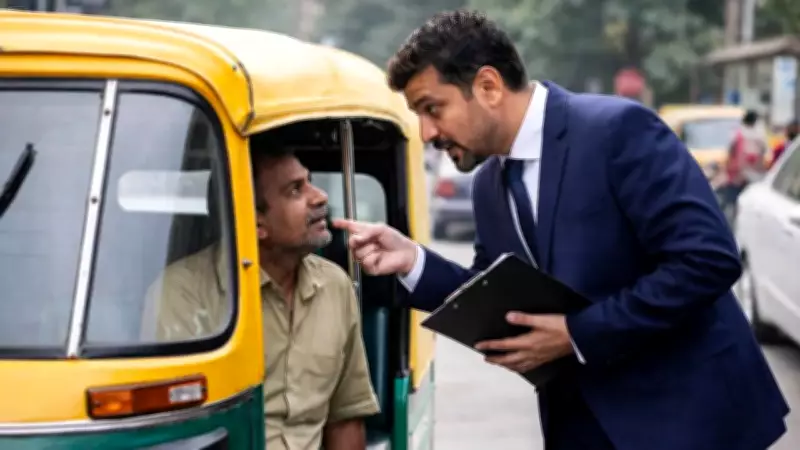
"Two months in Bangalore and I miss Mumbai. I miss the people," Gowtham wrote in his now-viral post. "Every small interaction here feels like a negotiation. Auto drivers, packers, old tenants. Everyone's trying to squeeze something out of you. In Mumbai a cab driver sees it's hot and just turns on the AC. Here you have to ask for it like it's a personal favour. That tells you everything."

Gowtham described Bengaluru as "businesslike" and "full of negotiations," noting that even minor exchanges seemed to involve subtle bargaining or attempts to extract additional value. This contrasted sharply with his Mumbai experiences, where he found interactions smoother and less conditional.
The Internet's Divided Response
As expected, the online community responded with passionate opinions from across the spectrum:
- Supporters of Gowtham's perspective echoed his observations, describing Mumbai as more "easygoing" and accommodating in daily interactions. Many shared personal anecdotes about strangers in Mumbai offering assistance without expectation of reciprocation.
- Critics cautioned against generalizations, emphasizing Bengaluru's diversity and rapid growth. They argued that experiences vary significantly based on neighborhood, social circles, and individual circumstances.
- Some suggested alternative interpretations, proposing that what Gowtham perceived as negotiation might simply reflect regional norms, practical realities, or adaptation to economic pressures in a fast-growing city.
Beyond Simple City Comparisons: Deeper Cultural Dynamics
While initially appearing as a straightforward Mumbai versus Bengaluru comparison, this debate reveals more profound insights about evolving urban cultures:
- Historical Context Matters: Mumbai has developed established systems over decades, particularly in transportation and services, creating more standardized expectations. Bengaluru's explosive growth has created different dynamics.
- Economic Factors Shape Behavior: Bengaluru's rapid expansion has resulted in higher living costs, intense service demand, and a growing gig economy. In such environments, negotiation often becomes a survival strategy for service providers.
- Perception Colors Experience: Individuals bring their previous experiences and expectations when relocating. When reality diverges from these expectations, the differences feel magnified.
The Psychology of Urban Adaptation
This viral discussion resonates deeply because it addresses a universal experience for millions of Indians who relocate for work or education. The adaptation process extends beyond professional environments to encompass cultural nuances that often remain unspoken until someone articulates them.
The story highlights how cities develop distinct personalities that manifest in daily interactions, whether through service exchanges, casual conversations, or routine transactions. These micro-interactions collectively shape our urban experiences more significantly than we typically acknowledge.

Important Caveats About Generalizations
While this conversation provides valuable insights, it's crucial to recognize that both Mumbai and Bengaluru are extraordinarily diverse cities with millions of residents from varied backgrounds. Individual experiences over limited timeframes cannot represent entire urban populations.
Nevertheless, such discussions serve important purposes:
- They help articulate subtle cultural differences that many experience but struggle to describe
- They encourage reflection on how urban environments shape social interactions
- They highlight how economic conditions influence everyday behavior patterns
The Broader Implications
Ultimately, this viral moment transcends simple city comparisons to explore fundamental questions about urban life:
- How do cities develop distinct cultural characteristics?
- To what extent do economic conditions dictate social interactions?
- How do personal expectations shape our experiences of new environments?
The conversation reminds us that cities are more than physical spaces—they're living ecosystems shaped by people, history, economics, and culture. Whether one perceives a city as transactional or accommodating often depends on individual perspective and previous experiences.
As India continues its rapid urbanization, understanding these subtle cultural dynamics becomes increasingly important for fostering social cohesion and mutual understanding across different urban centers.