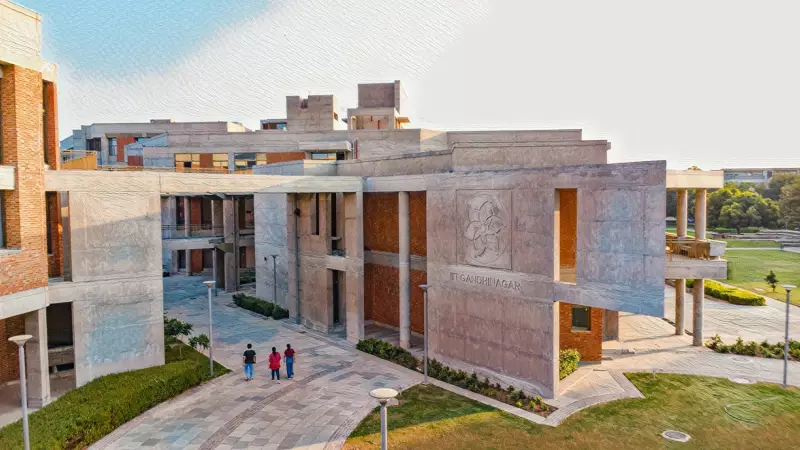
A major academic gathering at the Indian Institute of Technology Gandhinagar (IITGN) has spotlighted a significant gap in historical documentation: while global civilizations have extensively recorded their scientific feats, India's indigenous tools, techniques, and craft technologies remain largely underexplored. This critical observation was made during the international conference-cum-workshop titled 'History, Science and Technology of Indian Civilisation'.
Bridging the Historical Gap
Alok Kumar Kanungo, the convener of the conference series, emphasized the initiative's goal. He stated that while the world has documented its scientific milestones, a parallel effort for India's technological heritage is lacking. The conferences organized by the Humanities and Social Sciences (HSS) department at IITGN aim to address this very disparity.
The event brings together leading scholars, inspires new researchers, and applies modern scientific methodologies to study diverse fields like ancient metallurgy, textiles, and subsistence patterns. Kanungo noted the encouraging rise of collaborative research across borders, reflecting a vibrant and increasingly integrated India.

Interdisciplinary Focus on Metals and Heritage
The second day of the week-long event, which began on January 5 and continues till January 9, 2026, was dedicated to Indian metals and metallurgy. It attracted scholars, researchers, and practitioners from across India and abroad.
Professor Alok Tripathi, Additional Director General of the Archaeological Survey of India (ASI), highlighted the role of scientific analysis. He explained that it allows researchers to move beyond mere physical examination of artefacts to understand their composition, origin, ancient trade networks, and the technological prowess of their creators. This leads to a deeper and more accurate understanding of India's exceptionally rich cultural past.
Stressing public engagement, Prof. Tripathi added that significant research findings must reach society so people can understand, value, and participate in preserving heritage. Scientific analysis offers unique insights that traditional methods alone cannot provide.
Collaboration for a Forward-Looking Approach
The conference is a collaborative effort involving the Anusandhan National Research Foundation, Archaeological Survey of India, Indira Gandhi Manav Sangrahalaya, Gujarat State Directorate of Archaeology and Museums, Gujarat Council on Science and Technology, and the French National Centre for Scientific Research.
Professor K Rajan from the Tamil Nadu State Department of Archaeology praised the interdisciplinary nature of the meet. He said the platform enabled meaningful interaction between archaeologists, geochemists, and scientists from various fields, which is essential for advancing archaeological science in a future-oriented manner. Such collaboration helps uncover the technological, cultural, and trade significance of metals and emerging fields like ancient DNA and palaeobotany.
A key highlight was an archaeological exhibition featuring over 4,000-year-old metal artefacts, including anthropomorphs and iron tools. These finds were displayed from eleven significant sites across India, including Gujarat's Prabhas Patan and the latest discoveries from Lothal (2024–25), Tamil Nadu's Kilnamandi and Mayiladumparai, and sites in Uttar Pradesh.