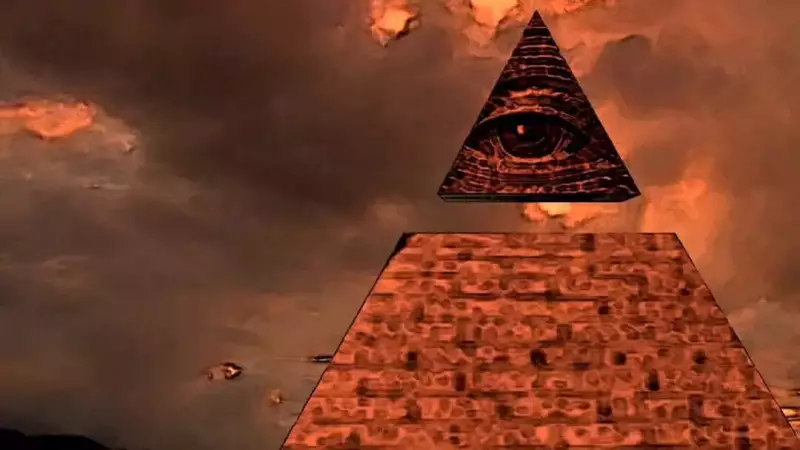
The term 'Illuminati' weaves through modern conversations much like an urban legend—casually, shrouded in mystery, and often with a thrilling undercurrent. It pops up in music videos, fuels late-night Reddit debates, spices up celebrity gossip, and forms the backbone of countless internet conspiracy theories. But what is the Illuminati in reality? Is it a shadowy cabal ruling the world, a mere historical footnote, or a persistent modern myth we are unwilling to release? To find clarity, one must cut through the haze and examine the documented facts.
The Historical Truth: Bavaria's Enlightenment Club
Contrary to popular belief, the Illuminati did not originate in Hollywood or on a remote secret island. Its true birthplace was in Bavaria, Germany, in the year 1776. The founder was Adam Weishaupt, a professor of law. His ambition was not global domination but intellectual and social enlightenment. At a time when the Church and monarchy wielded absolute power, Weishaupt envisioned a society that championed reason, scientific inquiry, freedom of thought, and equality.
This group formally called itself the Order of the Illuminati. Operating in secrecy, its members used coded symbols, adopted mysterious ranks, and held discreet meetings to discuss strategies for challenging oppressive structures. In essence, it was a rebellious intellectual club with a flair for dramatic, secretive branding. However, its existence was brief. The Bavarian government, growing wary of secret societies, banned them. By 1785, the Illuminati was officially dissolved. The historical record shows a small, short-lived group with no global reach or lasting power structure.

From History to Legend: The Birth of a Conspiracy
After its dissolution, the Illuminati should have faded into obscurity, mentioned only in academic texts. Instead, it transformed into a potent legend. The chaos of the French Revolution and subsequent political upheavals created a climate of fear and suspicion. Writers and politicians began pointing fingers at a hidden, all-powerful Illuminati as the puppet master behind revolutions and social change.
Throughout the 1800s, the group became a favourite villain in novels, political speeches, and sensational newspaper reports. The more people feared invisible control, the larger the myth grew in the public imagination. By the time pop culture embraced the concept, the fictional version had completely overshadowed the historical truth.
The Modern Myth: An All-Seeing Global Elite
Today's portrayal of the Illuminati bears almost no resemblance to Weishaupt's Bavarian society. In contemporary conspiracy lore, it is depicted as:
- A global elite covertly controlling governments, financial markets, and media empires.
- A shadowy council that orchestrates wars, manipulates elections, and engineers celebrity careers.
- A force working towards establishing a sinister 'New World Order'.
- A secret club for billionaires, high-ranking politicians, and A-list pop stars.
- An entity that communicates through symbols like the all-seeing eye and pyramids.
This narrative is dramatic, cinematic, and perfectly suited for viral internet culture. However, a critical problem persists: there is no credible evidence that such an organisation exists today, or that the original Illuminati survived beyond the late 18th century.
Why Does the Illuminati Conspiracy Remain So Popular?
The allure of an all-controlling secret group is psychologically compelling. It offers simple, albeit frightening, explanations for a complex and often chaotic world. When major events occur—like an economic crash, a sudden political shift, or a meteoric rise to fame—it can be comforting to believe, 'Someone planned this.' It replaces randomness with the idea of a deliberate, if malevolent, mastermind.
Furthermore, the myth integrates seamlessly with pop culture. A triangular shape in a logo, a specific hand gesture in a music video, or a cryptic lyric is often interpreted as 'proof.' When artists playfully reference the Illuminati, it inadvertently lends more credibility and oxygen to the theory, allowing it to evolve and spread.

Separating Fact from Fiction
What is Factually Accurate:
- The Bavarian Illuminati was a real organisation active from 1776 to 1785.
- Its members were anti-authoritarian thinkers advocating for freedom, not world rulers.
- They indeed used secret symbols and ranks, which contributed to their mysterious aura.
- The group was disbanded and left no verifiable trail of continued underground activity.
What is Definitively Myth:
- A single group pulling the strings of every global event.
- Occult rituals, sacrifices, or supernatural powers.
- Celebrities signing Faustian contracts for fame and fortune.
- Hidden messages in media being direct instructions or confirmations.
- Plans for a totalitarian New World Order.
- Billionaires convening in underground lairs.
- Secret hand signs at award shows being meaningful signals.
These ideas are fun for speculative fiction but are constructed from imagination, coincidence, and the reinterpretation of symbolism, not factual proof.
The Reality: A Symbol of Power, Not a Secret Society
In the 21st century, when people invoke the Illuminati, they are rarely referring to Adam Weishaupt's club. Instead, they are referencing a powerful concept—the fear of an invisible, unaccountable elite making decisions that shape all our lives. The word has become a metaphor for anxieties about concentrated power.
Real power undeniably resides with governments, multinational corporations, and wealthy individuals. This is not the work of a secret society; it is the open, though complex, machinery of geopolitics, economics, and human ambition. The enduring fascination with the Illuminati proves one thing above all: mystery sells, and a good story is often more captivating than a simple historical truth.