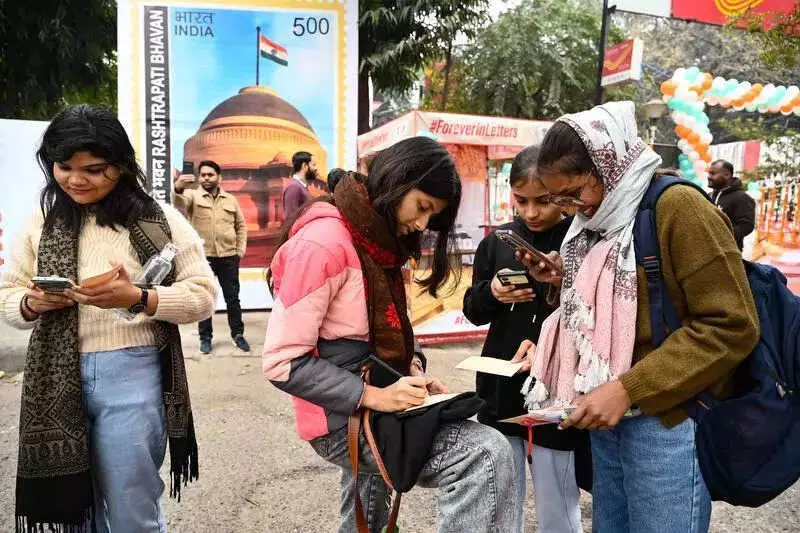
In a digital world dominated by instant messages and emails, the gentle rustle of paper and the scratch of a pen have become rare sounds. On a chilly Wednesday in late December, as New Delhi shivered and prepared to welcome 2025, India Post orchestrated a heartfelt return to this fading form of connection. The Indraprastha head post office became a vibrant hub, temporarily reviving the lost art and forgotten habit of letter writing for the city's residents.
A Festival of Words and Memories
The event was designed as more than just a functional exercise; it was a celebration. India Post supplied free postcards and pens, inviting both the young and the old to sit at tables and put their thoughts on paper. The atmosphere was festive, with nostalgic songs about letter writing playing in the background. Tricolour balloons brightened the overcast day, while decorated stalls sold India Post merchandise like coasters, stamps, and fridge magnets. A festooned e-vehicle carried the hashtag "#ForeverInLetters: Write a letter to your loved ones," and many heeded the call.
For some, the moment was a deep dive into nostalgia. For others, especially children, it was a novel first-time experience of how communication worked in the past. The act of writing and the anticipation of a reply, once the fundamental rhythm of personal exchange, were momentarily restored.

Personal Stories Inked on Postcards
The initiative drew participants from all walks of life, each with a unique story to mail. Eleven-year-old Maira was so absorbed in writing a Happy New Year postcard to her father that she, along with her three siblings, missed a family appointment for Aadhaar-related work. Their father, 38-year-old scrap dealer Mohammad Haider from Turkman Gate, didn't mind. He smiled, touched by his daughter's tangible greeting.
Nearby, best friends 17-year-old Kripa and 18-year-old Arunima wrote New Year wishes to each other, creating a physical token of their friendship. Shilu Kumari, 24, watched her three-year-old daughter Ishaani scribble on a postcard for her uncle in Patna. Kumari described the activity as a deeply personal and rare pause from the digital rush, valuing the creation of something tangible.
Navya Sriram, 21, an associate analyst who had recently moved from Mumbai to Delhi, poured her feelings of living away from home into her postcard. Her colleague, 27-year-old Ruchira Sakalle, took a whimsical approach, addressing her card to the pawprints of her dog. Sakalle reflected on how the exercise took her back to school days, but with the freedom to write anything she felt.
The most poignant moment came from 38-year-old Reet Ramanjeet. When asked who her postcard was for, she softly replied, "My little brother." And when questioned about where he lived, her answer was a simple, heartfelt: "Heaven."
The Official Push Against a Digital Decline
The event was a conscious effort by India Post to pay tribute to traditional communication in the modern era. Senior postmaster Yogesh Papnai highlighted the enduring power of a handwritten letter, noting that while social media posts are overthought and deletable, "a handwritten letter, however, becomes a lasting memory."
Another organizer, Jeetendra Kumar Kukreja, pointed out the practical reach of the postal service, stating that "even today, letters reach the farthest corners of the country where networks can't." This initiative comes against the backdrop of stark statistics showing a steady decline in personal postal mail. According to the Department of Posts' annual reports, the usage of postcards fell from 1145 million in 2012-13 to 703 million in 2021-22. Similarly, the volume of closed letters declined from 3499 million to 2838 million over the same period.
The India Post event in the heart of the capital served as a powerful, if temporary, reminder that the intimacy and permanence of a handwritten note hold a unique charm that modern technology has yet to replicate. It proved that the desire for tangible, thoughtful connection is still very much alive, waiting for a pen and a postcard to bring it to the surface.