India's Art Renaissance: A Cultural and Economic Phenomenon
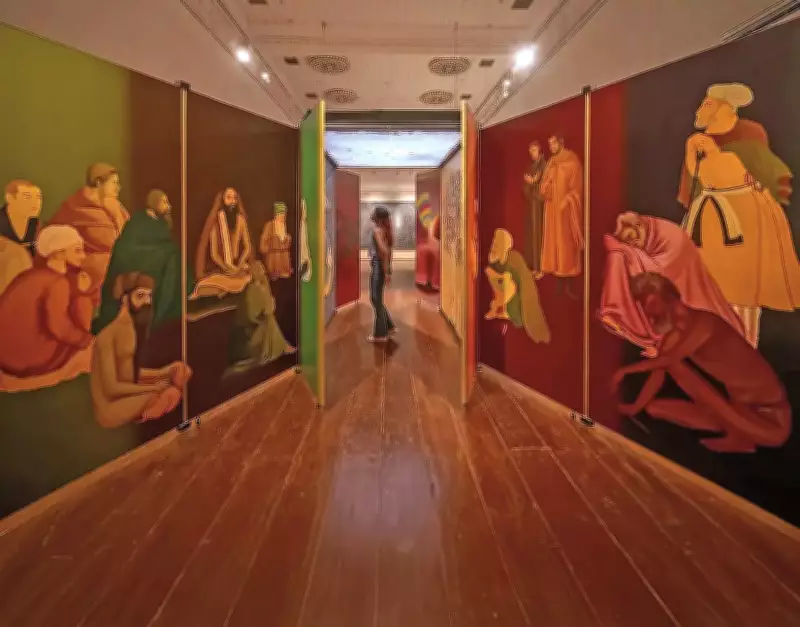
The year began with a significant cultural statement as Air India unveiled its first art-themed in-flight magazine, signaling the growing prominence of Indian art on global platforms. This collector's edition celebrates India's buoyant and dynamic art scene, which is currently experiencing an unprecedented surge in activity and recognition.
The New Wave of Art Collectors
A fresh generation of High Net Worth Individuals (HNIs) is meticulously building art legacies across India. While some collectors like Kalyani Saha Chawla's daughter Tahira Tara or Anamika Khanna's son Viraj benefit from familial artistic environments, others such as a prominent Gurgaon-based startup entrepreneur prefer maintaining discretion about their collections.
What unites these collectors is their deep engagement with the artistic process. Renowned artist Gurudas Shenoy observes, "Serious collectors today study an artist's journey, provenance, authenticity, and past valuations before committing. No one is buying art blindly or purely as speculation."

Prateek and Nandita Raja of the globally respected Experimenter gallery note, "Indian collectors are definitely more aware of contemporary practices than before. And increasingly so... which makes them build their own collections with more intent and knowledge."
Record-Breaking Auctions and Market Expansion
The Indian art market has witnessed spectacular auction results in recent years:
- MF Husain's 'Gram Yatra' sold for over Rs 118 crore at Christie's New York auction
- SH Raza's 'Gestation' fetched Rs 45 crore at Pundole's Mumbai auction
- VS Gaitonde's untitled 1970 work realized Rs 67.08 crore at Saffronart
- Rabindranath Tagore's 'From Across the Dark' achieved Rs 10.73 crore at AstaGuru
These remarkable figures reflect growing confidence in Indian art as both cultural treasure and valuable asset. Dinesh and Minal Vazirani, founders of Saffronart, attribute this boom to "a far more informed collector base, greater transparency, and the willingness to see Indian art as both culture and capital."
The Personal Connection to Art Collection
Seasoned collector Munish Jhajharia, with nearly four decades of experience, emphasizes the emotional dimension of art acquisition. "Indian art does not give immediate returns. Unless you are in love with a piece you can't keep it with you," he explains, highlighting his particular fondness for a Jayshree Burman work in his private collection.
A 36-year-old Kolkata-based business consultant echoes this sentiment, describing how art collection differs fundamentally from other investments. "With art it is different. The whole process of studying, selecting and watching their valuation grow is personal and enjoyable."
Expanding Ecosystem and Global Recognition
The current art renaissance is supported by a deepening ecosystem that extends beyond India's borders. In the United Kingdom, wealthy Indian patrons engage with prestigious institutions, while in Los Angeles, Ramesh Menon Contemporary has emerged as a crucial platform for contemporary South Asian art practices.
Within India, major events have transformed the landscape. Art curator Reena Dewan notes, "Large-scale platforms such as art fairs and biennales have shaped this momentum by creating concentrated spaces of encounter. Beyond commerce, they enable artistic practices to be seen, discussed and contextualised within global conversations."
The success of events like Bengal Biennale, Serendipity Arts Festival, Art Mumbai, and Kochi-Muziris Biennale has attracted younger, curious audiences, expanding art appreciation beyond traditional elites.
Market Statistics and Future Outlook
The numbers confirm the market's robust health:

- 995 lots sold in 2025, representing a 26% year-over-year increase
- Rs 310 crore in total sales by India's top artists (Hurun India Art List)
- Key artists commanding attention include Anish Kapoor, Krishen Khanna, and Sakti Burman
Lifestyle consultant Jaswant Lalwani described the atmosphere at Christie's Modern and Contemporary South Asian Art sale as "electric," with Indian works receiving competitive bidding traditionally reserved for European modernism. He credits auction houses with "systematically creating a global segment" for Indian art through dedicated departments and rigorous scholarship.
As the Rajas of Experimenter conclude, "Curators in significant institutions now understand that the story of a contemporary world cannot be told without the inclusion of the global south... And Indian artists and the concerns they raise and address is a significant voice." This recognition, combined with economic growth and evolving collector sophistication, positions Indian art for continued global prominence.