The Digital Awakening of India's Ancient Temples
It all started with a typical WhatsApp forward that many would have ignored. The message circulated images claiming that sculptures of women using an iPad and a mobile phone had been "discovered" in an ancient temple in Gujarat. While most recipients simply scrolled past, Maharashtra-based businessman Dinesh Soni decided to investigate further. His research revealed that the so-called iPad was actually a depiction of a 'patralekha'—a traditional letter writer—and the other figure was likely applying kajal. "These exaggerated claims about finding cycles, mobiles, and even dinosaurs in ancient temples really motivated me to take action," explains Soni, who has now become a dedicated myth-buster.
From Parental Homework to Passion Project
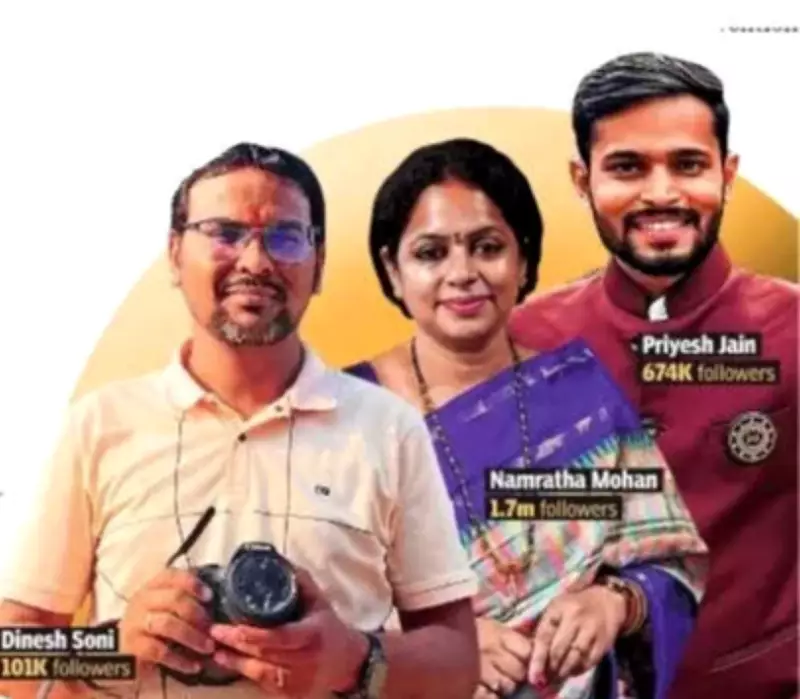
Initially, Soni's interest in temple research stemmed from a desire to answer his children's persistent holiday questions and avoid feeling uninformed. However, what began as parental homework soon evolved into a full-fledged passion. "I trade in oil seeds during the day and dedicate my free time to researching sculptures and inscriptions," he shares. Based in Latur, Soni now manages the Instagram handle @indian.temples, boasting over 101,000 followers, and has authored 18 books on the subject. He is also planning to develop an app that will consolidate information on archaeological museums, site repositories, and historical places into a single platform.
The Rise of Temple Influencers and Digital Trends
In a country as spiritually inclined as India, it is unsurprising that temple-related content thrives on social media. Numerous Instagrammers have capitalized on this trend. For instance, temples in Mathura and Vrindavan have become hotspots for trends like #gopiglam and #braj, where influencers don traditional attire such as lehenga choli and 'gopi makeup,' while men dress as Krishna with peacock plumes. Additionally, Bareilly's recently inaugurated Nath corridor—connecting ancient Shiva temples—is challenging Goa's popularity among tourists. Meanwhile, Ayodhya's Ram Mandir has inspired a dedicated group of influencers, similar to the fervor seen with BTS fans, who document everything from construction progress and crowd management to local eateries and the overall ambiance.

Beyond Darshan: The Quest for Experiential Spirituality
This newfound digital attention builds upon a longstanding tradition. Temples like Tirupati and Sabarimala, along with many others in South India, have dominated domestic tourism for decades. Indians have always had a talent for identifying sacred sites in diverse locations. However, the traditional 10-minute solemn 'darshan' is now being replaced by an emphasis on the "experience." This shift sees influencers posting religious reels, organizing pre-wedding shoots, and even encountering bold myth-makers who claim to find modern objects like bicycles and mobile phones in ancient settings.
Educating the Youth: Decoding Rituals and Traditions
So, what value do influencers add to something as universally accessible as temples? Namratha Mohan, who runs the Instagram channel @thetemplegirl, believes it is about education and preservation. "Young people seek explanations for why they follow certain rituals or dietary restrictions during festivals, rather than accepting customs blindly. If we fail to document and raise awareness, our centuries-old knowledge could be lost," she asserts. Mohan left her job at Amazon last year to focus on her channel, where she decodes rituals while integrating insights into temple architecture and history. She even employs AI to give her reels a contemporary flair.

Accidental Entrepreneurs: From Corporate Life to Temple Documentation
Mohan's transition from corporate life was somewhat accidental. In 2014, she and her husband began organizing curated spiritual tours after struggling to plan their own Char Dham yatra. Their business gained traction until the pandemic forced a pause. This led the couple to relocate from Mumbai to Mangaluru and start documenting local temples. Their 15-45 minute videos resonated with audiences and were even broadcast on local cable TV channels. With the rise of short-format videos, @thetemplegirl was launched in 2024. "Within a year, the page's popularity forced me to choose between my corporate job and the channel," Mohan recalls. She now has 1.7 million followers and two books in the pipeline.
Navigating Controversies and Catalyzing Positive Change
Not all influencer efforts yield positive outcomes. For example, influencer Jasmine Jaffar faced backlash after washing her feet in a water reservoir used for cleansing the deity at Guruvayur temple in Kerala. The incident resulted in a police complaint, a public apology from Jaffar, and the removal of the video. Conversely, digital attention can also benefit temples. In September last year, an influencer's video highlighting an ancient temple in Andhra Pradesh's Itikyal village—transformed into a garbage dump with a stepwell clogged with plastic—went viral, prompting followers and locals to initiate a cleanup.
Crowdsourcing Heritage: The Power of Community Engagement
Similarly, Priyesh Jain, a digital marketer from Udaipur, was driven to act after discovering an ancient temple near his village Kun that had become a refuge for drunks and vagabonds. "The temple is over 1,000 years old, but no one in the village was maintaining it. I stumbled upon it by chance and was shocked by its condition," he says. This discovery inspired him to launch the Instagram handle @secret_temples in July 2020. Over the years, Jain has built a network of 8,000 volunteers who contribute content, including local legends associated with lesser-known temples. "This has evolved into a crowdsourced platform. My only rule is that it should promote the temple, not any individual. When we create a video, we thoroughly research historical facts, architecture, and local folklore," he explains.
Influencing with Purpose: Connecting Youth to Their Roots
Like Mohan and Soni, Jain aims to "influence" the younger generation. His goal is to help them understand their identity and the achievements of their ancestors without relying solely on divine explanations. This digital movement represents a harmonious blend of ancient heritage and modern technology, ensuring that India's rich temple culture remains relevant and accessible in the digital age.