Frozen in Faith: The Enduring Wait for Ashutosh Maharaj's Return at Nurmahal Dera
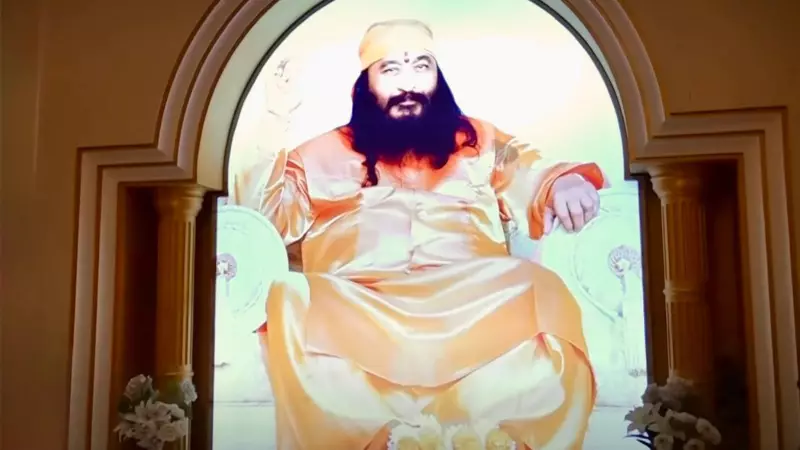
As Divya Jyoti Jagriti Sansthan (DJJS) observes the twelfth samadhi day of its founder, Ashutosh Maharaj, on January 28–29, 2026, a remarkable scene unfolds at the organization's sprawling Nurmahal Dera in Jalandhar district. Devotees from across Punjab and neighboring states continue to arrive, not to mourn a death anniversary, but to honor what they believe is their guru's ongoing deep meditative state—twelve years after medical science declared him clinically dead.
A Chamber of Suspended Time
At the heart of this nearly 100-acre complex lies a temperature-controlled chamber maintained at minus 22 degrees Celsius, where Maharaj's body has been preserved since January 29, 2014. This sealed chamber, accessible only to select disciples and medical professionals, operates under extraordinary judicial oversight. Following directions from the Punjab and Haryana High Court, a team of doctors inspects the preserved remains every six months and submits detailed reports to the court.
"For us, Maharaj ji is not gone—he is in samadhi," said Simran Batra, a devotee who has visited the dera every year since 2014. "Being here gives us peace and strength." This sentiment echoes among thousands who continue their annual pilgrimages, maintaining that their spiritual leader is not deceased but in an advanced yogic state from which he will eventually return.

Growth Under 'Invisible Guidance'
Ironically, the period following Maharaj's clinical death has witnessed significant expansion of the Nurmahal dera. What began as a small spiritual center has transformed into what devotees call 'Divya Gram'—a self-contained spiritual township officially registered as such by the Punjab government. The complex now features:
- A grand meditation hall capable of accommodating thousands
- Four theme-based spiritual parks
- An eight-acre sarovar (pool) completed in 2025
- One of the region's largest gaushalas with 900-1000 indigenous cows
- Extensive organic farming across nearly 300 acres
- An in-house pharmacy producing around 250 products
Senior functionaries credit this growth to Maharaj's "invisible guidance," insisting that despite his physical absence, the dera's spiritual and administrative life continues seamlessly. "He still guides us. We feel his presence during daily meditation," explained one functionary.
Unique Organizational Structure
What makes this spiritual institution particularly remarkable is its organizational structure. Unlike many large religious organizations, there is no second-in-command, no successor guru, and no visible struggle for power. Administrative decisions are taken collectively by a core team of around ten senior functionaries, while strict discipline governs daily life within the dera.
Most residents are bachelors, many highly educated, who meditate for at least two hours each morning before undertaking assigned duties. "There is no idleness here. Everyone is busy, and everyone knows there is no race for authority," noted a functionary.
Legal Battles and Established Practice
The preservation of Maharaj's body hasn't been without controversy. Soon after his clinical death, legal challenges emerged from individuals claiming familial rights, including Dalip Jha from Bihar who identified himself as Maharaj's son. After initial court orders for cremation, the Punjab and Haryana High Court eventually allowed the dera to retain the body under strict medical supervision—a verdict that effectively institutionalized what was initially seen as an anomaly.
Today, court-mandated medical inspections have become routine, and what once shocked many has gradually become accepted as both legal and social practice. Security remains tight, with Punjab Police personnel deployed at gates, surveillance cameras monitoring entry points, and visitors required to register while mobile phones are prohibited in sensitive areas.

From Ordinary Life to Spiritual Leadership
Ashutosh Maharaj's journey to spiritual leadership was unconventional. Born Mahesh Jha in 1946 in Bihar's Darbhanga region, he grew up in an ordinary household, married young, and became a father before leaving home in the 1970s. After spending several years in Patiala and adopting a spiritual life, he began visiting Nurmahal in the early 1980s, eventually establishing a small dera that would grow into today's sprawling complex.
His rise wasn't without opposition. Sections of the Sikh community accused the dera of promoting religious assertions incompatible with Punjab's cultural fabric, leading to violent clashes in 2009 and subsequent high-level security protection for Maharaj.
A Global Following Without Traditional Initiation
The dera claims a global following of several crores, including devotees in the United States, Europe, and Australia, with an estimated 4-5 million followers in Punjab alone. On peak occasions like Guru Purnima, lakhs of devotees visit the Nurmahal dera in a single day.
Interestingly, the organization doesn't initiate followers with traditional guru mantras or naam. Instead, they emphasize meditation alone as the path to Brahm Gyan. "All scriptures say a guru is not less than God because he connects you to God," explained Swami Vishwanand, a regional coordinator of DJJS.
Beyond Spirituality: A Self-Sufficient Community
The Nurmahal dera functions as much more than a spiritual center. Beyond its religious activities, it operates as a self-sufficient community with:
- Experimental farming of exotic crops like dragon fruit
- Exploration of apple and coconut cultivation feasibility in Punjab
- Auto and iron workshops supporting campus maintenance
- A restaurant serving visitors and residents
- Agricultural activities focusing on organic methods
"Self-awakening to world peace—this ashram has a clear purpose," emphasized Swami Vishwanand. "Even today, our programmes continue uninterrupted. We organise religious discourses, meditation sessions and sabhas across regions. The only aim is to guide people towards a better life."
The Unanswered Question
Twelve years after medical science delivered its verdict, the fundamental question remains unchanged within Nurmahal's walls. While courts have drawn legal boundaries and established monitoring protocols, faith continues to suspend conventional understanding of time and mortality. For devotees, waiting isn't passive—it's an active expression of belief, turning what many consider extraordinary into everyday normalcy.
As one security personnel observed, "Science has delivered its verdict. The courts have drawn boundaries. But inside Nurmahal dera, faith continues to suspend time itself—turning an extraordinary conviction into everyday normalcy. Here, waiting is not passive. It is doctrine."