It is an uncommon experience to call a city your own when it is not your birthplace, and even rarer to find a sense of home in a place whose worldview does not align with yours. For journalist and academic Rashid Ali, Jammu is precisely that city—a place of profound contradiction and enduring intellectual grounding. His relationship with Jammu, spanning nearly two decades, is a narrative of partial presence, emotional distance, and deep, unyielding lessons.
A City Unfolding: From Indifference to Understanding
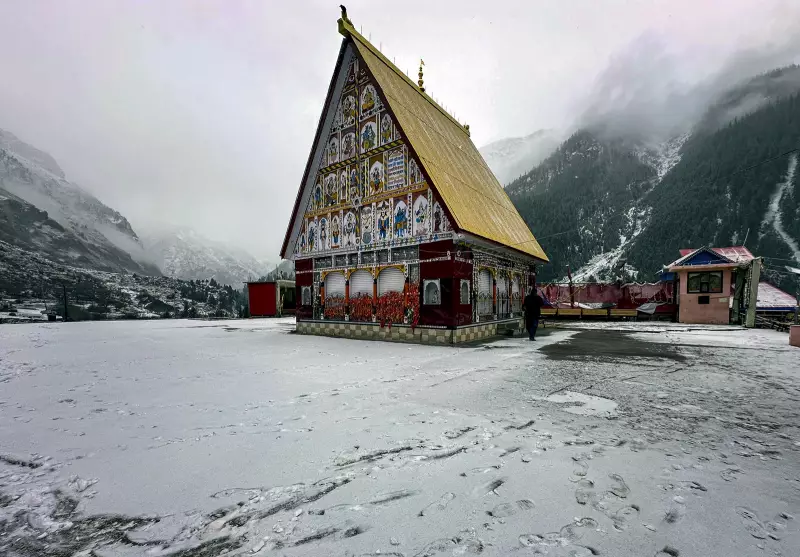
Rashid Ali's first encounter with Jammu was in 2005, when he arrived to shoot a documentary film. The city, often labeled the "city of temples," failed to register as a place of aspiration then and, in his view, still does not. He left without any particular attachment. However, upon his return in 2014, Jammu began to slowly reveal its layers. He observed two powerful forces shaping its core identity: a deep connection to the Dogri language and an eternal quest for Dogra pride. Notably, Jammu chose pride over linguistic preservation, a decision that helped Ali comprehend the city's unique character of simultaneous assertion and retreat.
The Reactive Pulse: Jammu's Politics and the Shadow of Kashmir
Ali's analysis highlights that Jammu's political consciousness remains inextricably and deeply reactive to events in the Kashmir Valley. The city often defines itself not through an internal narrative but in constant relation to its northern neighbour. This dynamic was thrown into sharp relief during the historic abrogation of Article 370 in 2019. While Jammu overwhelmingly supported the move, seeing it as justice and national integration, a palpable unease about its consequences simmered beneath the celebrations. The city exists in a state of liminality, caught between its aspirations and anxieties.

This inherent tension became more personal for Ali, who has taught Media Studies at the Central University of Jammu for the past 12 years. Despite his long professional tenure, he describes feeling only "partially present." His students were cordial and respectful, yet a barrier remained; he was never invited into their personal festivals or family rituals. The city accommodates but does not absorb, allowing him to teach but not to critique or truly belong.
Selective Inclusion and the Discipline of Discomfort
The conditional nature of belonging in Jammu became starkly visible post-Article 370's abrogation, when migrant workers sought recognition and inclusion. The city's response was one of resistance and protest, revealing a core anxiety. Jammu aligns strongly with New Delhi's policies yet fiercely guards its sense of ownership against newcomers. Inclusion appears selective—extended vertically towards power but withheld horizontally from those arriving without privilege.
Yet, despite this caginess and the persistent emotional distance, Ali confesses a profound longing for Jammu. The city became his indispensable intellectual terrain. It forced him to engage with a conflict-ridden region without the refuge of easy binaries. Jammu compelled him to read, listen, and think across positions that refused moral simplicity. It taught him, as he puts it, "the discipline of discomfort." In its silences and hesitations, it offered a deeper education than any confidently announced metropolis could.
In conclusion, Ali finds a literary parallel for Jammu in Mushtaq Yusufi's "Aab-e-Gum (Lost Water)," a work steeped in unspoken loss. Much like the nostalgia Yusufi warns against, Jammu holds its inhabitants in a state of suspension. It denies both full belonging and a clean departure, creating a complex, enduring, and intellectually rigorous space for those who inhabit its ambiguous embrace.