Kerala's Historic First Kumbh Mela Ignites Spiritual Revival in Malappuram
In an unprecedented spiritual gathering, Kerala is witnessing its very first Kumbh Mela at the ancient bathing ghats of the Nava Mukunda Temple in Thirunavaya, Malappuram district. This 18-day festival, concluding on February 3, has drawn tens of thousands of devotees daily, transforming the serene banks of the Bharathapuzha river into a vibrant hub of Vedic chants and saffron-clad sadhus.
A Southern Replica of Northern Traditions
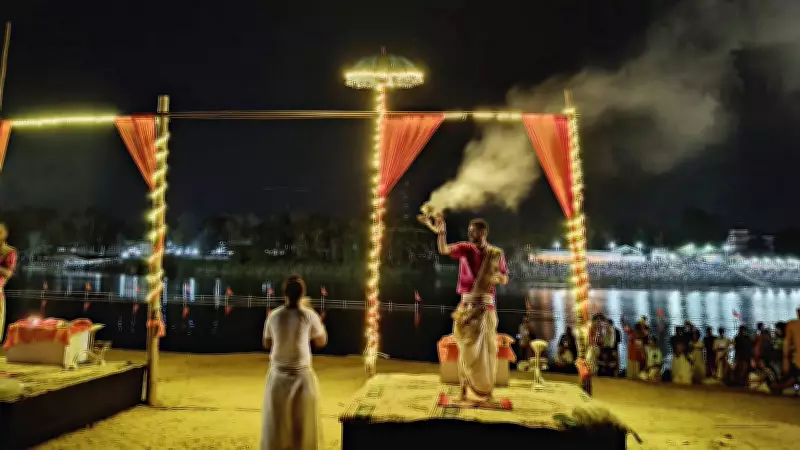
The festival meticulously re-enacts all rituals observed at the Mahakumbh Mela in Prayagraj, with priests from the renowned Kashi Vishwanath Temple performing the Nila Aarti—a local adaptation of Varanasi's famous Ganga Aarti. The Bharathapuzha river, often called Dakshin Ganga, provides the sacred backdrop for holy dips that echo round the clock.
Organized by the Bharatheeya Dharma Prachara Sabha and Mohanji Foundation, with patronage from Mata Amritanandamayi and Kerala Devaswom Minister V N Vasavan, the event represents a significant cultural revival. Swami Anandavam Bharati, the festival's prime mover and a former CPI(M) student leader turned senior monk, emphasizes this as a restoration of Hinduism and dharma in Kerala.

Historical Context and Modern Implications
Thirunavaya's ghats historically hosted the 12-yearly Mamankam festival until the 18th century, commemorating battles between local kings. After a 2016 revival as a low-key annual event, this year's Kumbh Mela marks a dramatic expansion, coinciding with Swami Bharati's appointment as Mahamandaleshwar for South India at last year's Mahakumbh in Prayagraj.
The festival's timing, just before Kerala's Assembly elections, has sparked political discussions. While Swami Bharati asserts the event benefits all parties supporting Hindu dharma, BJP Kerala vice-president V Unnikrishnan sees it as a renaissance for Hindu that may aid his party. In contrast, CPI(M) and Congress leaders maintain cautious neutrality, with CPI(M) district secretary V P Anil warning against communal exploitation.
Overwhelming Public Response and Community Support
Nava Mukunda Temple chief priest Sudheer Namboothiri reports daily attendance soaring to around a lakh, far exceeding initial expectations of 10,000. The festival has garnered cross-community backing, with Muslim volunteers participating and local support overcoming initial governmental hurdles.
Devotees like homemaker Suma from Ponnani express joy at experiencing Kumbh Mela rituals locally, while retired employee Sudhir from Thrissur believes it will energize Hindu revivalism and provide a sense of security. Special trains from Varanasi and Rishikesh bring hundreds more sadhus, amplifying the festival's national connection.
As Vedic chants fill the air and saffron robes dot the landscape, Kerala's first Kumbh Mela not only revives ancient traditions but also ignites a profound spiritual awakening, potentially reshaping the state's cultural and political contours in the days ahead.