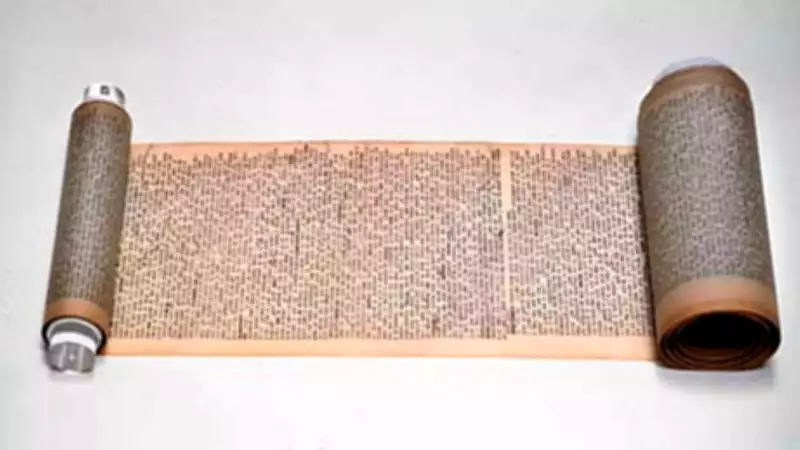
For generations, Jack Kerouac's seminal work On the Road has existed in two distinct versions. There's the published novel that readers worldwide have cherished, and then there's the legendary scroll that has remained mostly out of public sight. Now, this iconic literary artifact is making a dramatic return to the spotlight.
The Scroll's Journey to Auction
The remarkable 37-meter-long typewritten draft of On the Road is scheduled for auction in New York this coming March, and the literary world is watching with intense interest. Created during a feverish three-week creative burst in April 1951, this scroll represents Kerouac's vision before editorial changes, before polish, before any restraint was applied. It's raw, unfiltered, and according to scholars, it comes closest to capturing what the author truly intended to express.
Heather Weintraub, the books and manuscripts specialist at Christie's auction house, has emphasized the scroll's extraordinary significance. She describes it as "unique and hugely important" – not merely a draft but the only original version of Kerouac's masterpiece. Many consider it the most iconic physical object associated with the entire Beat Generation movement.

What Makes This Scroll So Different?
The scroll itself has achieved near-mythical status in literary circles. Kerouac famously taped together long sheets of tracing paper to create a continuous roll, allowing him to type without interruption. This physical format enabled the famous stream-of-consciousness prose that defines his work – just words flowing endlessly, one after another.
What's particularly striking is how substantially this original version differs from the book that was eventually published in 1957. The scroll contains passages, names, and narrative elements that were altered or removed in the final published edition, offering scholars unprecedented access to Kerouac's creative process.
Why This Auction Matters Today
Literary experts emphasize that the scroll provides rare, tangible evidence of Kerouac's spontaneous prose method – a technique he frequently discussed but which few could fully appreciate until this document became available. This isn't simply a draft; it's evidence of a revolutionary way of thinking and writing that influenced generations of authors.
The scroll's appearance at auction feels particularly significant because artifacts of this caliber and historical importance rarely become available to the public. Approximately 400 items from the collection will be displayed free to the public at Christie's Rockefeller Plaza galleries from March 6 to 12, offering a unique opportunity for literary enthusiasts to witness history firsthand.
Controversy and Cultural Ownership
This isn't the first time Kerouac's scroll has sparked controversy. When it was last sold in 2001, Carolyn Cassady – the former wife of Neal Cassady, who inspired one of the novel's central characters – strongly criticized the sale, calling it "blasphemy." Her reaction highlights ongoing debates about art, ownership, and who should decide where important pieces of cultural history ultimately belong.
The current auction raises these questions anew, as literary historians and cultural institutions consider the scroll's proper place in preserving America's literary heritage.
A Star-Studded Collection
The Kerouac scroll won't be alone at this significant auction. The sale features an impressive array of cultural artifacts including:
- Paul McCartney's handwritten lyrics for the Beatles classic Hey Jude
- Documents related to the Beatles' historic breakup
- Handwritten notes by Sylvester Stallone for the Rocky films
- A personal journal kept by Doors frontman Jim Morrison
This diverse collection underscores the auction's significance as a major cultural event, bringing together artifacts that have shaped modern literature, music, and film.