In a significant victory for urban conservation and citizen activism in Kolkata, a historic tamarind tree planted over seven decades ago by a freedom fighter has been saved from being cut down. The successful campaign was led by a unique collective of artists, cultural activists, and local residents who refused to let the green heritage vanish.
The Tree and Its Historical Roots
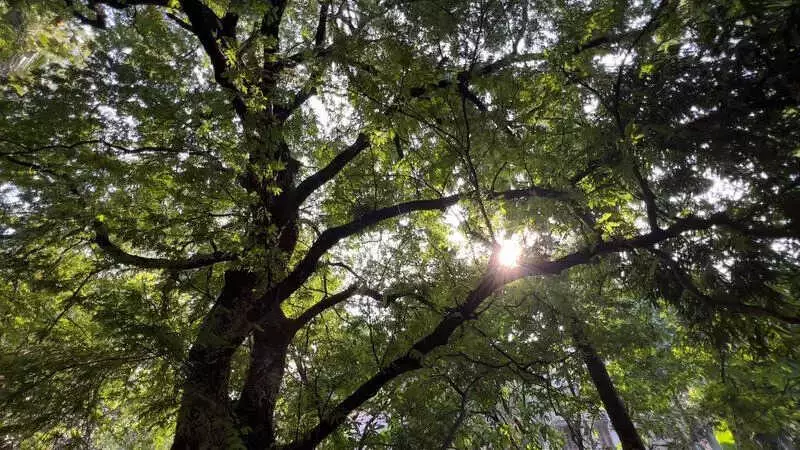
The focal point of this struggle was a tamarind tree in Vidyasagar Colony, planted more than 70 years ago by freedom fighter Parul Mukherjee. Known affectionately as 'Parul Pishi', Mukherjee was a respected revolutionary associated with the Anushilan Samiti and played a role in India's independence movement. She later dedicated her life to refugee welfare and community education.
In recent years, this tree transcended its botanical existence to become a cultural hub. It gained popularity among artists and activists across India, serving as a venue for discussions, concerts, and community gatherings. Its historical and ecological value made it a symbol worth fighting for when its existence was threatened by redevelopment plans.

The Collective's Multifaceted Campaign
Faced with the potential felling of the tree, concerned citizens formed the Tamarind Tree Collective. Their campaign was creative, persistent, and multi-pronged. Members, including key figures like Barnali Das, Madhuchhanda, Samata Biswas, Moushumi Bhowmik, Arko Mukherjee, and Akash Chakraborty, organized neighbourhood bird walks and hosted cultural events under the tree's canopy.
They launched a dedicated YouTube channel named 'Tamarind Tunes' to amplify their message. Cinematographer-turned-documentary maker Debalina directed a film titled 'Jilipibalar Bondhura' featuring the tree, which won a special mention at the Kolkata International Film Festival (KIFF) last year. The documentary highlighted the urgent need to conserve urban greenery.
The activism scaled up with an online petition that gathered over 4,000 signatures. The petition urged the Kolkata Municipal Corporation (KMC) to issue a protective order for the tree, prevent its removal under any redevelopment plan, create a monument for Parul Mukherjee nearby, and install informational signage about the site's history.
Victory and Lasting Impact
The relentless efforts bore fruit when, on a recent Saturday, forest department officials conveyed the decision to the collective. The builder, Debasish Sarkar, assured that "there is no question of chopping the tamarind tree". He also committed to constructing a memorial to honour Parul Mukherjee's legacy.
The developer had earlier alleged that saving the tree was a "business" for the activists, referencing their YouTube channel. Debalina responded unequivocally, stating, "I knew this battle to save the green won't be easy. For me, 1 tree is not 1 life. 1 tree is a million lives. We didn't monetise the channel and shut it down too. Such allegations don't bother me."
For collective member Samata Biswas, the triumph is symbolic of broader civic power. "We are often asked what can we achieve by saving only 1 tree. But saving this tree shows that change can indeed come when common people get together and take civic action in their own hands. We hope this will serve as an inspiration to people," she said.
This story from Kolkata is more than just about saving one tree; it's a blueprint for community-led environmental conservation, demonstrating how collective cultural action can safeguard tangible links to history and biodiversity in our rapidly urbanizing landscapes.