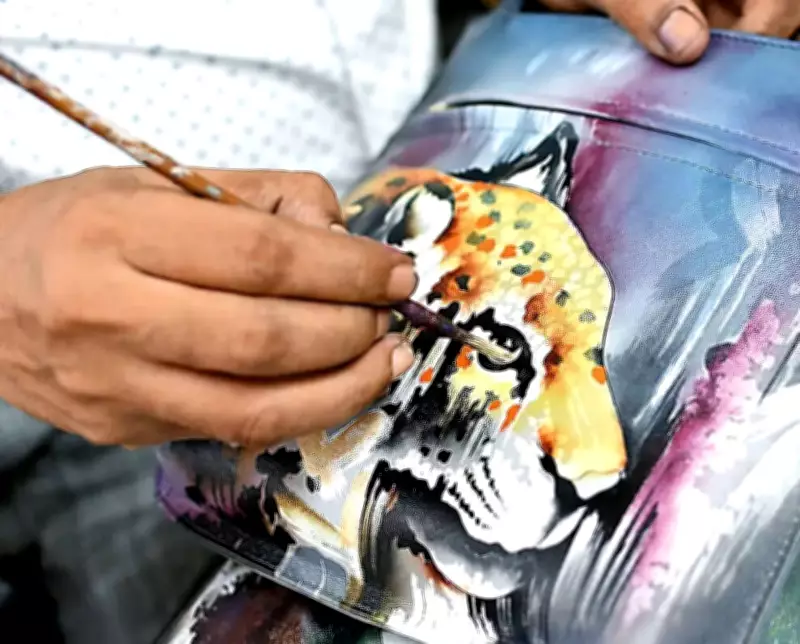
Leather Painting Emerges as Personal DIY Craft, Moving Beyond Workshops
Leather painting is not a craft one typically stumbles upon by chance. With only a handful of workshops available to introduce enthusiasts to this specialized art form, access has traditionally been quite limited. However, curiosity about this unique medium is anything but scarce. Those brief introductory sessions are now inspiring a broader movement, spilling over into living rooms and sparking do-it-yourself experiments across the country.
Individuals are increasingly picking up brushes to rework and revitalize old wallets, handbags, and personal keepsakes. What often begins as a one-off creative experience is steadily evolving into something far more personal and sustained: a slow, deliberate craft that invites practitioners to create and recreate objects they already own and cherish.
A Demanding Medium That Commands Respect
As designer Bhaskar Basu, CEO and Designer of Anuschka, articulates, "The intent was simple yet ambitious, to paint on leather the way one would paint on canvas." However, leather presents a distinct challenge compared to more forgiving surfaces like paper or fabric canvas. "Leather painting is inherently more demanding… the artist must adapt to the material, rather than rely on it," Basu explains.

The surface does not absorb paint readily. "The paint does not simply sink in; it binds to the surface in a controlled way," which necessitates that every single brushstroke be deliberate and intentional. For beginners, this learning curve is immediate and pronounced.
"Just to paint a pre-sketched butterfly keychain, it took me almost an hour," recounts homemaker Jaya Baid. "The challenge was to keep the different colors within the boundaries… from merging with each other. So I had to be really slow and patient."
Even artists from other disciplines notice the distinct properties. Workshop participant Priyam Dalmiya observes, "It was much easier than I expected it to be… it felt a lot like painting on fabric. If the surface is prepped properly with white paint, all the colours pop out nicely." She emphasizes that meticulous preparation is absolutely critical to the final outcome. True mastery of leather painting is not achieved quickly; it involves layering colors, building textures, and refining techniques over years. It is not a craft perfected in an afternoon; each piece typically undergoes cycles of trial, rejection, and reworking before it feels just right.
From Rare Workshops to Widespread Home Experiments
Because formal access remains limited, workshops are increasingly serving as springboards rather than final destinations. "It was my first," says Antara Basu, who "just happened to chance upon this advertisement on Insta" and signed up out of sheer curiosity. "I got to get creative… and I love the hands-on experience," she says, describing the session as "a blast."
The significant shift occurs after these initial encounters. "I had been wanting to paint a couple of my old handbags to give them a new look but had no idea how to start," says Jaya Baid. Now, she and many others are contemplating taking the craft forward independently. While admitting that "to create masterpieces more training and resources would be required," the DIY impulse is strong.
For some, the intent is already clear and focused. "Absolutely… specially on wallets and small leather products," says Priyam Dalmiya, who has "seen a lot of people paint on their leather bags… to personalise them." Antara Basu echoes this transition: "Now I can… continue doing it… on some leather stuff which I have," adding that it represents a meaningful way "to give that justification to an already used product."
Even established practitioners recognize this burgeoning DIY trend. Zainul Abedin of Feroza Arts notes that "Goat leather… acts as a canvas to do different designs and paintings," explaining that both "industrial paint" and "normal acrylic colours… coated with a solution" are utilized to ensure a durable, lasting finish.

The Enduring Personal and Emotional Appeal
A substantial part of leather painting's growing appeal lies in the deeply personal nature of the process. "Leather is a living material- it has grain, movement and personality… the leather becomes our canvas and our collaborator," describes Bhaskar Basu. This sense of collaboration ensures that every finished piece is inherently unique. "Every brushstroke is unique… there are subtle differences in the shading, in the colouring," he adds. It is precisely this element of unpredictability and organic character that draws people back to the craft.
There is also a significant emotional payoff. Participants describe the experience as "exciting," "fulfilling," and "everlasting." For Antara Basu, the hands-on aspect made it particularly memorable. For Jaya Baid, the result transcended mere object creation: "Anything handmade has the heart and soul of the creator… it worked like therapy to calm my mind."
Starter Guide: Essential Tools and How to Begin
For those inspired to start their leather painting journey, here is a foundational guide:
- Pick the Right Base: Begin with vegetable-tanned leather or small, manageable items like wallets or cardholders. Always practice on inexpensive scraps first.
- Clean and Prep Thoroughly: Wipe the surface with rubbing alcohol, then use a deglazer to remove any existing finish. This crucial step determines whether the paint will adhere properly or peel off later.
- Choose Flexible Paints: Opt for acrylic paints specifically formulated for leather. They bond effectively and will not crack when the leather bends or flexes.
- Get Basic Tools: A couple of fine-tipped brushes for details and a sponge for applying base coats are sufficient to begin.
- Sketch Lightly First: Use a pencil or chalk to lightly map your design onto the leather before painting. Keep the design simple for your initial attempts.
- Paint in Thin Layers: Build up color gradually, allowing each coat to dry completely before applying the next. Applying paint too thickly is a common beginner mistake.
- Seal the Work: Always finish by applying a dedicated leather sealer. This protects the artwork from wear and ensures the paint lasts.
Quick Start Tip: Initiate your practice with a very small project, such as a cardholder. Test all your materials and techniques on scrap leather first. Remember, the quality of the final finish often depends more on meticulous preparation than on an intricate initial design.
As workshop participant Priyam Dalmiya summarizes, reflecting on the accessible side of the craft, "The craft, though tricky for first-timers, felt a lot like painting on fabric. Prep is important because once the surface is prepped properly with white paint, all the colours pop out nicely."