The Trimurti and the Divine Cycle of Existence
In Hinduism, the concept of the Trimurti represents the fundamental cycle of life and existence through three divine aspects. This sacred trinity consists of Brahma, the creator; Vishnu, the preserver; and Mahesh, also known as Lord Shiva, the destroyer. Together, these deities embody a singular divine force that regulates the rhythm of the universe, maintaining balance between creation, preservation, and dissolution.
Lord Shiva: The Destroyer and Renewer
Lord Shiva is renowned for his intense nature, symbolizing both benevolent and formidable aspects of divinity. Hindus hold a profound belief in Shiva's powers of destruction and recreation, viewing his role as essential for eliminating imperfections in the world and facilitating beneficial transformation on Earth. Devotees who worship Lord Shiva often contemplate his distinctive appearance, particularly his adornment with 'Vasuki,' the serpent king coiled around his neck.
Significance of the Serpent Around Shiva's Neck
In Hindu tradition, the snake encircling Shiva's neck is far more than mere ornamentation; it carries deep symbolic meaning. This serpent is typically identified as Vasuki, a powerful snake from ancient mythological narratives. Snakes are universally associated with fear and danger, often regarded as deadly creatures linked to mortality. By wearing Vasuki calmly around his neck, Shiva demonstrates supreme control, strength, and transcendence over fear, embodying the principle that true power lies in mastering rather than succumbing to destructive forces.

Symbolism of Renewal and Transformation
There exists a simpler yet equally profound interpretation. Snakes periodically shed their skin, emerging renewed and revitalized, making them potent symbols of change and new beginnings. This cyclical process of shedding and regeneration aligns perfectly with Shiva's role as the destroyer who facilitates renewal. The serpent thus becomes a living metaphor for the continuous cycle of destruction and recreation that Shiva governs.
In essence, the serpent around Lord Shiva's neck symbolizes:
- Fearlessness in the face of danger and mortality
- Renewal from destruction through transformative cycles
- Self-control and mastery over primal forces
Understanding Lord Shiva's Iconic Form
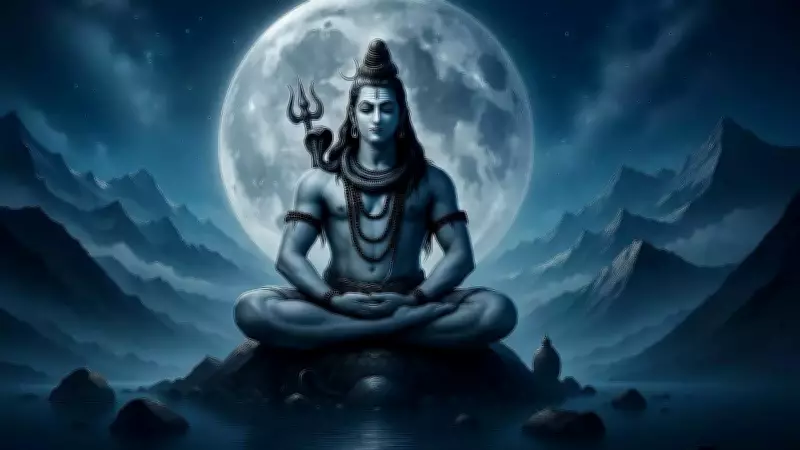
When visualizing Shiva, devotees typically imagine him with distinctive blue coloration on his throat and face. While ancient texts describe his body as fair or ash-white, artistic traditions over centuries have depicted him in various shades of blue, an imagery that has become deeply ingrained in Hindu iconography.
The Third Eye and Spiritual Awareness
One of Shiva's most recognizable features is the third eye positioned on his forehead. This symbolizes transcendent awareness that surpasses ordinary perception. A well-known mythological episode recounts how Shiva, in a moment of divine anger, opened this third eye, releasing fiery energy that destroyed Kama, the god of desire. Only through Parvati's subsequent intervention was Kama restored to existence, illustrating Shiva's power over both creation and dissolution.
Additional Iconographic Elements
Beyond the serpent, Shiva's form incorporates several other significant elements. Three lines of sacred ash, known as vibhuti, adorn his forehead, representing detachment from worldly desires and material attachments. He carries a trident, or trishul, whose three prongs are commonly interpreted as symbolizing the three fundamental forces of the universe: creation, preservation, and destruction. This weapon serves as a reminder of the delicate balance that sustains cosmic order.
The serpent king resting peacefully around Shiva's neck contrasts sharply with conventional perceptions of snakes as threatening creatures. This visual paradox reinforces Shiva's role as the master of transformation who tames and incorporates destructive energies into the divine scheme of renewal and balance.