Maatu Pongal Celebrated with Traditional Fervor in Tamil Nadu's Delta Districts
Cattle farmers across the delta districts of Tamil Nadu celebrated Maatu Pongal on Friday. This vibrant festival honors bovines for their hard work and contribution to agriculture. Farmers expressed deep gratitude to their animals through a series of traditional rituals and offerings.
Traditional Rituals and Decorations
Farmers began the day by bathing their cattle thoroughly. They then adorned the animals with colorful decorations, applying turmeric, sandalwood paste, and kumkum on their foreheads. The bovines received garlands as part of the festive adornment. After the decoration, farmers performed age-old rituals and offered special Pongal food to their cattle.
These practices served as expressions of thanks for the animals' labor throughout the year. Farmers prayed for the long life, good health, and prosperity of their bovine companions. The rituals highlighted the deep bond between farmers and their cattle in these agricultural communities.

Grand Go-Pooja at Thanjavur Temple
A significant 'go-pooja' or cow worship ceremony took place at the Brihadeeswarar Temple in Thanjavur. This elaborate event featured 108 sacred bovines receiving special honors. Temple priests performed detailed poojas dedicated to the well-being of the cows.
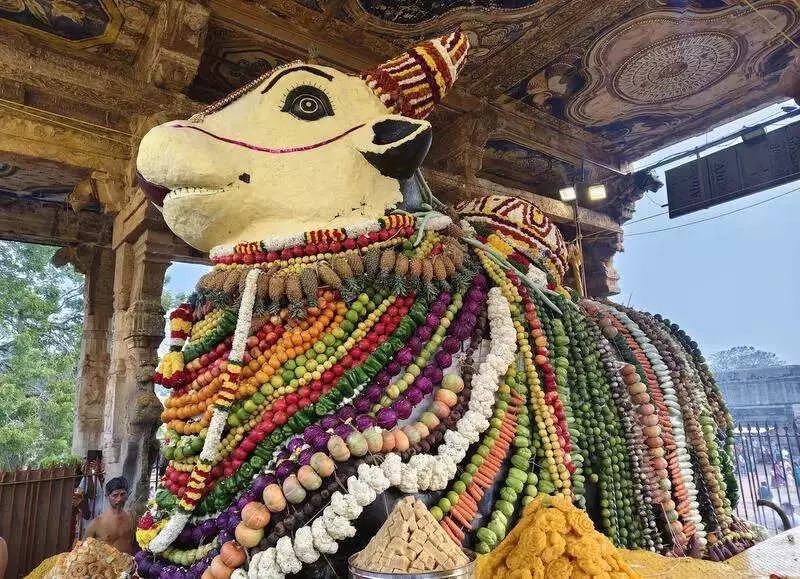
The ceremony included offering sarkarai pongal and ven pongal to the animals. Following this, an abhishekam was conducted for Maha Nandi using various sacred substances. These included turmeric, sandalwood, milk, curd, herbal powders, sugarcane juice, tender coconut water, and panchamirtham.
After the abhishekam, the nandi received decoration with two tonnes of sweets, fresh fruits, and vegetables. The event concluded with a maha deeparadhana attended by numerous devotees. This temple ceremony demonstrated the religious significance of cattle in local traditions.
Celebrations in Nagapattinam District
Maatu Pongal was also observed in the Thalaignayiru block of Nagapattinam district. The festival took place in Umbalacheri village on Thursday. This village holds special importance as the original home of the Umbalacheri native cattle breed.
This year's celebrations involved fewer animals than previous years. This reduction reflects the gradual decline in the population of this native breed across the region. Despite the smaller numbers, local farmers maintained the traditional spirit of the festival.
Farmers bathed their cattle with care and affection before decorating them beautifully. They carried out traditional rituals including circling the herd with a pot of burning charcoal. As part of their prayers, farmers guided the eldest animal to jump over a burning haystack.
Through these customs, farmers sought blessings for robust cattle health. They also prayed for improved milk production and better breeding outcomes. These practices underscore the practical importance of cattle health to agricultural livelihoods.
Cultural Significance and Contemporary Challenges
Maatu Pongal represents more than just a festival. It embodies the cultural heritage and agricultural traditions of Tamil Nadu's delta regions. The celebrations reinforce the vital role cattle play in rural economies and farming communities.
The declining participation of Umbalacheri cattle in this year's festival highlights a concerning trend. Native breed populations face gradual reduction across the region. This development raises questions about biodiversity conservation and traditional farming practices.
Despite these challenges, the continued observance of Maatu Pongal demonstrates the resilience of cultural traditions. Farmers maintain their connection to age-old practices while adapting to changing circumstances. The festival serves as both a celebration of bovine contributions and a prayer for their continued well-being.