The sacred banks of the Ganga in Prayagraj are poised to become a monumental stage for unity, equality, and spiritual harmony as the Magh Mela 2026 gets underway from January 3. The annual religious congregation, beginning with the auspicious Paush Purnima Snan (holy bath), is expected to draw millions of seers, pilgrims, and devotees with the shared goal of attaining moksha (salvation). This timeless event consistently transcends the rigid barriers of language, caste, creed, and sect, embodying India's profound cultural diversity.
A Grand Confluence of Faith and Humanity
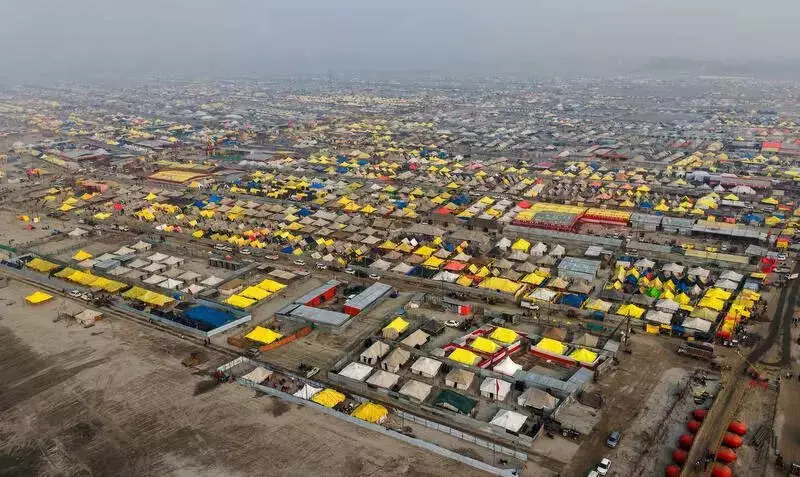
Pilgrims from every corner of the nation are converging at the sprawling tent city that has taken shape along the Ganga. The mela campus is a vibrant tapestry of devotion, where individuals from Prayagraj, neighbouring districts, and distant states gather daily. Their pursuits are multifaceted: seeking blessings from revered sages and ascetics, visiting temples for darshan, and partaking in communal meals at community kitchens (bhandaras). These bhandaras stand as powerful symbols of unity and equality, where everyone sits together to share food.
Mela officials emphasize that the event is a remarkable showcase of the egalitarian spirit embedded within the country's diverse traditions. Visitors are often left in awe witnessing devotees from vastly different linguistic and cultural backgrounds assemble at the Sangam—the confluence of the Ganga, Yamuna, and mythical Saraswati—for the sacred dip, to earn punya, and perform rituals.

Religious scholar Amitabh Gour highlighted this inclusive atmosphere. "Whether it's the spiritual discourses (kathas) by gurus, the camps of prominent seers, or the ghats of Sangam, devotees freely visit, worship, and seek blessings without any barriers," he said. He further noted, "Numerous community kitchens in the Sangam area operate day and night, offering food and prasad to all, where devotees from across the country sit together, setting aside differences, to share meals in a spirit of harmony."
Elaborate Arrangements for a Massive Gathering
With a staggering 15 crore devotees and pilgrims anticipated, the mela administration has undertaken extensive preparations to ensure safety, convenience, and smooth operations. A prime focus has been on sophisticated crowd and traffic management systems.
Key infrastructure developments include:
- Expanded Ghats: The bathing ghats have been lengthened to 8 kilometers to prevent overcrowding and inconvenience to bathers. Jal police and volunteers will monitor deep-water zones.
- Sector Division & Connectivity: The mela area has been expanded and divided into seven sectors. For seamless transportation, nine pontoon bridges (including two at Teliyarganj) have been constructed.
- Water, Sanitation & Health: A massive network of 242 km of water pipelines and 85 km of sewer lines has been laid. 25,000 toilets have been built, with 3,000 sanitation workers assigned for 24/7 cleaning. Healthcare facilities include two 20-bed hospitals (Ganga and Triveni), 12 primary health centres, 50 ambulances plus one river ambulance, and over 350 medical and paramedical staff.
- Power & Transport: Uninterrupted power supply with LED lighting has been arranged. For transport, 3,800 UPSRTC buses (including 75 electric buses) are deployed, and 43 parking zones have been established.
Security and the Timeless Tradition of Kalpavas
Security has been significantly bolstered for the 2026 event. Over 10,000 policemen have been assigned duty, which is 20% more than the previous Magh Mela. A total of 17 police stations and 42 police outposts ensure foolproof security and crowd management. Measures like deep-water barricading, fixed parking, multilingual signboards, PA systems, and mock drills are in place for effective crowd control.

At the heart of the mela is the ancient tradition of Kalpavas, where around four lakh devotees from across the country, representing every stratum of society, participate. Here, distinctions of wealth, profession, gender, or social status dissolve. Rich and poor, traders and officials, men, women, and transgender individuals—all unite in devotion, taking the holy dip at the confluence.
Maa Ganga and the Magh Mela make no distinctions, welcoming urban dwellers, rural pilgrims, and people from states like Madhya Pradesh, Bihar, Gujarat, Rajasthan, Punjab, and Delhi. For ages, this tradition of unity and equality on the banks of the Sangam has symbolized the timeless essence of Sanatan dharma, continuing to inspire and draw millions into its fold.