Maharashtra Temples Navigate LPG Supply Challenges to Sustain Free Meal Services
In the face of ongoing LPG supply bottlenecks, several prominent temples across Maharashtra have demonstrated remarkable resilience, ensuring their mass-meal services remain uninterrupted for thousands of devotees daily. Key institutions including the Shree Saibaba Temple in Shirdi, the Shree Saptashrungi Nivasini Devi Shaktipeeth, and the Gajanan Maharaj Mandir in Trimbakeshwar are continuing their sacred feeding traditions without compromise.
Shirdi Saibaba Temple's Solar-Powered Solution
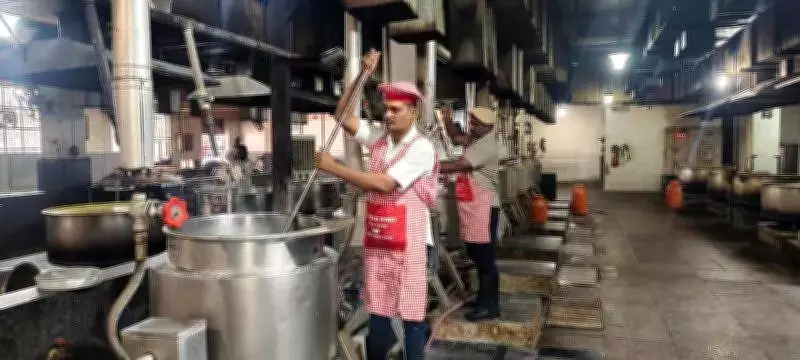
The Shree Saibaba Sansthan in Shirdi has effectively leveraged technology to mitigate fuel constraints. Since 2009, the temple has operated a solar-powered steam generator that significantly reduces dependence on LPG for cooking. This innovative system helps prepare rice and vegetables, cutting daily LPG consumption by up to 300 kilograms.
Trust CEO Goraksha Gadilkar emphasized that while supply remains stable, proactive conservation measures are in place. "We are voluntarily adjusting our menu to conserve fuel. Currently, we are serving one vegetable instead of two, specifically choosing items that can be cooked using steam. Importantly, there has been no reduction in either the quantity of food served or the number of pilgrims we accommodate, which averages 40,000 per day," Gadilkar explained.

Administrative officer Sandeep Bhosale provided detailed consumption figures, noting that daily LPG usage typically ranges from 950 kilograms, increasing to 1,350 kilograms during cloudy weather when solar efficiency decreases. "We provide breakfast and two full meals daily. If the supply situation persists for another twenty days, we may need to reduce items like puris and laddoos, though boondi will continue to be served," Bhosale stated.
Kolhapur's Mahalaxmi Temple Faces Strain
In contrast, the Annachhatra at Kolhapur's Mahalaxmi temple, which offers free, simple meals to devotees, is experiencing significant pressure. Operator Raju Mevekari, who feeds approximately 5,000 people daily at no cost, expressed growing concern. "I require four to five LPG cylinders each day to serve 4,000 to 5,000 individuals. My current stock will only last two more days. For the first time, I am uncertain how to continue feeding so many devotees beyond that point," Mevekari revealed.
He has made a public appeal for cylinder donations to support this social cause, emphasizing his commitment to never letting anyone leave hungry, especially those traveling from distant regions within and beyond Maharashtra.
Community and Administrative Appeals
With supplies dwindling, Annachhatra operators have requested local devotees from within the district to temporarily avoid visits, allowing them to prioritize feeding pilgrims from farther away. They have also approached district administration for relief, but officials have indicated that the matter falls under central government jurisdiction, offering no immediate solution.
Other Temples Maintain Services with Precautions
The Shree Saptashrung Niwasini Devi Trust continues to serve two meals daily to around 4,000 pilgrims without alterations. Executive officer Bhagwan Nerkar highlighted upcoming challenges, stating, "With Chaitra Navratri commencing on March 19, we anticipate over 40,000 pilgrims daily for nine days who will require prasad. We have formally requested the administration to allocate the necessary LPG quota for this period."
At the Gajanan Maharaj Mandir in Trimbakeshwar, the prasadalay serves 900 devotees each day. Temple management has prepared contingency plans by stocking diesel and alternative-fuel stoves. A temple representative assured, "Should any rationing decisions be implemented, we will make appropriate adjustments to ensure uninterrupted service to pilgrims without compromise."
These temples exemplify adaptive management and community spirit, ensuring that spiritual hospitality endures despite logistical challenges.