Makar Sankranti 2026: A Celebration of Harvest and Traditional Foods
Makar Sankranti marks a joyous time in India. It is a harvest festival celebrated with great enthusiasm across the country. The festival falls on January 14th in 2026. People welcome the sun's transition into the zodiac sign of Capricorn. This event symbolizes the end of winter and the beginning of longer days.
Significance of Traditional Foods in Makar Sankranti
Food plays a central role in Makar Sankranti celebrations. Families prepare special dishes that hold deep cultural meaning. These foods are not just tasty. They also offer health benefits and connect people to their roots.
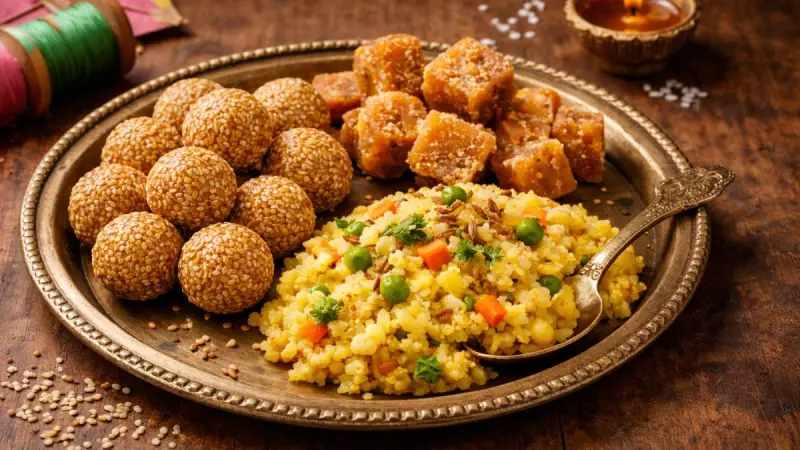
Til, or sesame seeds, are a key ingredient during this festival. People make til ladoos and other sweets with sesame. Til is believed to provide warmth in the cold weather. It is rich in nutrients like calcium and iron. Consuming til is thought to bring prosperity and ward off negative energies.

Jaggery, or gur, is another essential item. It is often paired with til in various recipes. Jaggery is a natural sweetener made from sugarcane juice. It helps in digestion and boosts energy levels. Eating til and jaggery together is a common practice. This combination is said to promote good health and harmony.
Khichdi: The Hearty Dish of Makar Sankranti
Khichdi holds a special place in Makar Sankranti feasts. This simple dish is made from rice and lentils. Many regions in India prepare khichdi as a main meal during the festival. It is easy to digest and provides balanced nutrition.
Khichdi symbolizes simplicity and purity. Families often cook it as an offering to deities. Sharing khichdi with loved ones strengthens bonds. The dish represents the harvest bounty and gratitude for nature's gifts.
Regional Variations and Celebrations
Makar Sankranti is known by different names across India. In Punjab, it is celebrated as Lohri with bonfires and dancing. In Gujarat, people fly kites during Uttarayan. Tamil Nadu observes it as Pongal, where rice is boiled in milk as an offering.
Despite regional differences, the core themes remain the same. People express gratitude for the harvest. They seek blessings for a prosperous year ahead. Traditional foods like til, jaggery, and khichdi are common threads. These items highlight the festival's connection to agriculture and well-being.
Health Benefits of Festival Foods
The foods of Makar Sankranti are not only symbolic. They also offer practical health advantages. Til provides essential fats and antioxidants. Jaggery is a good source of iron and helps cleanse the body. Khichdi is a light meal that supports digestion during seasonal changes.
Eating these foods aligns with the body's needs in winter. They help maintain energy and warmth. This tradition shows how Indian festivals blend culture with wellness.
Makar Sankranti 2026 will be a time for joy and reflection. Families will come together to enjoy these traditional dishes. The festival reminds everyone of the importance of nature and community. By savoring til, jaggery, and khichdi, people honor their heritage and health.