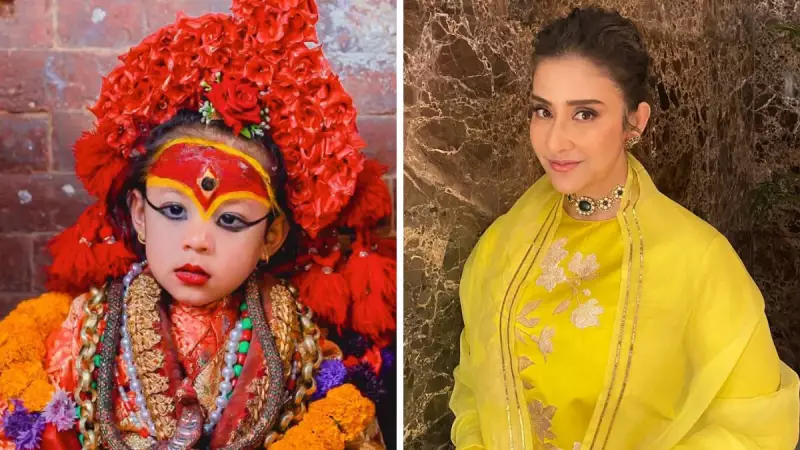
Bollywood actress Manisha Koirala recently undertook a spiritual journey to her ancestral homeland of Nepal. Her visit included a significant stop at the historic Kumari Temple in Kathmandu, a site central to the unique and ancient tradition of worshipping a living goddess.
A Spiritual Homecoming for Manisha Koirala
The actress, who has Nepalese roots, shared glimpses of her temple visit on social media. She expressed a deep sense of reverence and curiosity about the centuries-old Kumari tradition. Koirala's exploration highlights a growing interest among individuals in connecting with profound spiritual and cultural practices beyond mainstream religion.
The visit took place in early January 2024, as documented in her posts. Her respectful engagement with the site underscores a personal quest for understanding and peace.

Understanding the Kumari: Nepal's Living Goddess
The Kumari tradition is a cornerstone of Newari culture in the Kathmandu Valley. It involves the worship of a pre-pubescent girl chosen as the human incarnation of the Hindu goddess Taleju Bhawani, a form of Durga. The selected girl, known as the Kumari, is revered as a living deity until she reaches puberty.
The selection process for the Kumari is rigorous and steeped in ritual. Candidates, typically from the Shakya goldsmith caste, must pass numerous tests. These include demonstrating fearlessness and exhibiting a perfect horoscope that matches the king's. A key test involves remaining calm in a room filled with 108 decapitated buffaloes and men wearing frightening masks. The girl who shows no fear is believed to be the true vessel for the goddess.
Once chosen, the Kumari resides in the Kumari Ghar, a palace in Kathmandu Durbar Square. Her life changes dramatically, as she leaves her family home to live in the temple. She makes public appearances on specific festivals and grants audiences to devotees. Her feet must not touch the ground outside the palace, and she is carried or transported in a palanquin.
The Life and Transition of a Kumari
The goddess's presence is believed to depart from the girl at her first menstruation or a significant loss of blood from an injury. Upon this event, her divine status ends, and she returns to a normal life. The former Kumari receives a state pension to support her transition. This return to ordinary life can be challenging, with societal myths and adjustments posing difficulties. However, in modern times, many former Kumaris have pursued higher education and built successful lives.
The tradition, while deeply revered, has also faced scrutiny regarding the impact on the child's upbringing and social development.
A Symbol of Cultural Heritage and Spiritual Inquiry
Manisha Koirala's visit to the Kumari Temple is more than a celebrity sightseeing trip. It represents a meaningful engagement with a living cultural heritage. For devotees, the Kumari is a source of blessings and a powerful spiritual symbol. For observers like Koirala, it offers a window into a unique syncretic tradition that blends Hinduism and Buddhism, and where the divine is seen in a human child.
Her public sharing of this experience helps bring global attention to this Nepalese tradition. It encourages conversations about the preservation of intangible cultural heritage and the evolving understanding of such practices in the contemporary world. The actress's journey underscores a universal human search for meaning, connection, and a deeper understanding of the diverse ways in which faith and culture manifest.