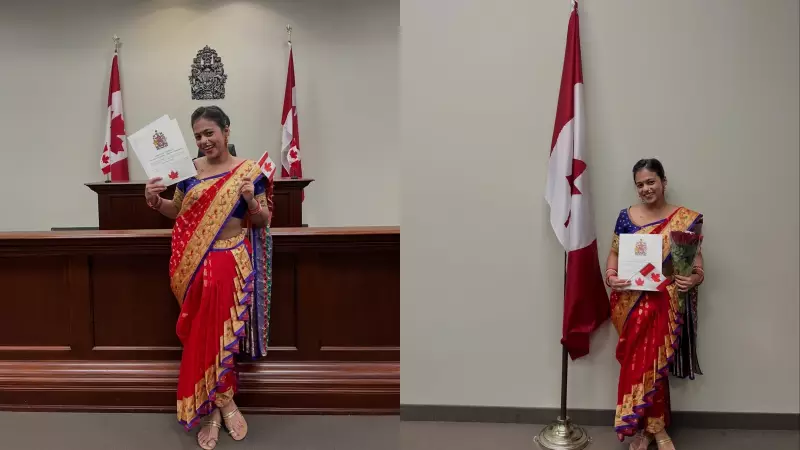
Marathi Woman Chooses Traditional Nauvari Saree for Canadian Citizenship Oath Ceremony
In a heartfelt display of cultural pride, Divya Lotikar, who identifies as a "Marathi mulgi" or Marathi daughter, opted to wear a traditional Nauvari saree during her Canadian citizenship oath ceremony. This choice, which she described as "keeping my roots alive," has ignited widespread discussion on social media about balancing heritage with new national identities.
A Symbolic Attire Choice for a Milestone Moment
Instead of selecting conventional formal wear for the significant occasion, Divya adorned herself in a nine-yard Nauvari saree, complemented by a traditional nath (nose ring) and a simple bindi. Photographs from the ceremony, shared on her Instagram account, show her holding the Canadian citizenship certificate with a serene smile, the distinctive drape of the saree adding a unique cultural frame to the moment.
In her social media post, Divya reflected on the profound meaning behind her attire choice, stating, "Today marks one of the most significant milestones of my life. Wearing a Nauvari saree that carries strength, dignity, resilience, and continuity, this moment reflects years of perseverance, adaptation, and quiet determination." She further emphasized her connection to her origins by adding, "Proud to be where I am without forgetting where I'm from."

Mixed Reactions from the Online Community
The post quickly garnered attention, with many users praising Divya for blending tradition with achievement. Comments included sentiments such as:
- "Tradition & Achievement in one frame," one Instagram user remarked.
- Another wrote, "You just gave me a nice idea to wear Marathi ethnic wear for my USA citizenship ceremony."
- A third applauded, "Yes girl, take your culture with you, that's the true meaning of a global citizen."
However, not all feedback was supportive. Some users questioned the appropriateness of cultural expression at a citizenship ceremony, with comments like:
- "We really need to assimilate with the society we choose as our home in my opinion. You looked great though!"
- Another asked, "Why not try to embrace the culture of the new country you moved to for a better life? Just curious."
Understanding the Nauvari Saree and Its Cultural Significance
The Nauvari saree is a traditional Maharashtrian garment, typically nine yards in length and draped in a dhoti style. Historically, it was worn by women warriors and laborers due to its comfort and freedom of movement. Today, it stands as a powerful symbol of cultural pride, strength, and heritage in Maharashtra, representing resilience and continuity across generations.
Divya's decision to wear it during her citizenship oath highlights a growing trend among diaspora communities to maintain cultural ties while embracing new nationalities. This incident underscores the broader conversations about identity, assimilation, and the celebration of diversity in multicultural societies like Canada.
As debates continue online, Divya's story serves as a poignant reminder of the personal journeys behind citizenship milestones, where individuals navigate the delicate balance between honoring their past and building their future.