Medieval Tunnel Discovered Within Ancient Neolithic Burial Landscape in Germany
Archaeologists conducting routine excavations in the German state of Saxony-Anhalt have made a remarkable discovery that bridges thousands of years of history. While preparing for a wind energy project near the village of Reinstedt in the Harz district, researchers uncovered an unusual underground tunnel nestled inside a much older prehistoric burial site. This finding has sparked significant interest among historians and archaeologists alike.
An Unexpected Find During Wind Farm Preparations
The discovery occurred during standard archaeological surveys required before the construction of wind turbines. The area was already known for its rich archaeological heritage, featuring Neolithic and Bronze Age remains. However, the tunnel emerged as a completely unexpected addition to this ancient landscape.
Initially appearing as a simple pit in the soil, further excavation revealed a more complex structure that clearly belonged to a much later historical period. Analysis suggests this underground feature dates to the late Middle Ages, creating a fascinating temporal overlap with the prehistoric surroundings.

A Landscape Shaped by Millennia of Human Activity
The archaeological site near Reinstedt has long been recognized as significant. It features a large trapezoid-shaped ditch from the Baalberg culture, dating back to the fourth millennium BC. Nearby, researchers have identified traces of poorly preserved burials from the third millennium BC and remains that likely belong to a Bronze Age burial mound from around the second millennium BC.
This location demonstrates how landscapes can be used, reused, and reshaped over thousands of years. The discovery of the medieval tunnel within this context raises intriguing questions about how people in different eras interacted with places shaped long before their time.
From Suspected Grave to Medieval Tunnel System
While examining the southern section of the Neolithic ditch, archaeologists noticed a long oval pit cutting across it at nearly a right angle. At first glance, it resembled a typical grave. However, as excavation continued, the feature extended deeper into the loess soil without reaching an expected conclusion.
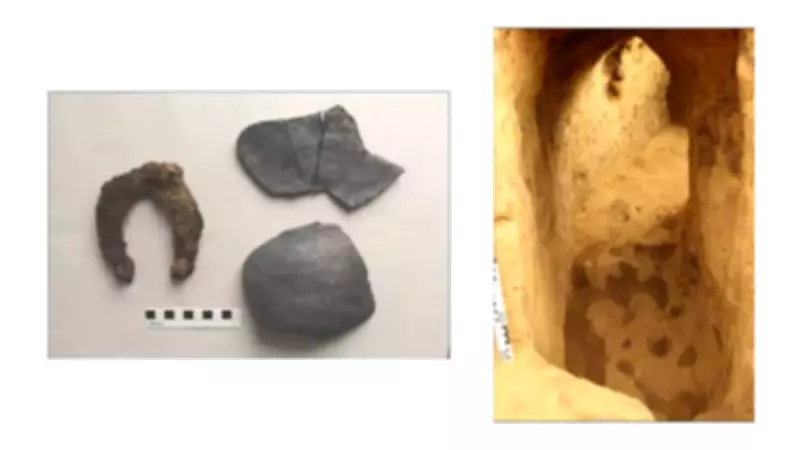
The fill contained late medieval pottery, loose stones, and small hollow spaces, clearly indicating this was not a burial site. Instead, researchers identified the structure as an Erdstall—a narrow underground tunnel system dug by hand into firm soils.
Characteristics of the Medieval Tunnel
These underground structures are known from parts of central Europe and typically date to the late Middle Ages. Their exact purpose remains unclear, with theories ranging from hiding places to spaces with symbolic or ritual significance.
The Reinstedt tunnel curves gently toward the northwest and features cramped dimensions—barely a meter high in places and no wider than 70 centimeters. Inside, archaeologists made several significant discoveries:
- A horseshoe
- The skeleton of a fox
- Numerous bones from small animals
- A thin layer of charcoal at the lowest level
The soil beneath the charcoal showed no signs of prolonged heat, suggesting a short-lived fire rather than sustained use of the space.
Evidence of Deliberate Construction and Sealing
The tunnel shows signs of careful planning rather than hasty digging. Archaeologists found:
- A carved step within the passage
- A small niche in the wall
- A stack of stones at the entrance that may indicate deliberate sealing
These features suggest the tunnel was constructed with intention and later closed off purposefully.
Why Build a Medieval Tunnel in a Neolithic Site?
The most compelling question remains: why would medieval people construct a tunnel within a prehistoric burial landscape? Several theories have emerged:
The prehistoric ditch may have still been visible in the medieval landscape, making the location easy to identify and potentially significant to later inhabitants.
The ancient burial ground might have been avoided by local people, offering the privacy needed for a hidden or secret space.

The site may have held continued symbolic importance across millennia, with different cultures finding their own meanings in the same landscape.
The tunnel maintains its silence about its exact purpose, leaving archaeologists to piece together clues from the physical evidence. This discovery highlights how archaeological sites can contain multiple layers of history, with each era leaving its mark on landscapes shaped by previous generations.
The finding in Saxony-Anhalt provides valuable insight into medieval life and how people interacted with ancient landscapes. It demonstrates that historical sites often contain surprises that challenge our understanding of how different periods connect across time.