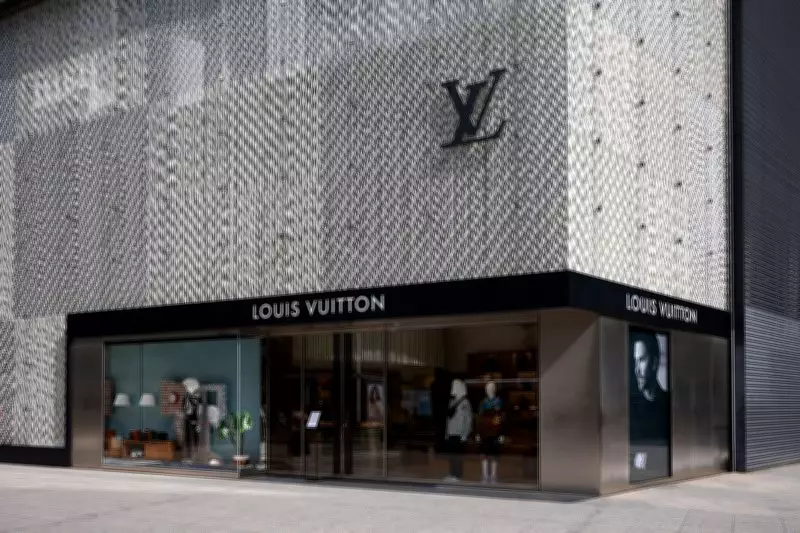
A Chinese court has ruled against Molly Tea in a trademark battle with French luxury house Louis Vuitton, ordering the bubble tea chain to pay 10.3 million yuan, roughly Rs 12 crore, to the designer for using a floral logo the court found too similar to LV's signature monogram.
Court Ruling and Damages
The Suzhou Intermediate People's Court held that Molly Tea's four-petal design created a real risk of confusing customers with Louis Vuitton's trademark, despite the two companies operating in entirely different industries. Along with 10 million yuan in damages and 300,000 yuan toward legal costs, the ruling requires Molly Tea to drop the disputed logo altogether and issue a public acknowledgment of the verdict across its website, WeChat, Weibo, RedNote and Douyin accounts.
Molly Tea's Response and Appeal
Molly Tea has rejected the ruling, and confirmed that it will appeal to a higher court. In the meantime, the Shenzhen-based chain has swapped the black-and-white version of its logo for a coloured redesign while the case proceeds. Founded in 2021, the brand has expanded rapidly to more than 2,000 outlets, with presence in the United States, Canada, Australia, the United Kingdom, Singapore, Thailand and Indonesia.

Background of the Dispute
The dispute traces back to last year, when Louis Vuitton first filed a suit. Chinese trademark records show several applications submitted by Molly Tea in 2024 were turned down after authorities noted that LV already held registration for its monogram pattern within the country.
Public Reaction and Debate
Since the verdict became public, it has drawn massive attention online, with reactions splitting sharply. Supporters of the ruling argue that registered trademarks deserve protection irrespective of sector, pointing out that legal ownership, not the age of a motif, is what determines infringement. Critics counter that floral geometric patterns resembling the monogram have long featured in Chinese textiles, architecture and decorative art, and object to a single foreign brand holding exclusive claim over such imagery.
Cultural and Legal Implications
State-run outlet Beijing Daily framed the case as exposing gaps in how Chinese heritage designs are legally safeguarded, while several commentators noted the irony of an ancient artistic tradition needing protection from the culture that produced it. Louis Vuitton, currently marking 130 years since its monogram was created in 1896, has a long history of defending the design in courts worldwide. With Molly Tea's appeal still ahead, the case looks set to keep the debate over cultural ownership and brand protection running well into the year.