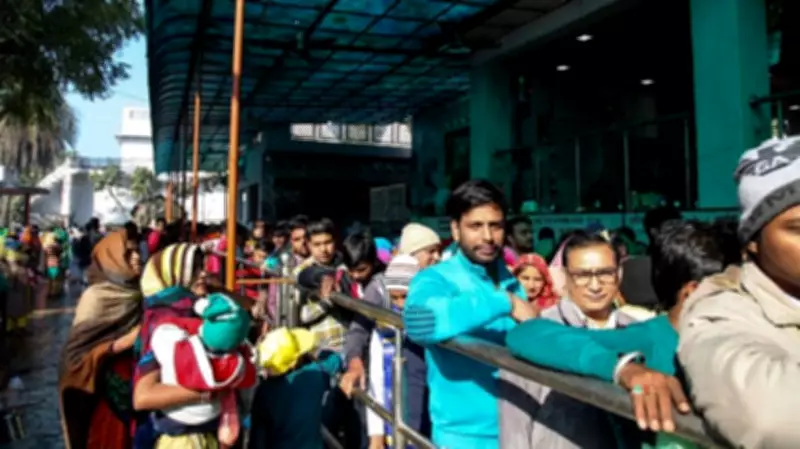
End to Paid Entries at Temples? Movement Against Paid Darshans Grows Stronger
Across India, a significant movement is gaining traction to challenge the long-standing practice of paid darshans at temples. Devotees and activists argue that when temples fall under government control or are managed by politically appointed committees, the sacred nature of worship is often overshadowed by commercial interests.
Commercialization vs. Devotion
The core of the issue lies in the perceived shift from spiritual devotion to financial gain. Many temples, especially those under state administration, have implemented tiered pricing systems for darshans, where higher fees grant quicker or more exclusive access to deities. Critics contend that this creates a hierarchy among worshippers, undermining the egalitarian principles of Hindu worship.
This practice has sparked widespread debate, with proponents claiming that fees are necessary for temple maintenance, security, and crowd management. However, opponents assert that these funds are frequently mismanaged or diverted, with little transparency in how the revenue is utilized.

Government Control and Political Influence
A key factor driving the movement is the role of government and political appointees in temple management. In states like Tamil Nadu, Karnataka, and Maharashtra, numerous temples are overseen by state-appointed boards. Activists argue that this leads to decisions being made based on revenue generation rather than religious sanctity.
Instances have been reported where temple funds are used for non-religious purposes, such as funding government projects or political campaigns, further fueling public discontent. The movement calls for greater autonomy for temples, advocating for management by religious trusts or local communities to preserve their devotional integrity.
Nashik as a Focal Point
The city of Nashik, home to several prominent temples, has emerged as a focal point in this struggle. Local groups have organized protests and petitions demanding the abolition of paid darshans, citing examples where devotees from economically weaker sections are effectively barred from worship due to high fees.
These efforts have garnered support from various religious leaders and social organizations, amplifying the call for reform. The movement in Nashik is seen as a microcosm of the larger national issue, highlighting the tension between accessibility and commercialization.
Potential Impacts and Future Directions
If successful, this movement could lead to significant changes in how temples are managed across India. Potential outcomes include:
- The elimination or reduction of mandatory entry fees at government-controlled temples.
- Increased transparency in the use of temple funds, with regular audits and public disclosures.
- A shift towards voluntary donations instead of fixed charges, allowing devotees to contribute according to their means.
- Legal challenges to state laws that enable government control over temples, potentially restoring management to religious bodies.
As the movement continues to grow, it raises fundamental questions about the intersection of faith, finance, and governance in modern India. The outcome could set a precedent for other religious institutions facing similar issues, making this a critical development in the country's socio-religious landscape.