Nabadwip's Historic Raas Utsav Revives Bengal-Manipur Cultural Bond After Two-Year Hiatus
The ancient cultural connection between Bengal and Manipur has been spectacularly revived this Holi season in Nabadwip, following a challenging two-year period of diminished participation. The Raas Utsav, a sacred Holi celebration that commenced on February 27 and concludes on March 4, is experiencing a remarkable resurgence with expectations of more than 4,000 devotees from Manipur making the pilgrimage.
From Ethnic Strife to Spiritual Revival
Over the previous two years, participation had dwindled dramatically to less than 200 attendees due to ongoing ethnic conflicts in the northeastern state of Manipur. Rajkumar Tikendrajit Singh, a distinguished member of Manipur's royal family, provided insight into this year's transformation: "We are witnessing over 1,000 devotees arriving daily from Manipur between February 27 and March 4—this represents a substantial increase compared to the past two difficult years."
The significant influx of pilgrims marks a powerful revival of spiritual and cultural exchange between these historically connected regions. This resurgence gained momentum following the lifting of president's rule in Manipur on February 4, 2026, which facilitated renewed pilgrimage activities.

The 251st Celebration of Sacred Tradition
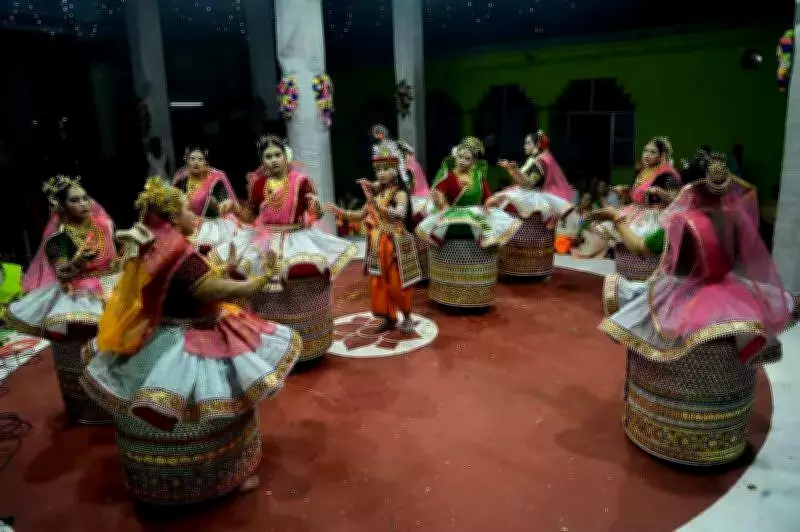
This year commemorates the 251st anniversary of the Raas Utsav, where the sacred Raas Leela performance takes center stage. Onima Khaidem from Kairang, a practitioner of the royal Raas dance tradition in Manipur, explained the cultural significance: "Within Manipur's Gaudiya Vaishnav tradition, the narrative of Krishna's celestial dance with Radha and the gopis—deeply rooted in the Bhagavata Purana and Jayadeva's Gita Govinda—has evolved into a refined classical art form over centuries."
The festival features several distinctive elements:
- Annual celebration of Dol Yatra in authentic Manipuri style
- Devotee participation in elaborate Raas Leela performances
- Nagar Parikrama processions during the Ashtaprahar observance
- Worship of chariot-mounted deities following the Holi procession
- Community celebrations that bring together pilgrims and locals
Usha Rani (64), a visitor from Yaiskul, described the experience: "After the vibrant Holi procession, we engage in worship of the chariot-mounted deity, followed by joyous community celebrations that strengthen our spiritual bonds."
Historical Roots at Manipur Rajbari
The Manipur Rajbari stands as the spiritual and cultural heart of these celebrations. This tradition is deeply rooted in Vaishnavism—the dominant faith of Manipur and its royal family. Historical records indicate that Maharaja Bhagyachandra arrived in Nabadwip in 1798 accompanied by princess Bimbabati, establishing the idol of Anu Mahaprabhu, a Manipuri representation of Sri Chaitanya Mahaprabhu.
This initiative proved particularly significant during a period when public worship of Chaitanya was prohibited under the rule of Maharaja Ishwarchandra of Nadia. Bhagyachandra's courageous act revived devotional practices and preserved this important cultural connection between the regions.
The renewed participation in this year's Raas Utsav represents more than just increased numbers—it symbolizes the resilience of cultural traditions, the healing of regional divisions, and the enduring spiritual bonds that connect Bengal and Manipur across geographical and temporal boundaries.