Ancient French Burial Pits Reveal Neolithic Warfare and Trophy-Taking Rituals
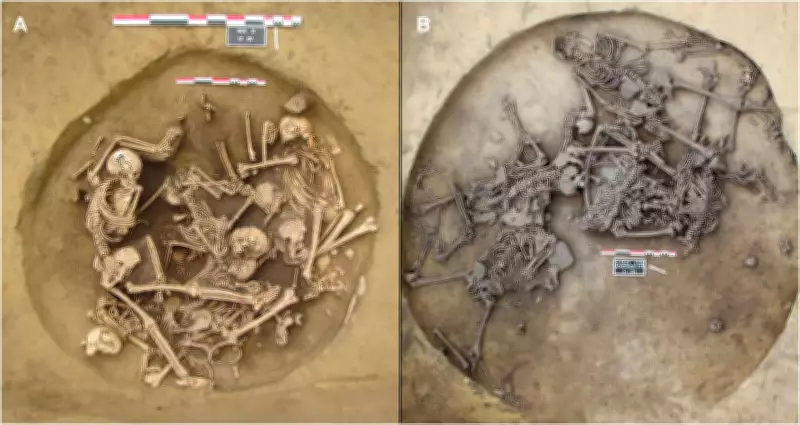
Archaeological excavations in northeastern France have unearthed compelling new evidence of organized violence and ritualistic practices during the Neolithic period in Europe. The discovery of human remains in burial pits at the sites of Achenheim and Bergheim, dating back approximately 6,300 to 6,150 years (4300 to 4150 BCE), provides fresh insights into early human conflict and cultural behaviors.
Extreme Trauma and Deliberate Mutilation
The skeletal remains recovered from these ancient pits display clear signs of extreme physical trauma, including the deliberate and systematic severing of left arms. This pattern of injury suggests intentional mutilation rather than random violence, pointing toward ritualized practices following violent encounters between distinct communities.
Chemical Analysis Reveals Non-Local Origins
A comprehensive new isotope analysis of 82 individuals, alongside animal bones and modern plant samples, has yielded significant findings about the origins of those buried in these pits. Researchers examined stable carbon, nitrogen, and sulfur isotopes in bone collagen, as well as strontium and oxygen isotopes in tooth enamel, to reconstruct dietary patterns and geographical movements.

The chemical signatures preserved in teeth and bones indicate that those who suffered violent deaths had different diets and more mobile childhoods compared to individuals buried in conventional graves nearby. This suggests the victims were not local to the Upper Rhine Valley region where they were ultimately interred.
Statistical Differences Between Groups
At both archaeological sites, researchers identified statistically significant differences between individuals placed in irregular pits and those given standard burials. Nitrogen values were notably higher among several victims at Bergheim, indicating distinct food sources. Sulfur values also showed greater variation among victims compared to local populations.
While the differences were not uniform across all individuals—some overlapped with local ranges while others stood apart clearly—the overall pattern suggests the presence of distinct groups with different geographical origins and dietary practices.
The Mystery of Severed Limbs
One particularly intriguing discovery involves the isolated left upper limbs recovered from the burial pits. In several cases, isotope analysis revealed that these severed arms did not match the chemical signatures of the complete skeletons found alongside them.
This finding has led researchers to consider the possibility of trophy-taking practices, where limbs from defeated enemies were collected as symbolic tokens following violent encounters. The pattern suggests these severed arms may represent deliberate symbolic acts rather than random mutilation, though without written records from this prehistoric period, interpretations must rely on bone chemistry and burial context.
Evidence of Childhood Mobility
By analyzing dentine layers formed during infancy and childhood, researchers traced changes in diet and landscape use over time. Victims showed more frequent chemical shifts during their early years, with strontium ratios between first and second molars demonstrating greater variation on average than those of non-victims.
This pattern suggests movement across different geological zones during childhood, though regional strontium variation remains wide enough that none of the individuals can be definitively labeled as foreign. Nevertheless, the consistent pattern of change distinguishes the victims from local populations.
Broader Context of Neolithic Conflict
The Achenheim and Bergheim sites date to a period of significant cultural transition in the Upper Rhine Valley, when traditions linked to the Paris Basin were replacing earlier local groups. Previous archaeological findings from this era have noted fortified settlements and skeletal trauma, but these new discoveries add important detail to our understanding of Neolithic conflict.

The evidence does not describe a single isolated massacre but rather suggests repeated confrontations between communities over time. While bones, soil, and chemical analysis provide only fragments of the complete story, they strongly indicate that violence in this region was organized, deliberate, and remembered through ritual practices that extended beyond simple burial.
Research Implications and Future Directions
The study, published as "Multi-isotope biographies and identities of victims of martial victory celebrations in Neolithic Europe," represents a significant advancement in our understanding of prehistoric violence. By combining traditional archaeological methods with sophisticated chemical analysis, researchers have uncovered evidence of what may be among the earliest documented examples of ritualized post-conflict violence in prehistoric Europe.
These findings contribute to growing evidence that organized violence and ritual practices were more complex and developed in Neolithic societies than previously recognized, challenging earlier assumptions about the nature of conflict in prehistoric Europe.